Top AI Testing Tools

AI Tools for Testing

Discover the best Testing AI tools to enhance your productivity and creativity.

Page 4 of 6 • 72 total tools
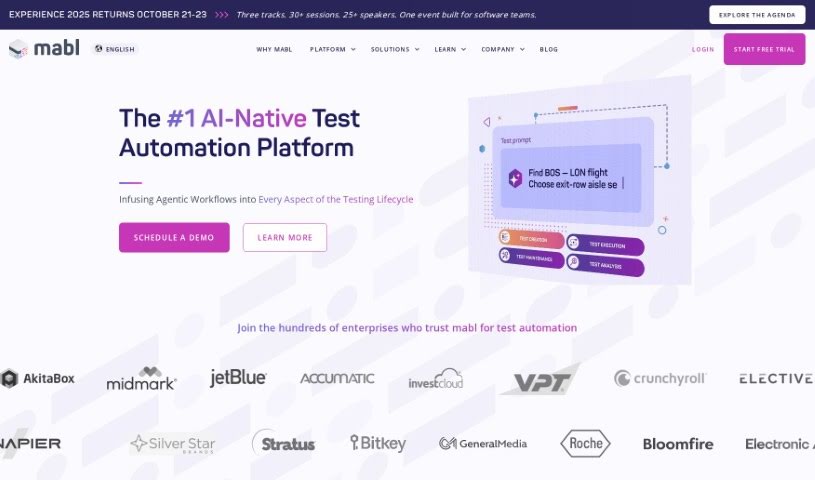
Screenshot of Mabl

Mabl

Freemium

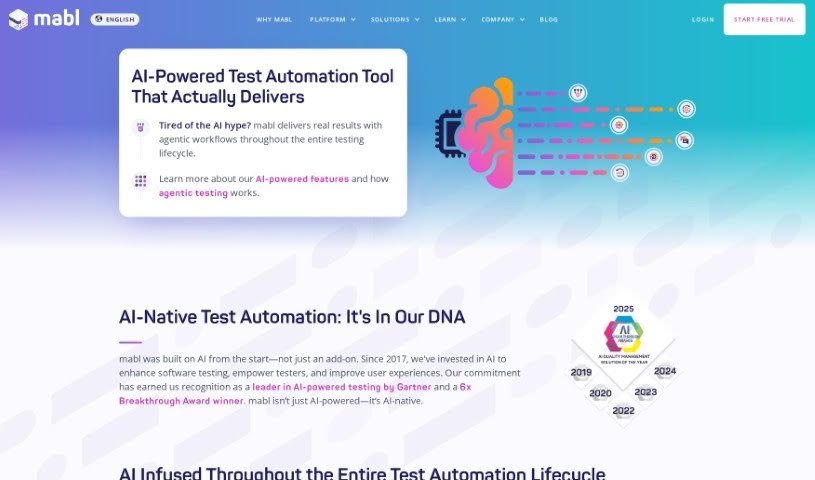
Mabl is an AI-native test automation platform built for fast-moving software teams. It lets you create, run, and maintain end-to-end tests for browsers, APIs, and mobile websites, using a low-code approach that makes test creation and updates accessible without deep scripting knowledge.

Screenshot of Mabl AI Test Automation

Mabl AI Test Automation

Freemium

AI test automation uses machine learning and natural language processing to simplify creating and maintaining test cases. These tools can analyze how users interact with an application, spot patterns, generate tests automatically, and extract key insights from test results. The benefits include more reliable tests that adapt to change, less maintenance time, better coverage across testing scenarios, and more accessible testing for the whole team. A key challenge is applying AI to specific problems effectively, since some tools may overpromise.

Screenshot of Maihem

Maihem

Freemium

Maihem automates testing and quality assurance for AI applications. It acts as a continuous tester, evaluating AI apps from development through deployment, with a focus on conversational AI. The platform simulates interactions with thousands of realistic personas, evaluates entire conversations against customizable performance and risk metrics, and presents results through dashboards in a web application.

Screenshot of Nunu

Nunu

Freemium

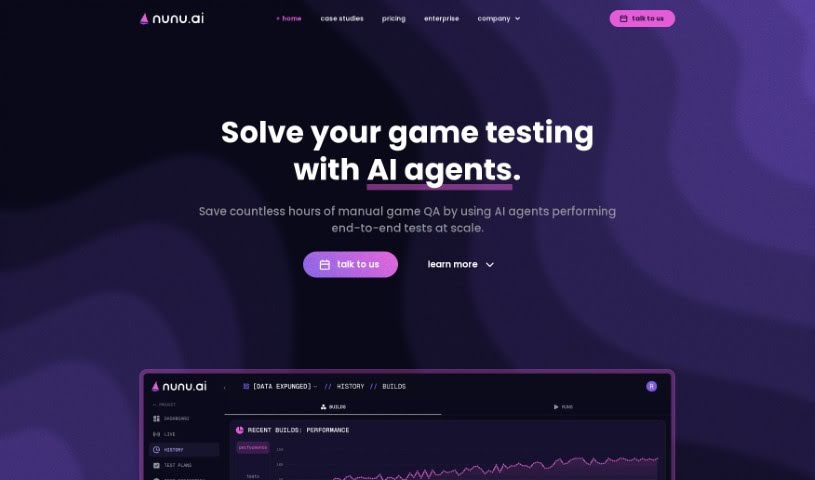
Nunu is an AI platform that builds agents capable of testing and playing games. The agents are vision-based: they "see" games the way humans do and interact with them naturally. The platform is interactive and interpretable — you can engage with the AI in real time, receive detailed reports on its tasks, and see why it made specific decisions.

Screenshot of Openlayer

Openlayer

Freemium

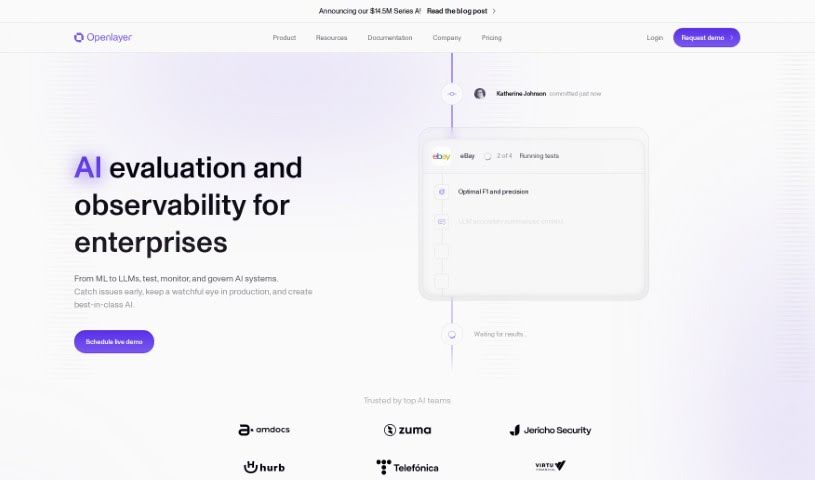
Openlayer is a platform that helps developers and data scientists keep their machine learning models reliable in production. It provides automatic testing, real-time monitoring, version control, and secure data storage. Models connect to Openlayer with a small amount of code, after which each version is continuously tested for data quality, performance, and drift (changes in a model's behavior over time). Instant alerts via Slack or email notify you when something goes wrong or the system goes down.

Screenshot of Pact Monster

Pact Monster

Freemium

Pact Monster is a tool that helps players and game masters keep track of the details involved when summoning creatures to form pacts in role-playing games. It organizes and manages pacts, the creatures involved, and their terms and conditions.

Screenshot of Page Canary

Page Canary

Freemium

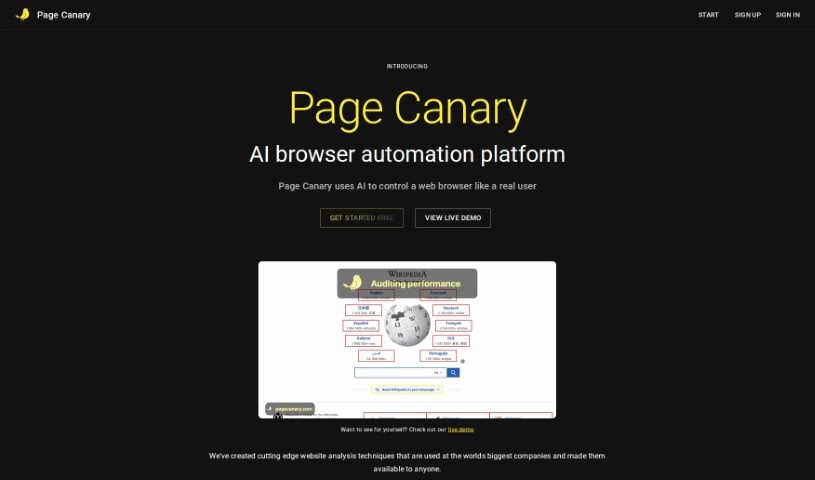
Page Canary is an autonomous website quality assurance bot. Using AI and web automation, it crawls your website, learns how it works, and actively searches for problems: broken links, pages returning errors, spelling mistakes, and SSL certificate issues. For each problem it finds, it assesses severity, provides step-by-step instructions for reproducing and fixing it, and alerts your development team.

Screenshot of Parea AI

Parea AI

Freemium

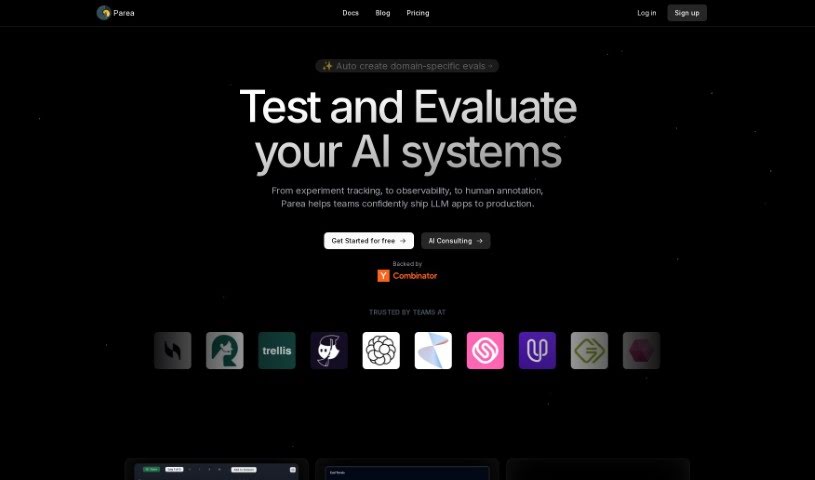
Parea AI is a platform for improving the performance of Language Model (LLM) applications. It provides prompt engineering tools: test different versions of prompts, evaluate how well they perform, and optimize them with one click. The platform also supports managing OpenAI functions.

Screenshot of PerfAI

PerfAI

Freemium

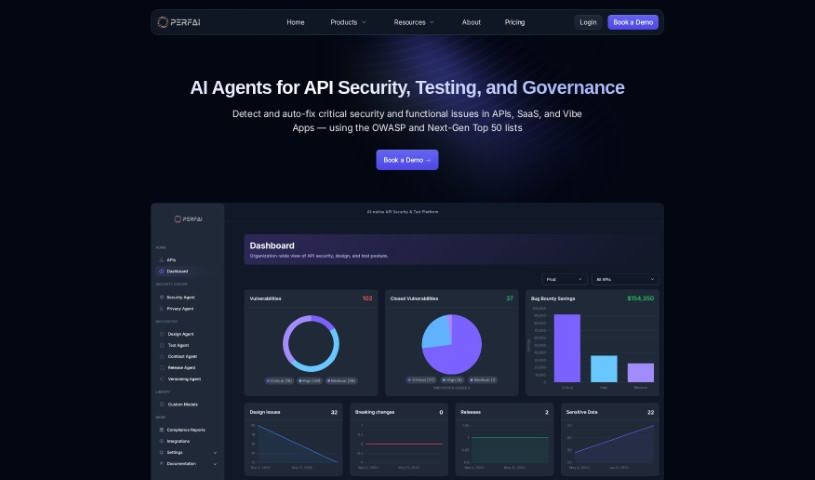
PerfAI is a no-code platform that uses AI to simplify API performance testing. It handles the process automatically: learning about your APIs, creating tests, and running them at the right times. The AI model behind PerfAI has learned from over 42,000 public APIs, allowing it to understand about 70% of new API endpoints. Features include automatic test generation, performance testing, and scoring-based reports. A natural language generation module also translates test descriptions into plain English, making it easier to understand and fix issues.

Screenshot of Prompt Studio

Prompt Studio

Freemium

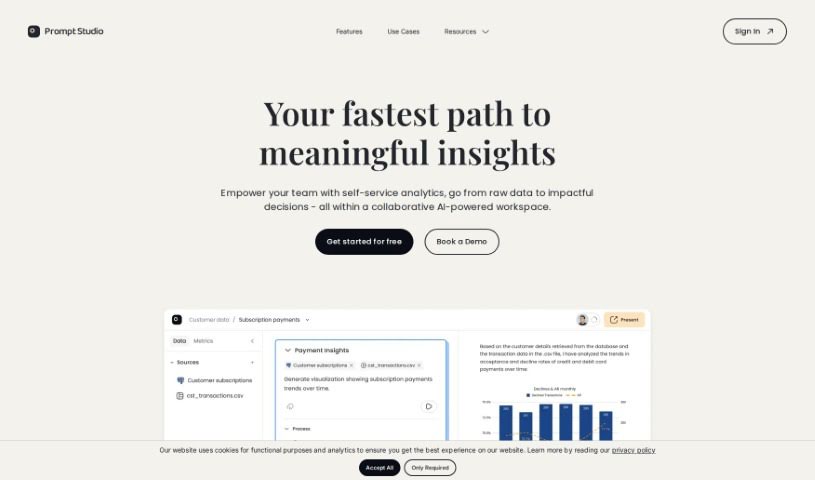
Prompt Studio is a tool for testing and validating generative AI use cases in businesses. It provides a visual editor for designing reusable AI features, and lets you plug AI tools into your own applications and workflows via an SDK or REST API. Prompt Studio handles integration, hosting, and deployment, while you stay in control and can fine-tune language models with your own examples. Teams can collaborate on prompt development, prototyping, and testing, with role-based permissions to control access. It is GDPR compliant, and pricing ranges from a free tier to pro and enterprise plans with more customization and support.

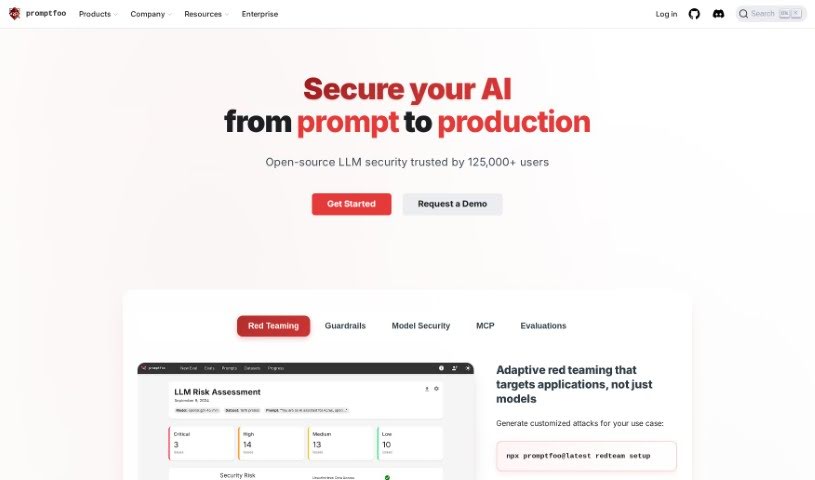
Screenshot of Promptfoo

Promptfoo

Freemium

Promptfoo is a library for testing and evaluating prompts used with large language models (LLMs). It runs automated evaluations based on clear, objective metrics. You can define test cases, create custom evaluation criteria, and compare different prompts and model outputs side by side. LLM applications serving over 10 million users rely on it.

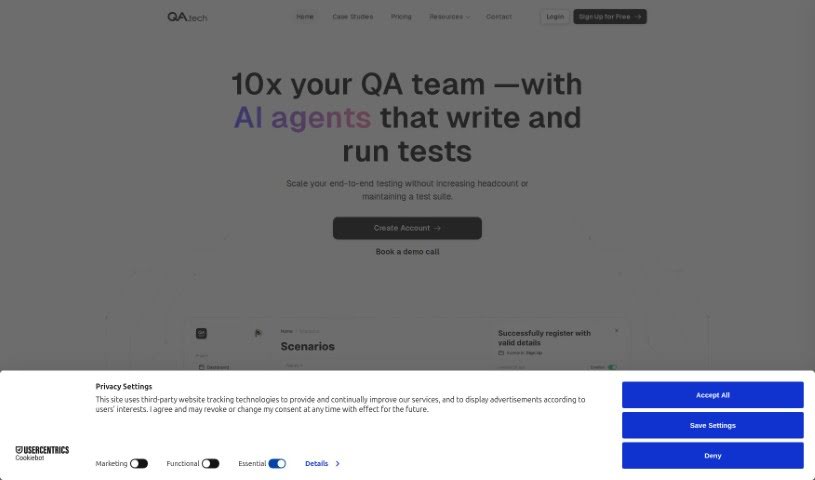
Screenshot of Qa.tech

Qa.tech

Freemium

QA.tech is an AI-powered solution for quality assurance (QA) testing. It automates many QA processes using artificial intelligence, helping software development teams save time and money by reducing manual testing and catching potential bugs before they reach production.

About Testing tools

Tracking down elusive bugs, writing endless test scripts, and fixing broken test suites every time code changes can make software testing feel like constant firefighting. Whether you’re running manual regression checks, writing unit tests for a new feature, or managing complex integration pipelines, keeping up with fast release cycles takes serious time. It’s easy to waste hours updating flaky test scripts instead of focusing on overall software quality.

These specialized testing assistants handle routine script creation, repair broken test paths, and catch hidden edge cases before your users do—without replacing human QA engineers or writing code on autopilot.

Test Case Generation, Self-Healing Scripts, and Coverage Gaps

Drafting comprehensive test cases from user stories or technical specs often takes hours of manual work. Smart testing assistants scan requirements, user flows, or code changes to generate clear test scenarios and unit test boilerplate in seconds. Instead of starting with a blank file for every sprint, you get a solid framework covering both standard user paths and unexpected edge cases.

Maintaining automated UI and end-to-end test suites gets much easier, as well. Minor interface updates often break traditional automation scripts, leaving QA teams with a mountain of test failures to inspect. AI-driven testing tools monitor application changes and automatically update element selectors when layout positions or button labels shift. These self-healing scripts drastically reduce maintenance overhead, keeping your build pipelines green and reliable.

Creating realistic test data and analyzing code coverage also becomes far less painful. Specialized tools generate privacy-compliant synthetic datasets that mimic real user traffic without exposing sensitive customer data. They can also analyze test runs to pinpoint untested code paths, security vulnerabilities, or performance bottlenecks that need extra attention.

Key Capabilities to Look For:

  • Automated script generation: Systems that turn natural language prompts, user stories, or code files into executable unit and end-to-end test scripts.
  • Self-healing test execution: Settings that automatically adjust broken element selectors and test steps when interface layouts change.
  • Synthetic data generation: Tools that create realistic, privacy-safe datasets for testing edge cases and complex user flows.
  • Visual regression scanning: Features that compare UI screenshots across multiple browsers and devices to flag subtle layout glitches.
  • Coverage and gap analysis: Analytics tools that highlight untested code paths, risky changes, and missing scenario coverage.

Building reliable software will always depend on human problem-solving, critical thinking, and a deep understanding of user expectations. Software can’t evaluate real user experience or understand complex business logic for you. But handing off repetitive script writing, data generation, and test suite maintenance gives you back the time needed to deliver high-quality applications.

Take a look through the QA tools below to streamline your testing process.

The Best AI Testing Tools

  1. LangChain: for validating LLM responses automatically
  2. Jam: for automatic bug tracking and reporting
  3. Google Search Labs: for evaluating new search features
  4. Testsigma: for automating web app regression testing
  5. Gooey.ai: for simplifying testing with AI-driven analytics
  6. VWO: for A/B testing to optimize websites
  7. Applitools: for visual regression testing on web apps
  8. Testim: for AI-driven web testing automation
  9. Eden AI: for testing voice commands in applications
  10. Layer AI: for helping teams quickly test concepts
  11. Promptfoo: for generating test cases automatically
  12. Keploy: for automating API test case generation
  13. Mabl: for automating UI tests for faster releases
  14. ACCELQ: for smooth API and web test automation
  15. AgentOps: for testing and optimizing agent performance
New tools, in your inbox.

Weekly picks of the best AI tools we've researched and added — no spam, unsubscribe anytime.

Join 25,000+ AI enthusiasts. No spam, unsubscribe anytime.