Staring at a blinking cursor while trying to hit a tight deadline is a special kind of frustration. Whether you need to draft website copy, write an article, polish an email newsletter, or craft social posts, keeping up with constant demands for fresh text drains your energy fast. It’s easy to get stuck wrestling with an intro paragraph for an hour.
The writing tools in this section act like versatile editorial assistants. They help you outline ideas, rephrase awkward sentences, and turn rough notes into clean, polished prose without replacing your creative voice.
From Blank Page to Polished Draft
Getting past the initial blank page is often the toughest hurdle. When you have a topic in mind but aren’t sure how to structure it, AI writing assistants suggest logical outlines and key talking points. Instead of starting from scratch, you get a clean framework to build on with your own experience and research. If you hit a wall mid-draft, ask the tool for alternative paragraph angles or transitions to keep your momentum going.
Self-editing your own work is notoriously difficult because your brain automatically fills in missing words and skips over awkward phrasing. AI editing tools scan your drafts for clunky sentence structures, passive phrasing, and repetitive word choices. They offer quick rephrasing options, helping you adjust your tone to match a specific audience—whether that means keeping things formal for a business report or making an article light and conversational.
Writing for different platforms usually means adjusting your voice and format. A detailed guide needs to sound quite different from a punchy social update or a direct sales email. Modern writing tools help adapt your core message across formats without losing the main point. You can paste in a rough report draft and generate quick email updates or summary notes in seconds.
Useful Features for Writers:
- Tone and style controls: Settings that let you adjust formality, emotion, and reading level to match your target audience.
- In-line editing and rephrasing: Tools that let you rewrite, expand, or condense specific sentences directly inside your document editor.
- Context-aware suggestions: Software that understands long documents so suggestions stay relevant to your overall topic.
- Plagiarism and originality checks: Built-in scanning tools that verify original text and catch accidental overlap with existing online sources.
- Format templates: Pre-built frameworks for specific content types, including email newsletters, landing pages, and long-form guides.
Effective writing requires personal perspective, real-world examples, and your authentic human voice. Software can help arrange words and suggest cleaner phrasing, but your unique insights give content its real value. Letting smart tools handle initial outlines, grammar cleanup, and quick rephrasing simply frees up time to focus on what you actually want to say.
Browse the directory below to find the right writing assistant for your workspace.
The Best AI Content Writing Tools
- AISEO: for making blog content visuals pop.
- Tiny Wow: for generating and rewriting AI content.
- Writesonic: for quickly creating engaging blog posts.
- Writecream: for generating compelling blog post content.
- Essai.pro: for quickly crafting polished essays on any topic.
- Sudowrite: for enhancing and structuring creative content.
- Aiktp: for making content work better for SEO.
- Seo Review Tools: for improving content to rank higher.
- Tool Baz AI Text Generator: for writing blog posts and articles.
- Toolsaday: for rephrasing content.
- Neuron Writer: for easily structuring and optimizing articles.
- Rytr: for an AI blog creation tool.
- Typli.ai: for generating persuasive blog articles.
- SEO Writing AI: for easy blog post creation.
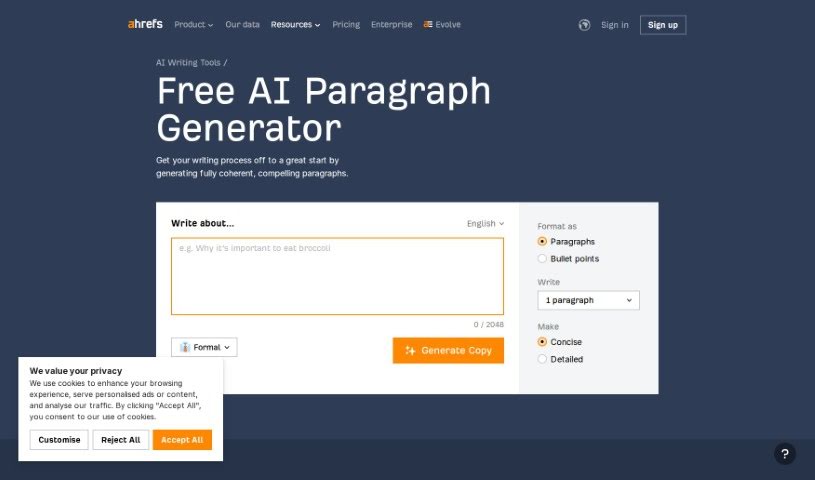
- Ahrefs AI Paragraph Generator: for crafting engaging blog post sections.