Meeting a breaking news deadline while wading through hours of recorded interviews and dense government reports is a relentless balancing act. You can easily spend half your day manually transcribing audio, hunting for a single line in a 300-page PDF, or trying to organize research notes into a coherent story. When administrative work eats up your shift, finding time for real investigative reporting and source interviewing gets tough.
Designed for reporters, investigative researchers, and editors, these tools handle time-consuming audio transcription, parse massive public record releases, and organize background notes without substituting for editorial judgment.
Accelerating Transcriptions and Document Research
Turning audio interviews into searchable text is one of the fastest ways to save time on a beat. Transcribing a one-hour recorded interview manually used to take three or four hours of constant stopping, rewinding, and typing. Modern transcription tools convert audio into clean text in minutes, distinguishing between multiple speakers and adding precise timestamps so you can jump straight to the exact quote you need for your draft.
Digging through massive document dumps and public records becomes far less daunting, as well. Freedom of Information Act (FOIA) responses, court filings, and financial disclosures often arrive as scanned PDFs running thousands of pages long. Intelligent document analyzers scan large file sets, spot key names, dates, or financial patterns, and pull out relevant pages so you can spot the story hidden in the data without reading every line.
Monitoring news wires and organizing background research also gets much simpler. Keeping up with local council agendas, press releases, and competing news outlets across multiple topics can overwhelm any beat reporter. Smart monitoring assistants flag relevant news updates, summarize press conferences, and organize research notes by topic, giving you a clear starting point before calling sources.
Features for Newsrooms and Reporters:
- Speaker identification and timestamps: Audio tools that distinguish between different voices during interviews and link text directly to exact timestamps.
- Large-file document search: Systems capable of parsing massive PDF collections, court records, and government filings to extract key data points.
- Strict data privacy and encryption: Security protocols that protect sensitive interviews, confidential whistleblower materials, and draft files from leaking.
- Multi-language transcription: Software that transcribes and translates interviews across different languages while preserving local dialects and context.
- Source reference mapping: Tools that tie extracted facts directly back to original page numbers or audio clips for quick fact-checking.
Great journalism will always depend on human ethics, critical thinking, and boots-on-the-ground reporting. Software cannot build trust with a confidential source, evaluate a politician’s tone during a press conference, or make tough ethical calls about what serves the public interest. But letting smart tools handle routine transcription and document scanning gives you back the time needed to uncover important stories.
Explore the journalism tools below to sharpen your newsroom workflow.
- Pressmaster Ai: Great for easily creating and tracking articles.
- Heartspace AI: Offers enhanced tools for investigative journalism.
- HAI News: Provides real-time updates for breaking news.
- Channel 1 AI: Helps streamline news research.
- Futuresearch: Gives insights for scenario-based reporting.
- Truebees: Useful for verifying sources and making stories more accurate.
- Charlie News: Curates reliable sources for your articles.
- Noozz: Tracks news and sends alerts in real-time.
- Webthat: Simplifies news research and curation.
- Honesty Meter: Helps journalists create objective content.
- Nepobb: Uncovers nepotism in celebrity news.
- News Deck: Tracks and analyzes stories as they happen.
- Clarity: Monitors biased media reporting.
- Shelor Motor Mile: Organizes news to make reporting more efficient.
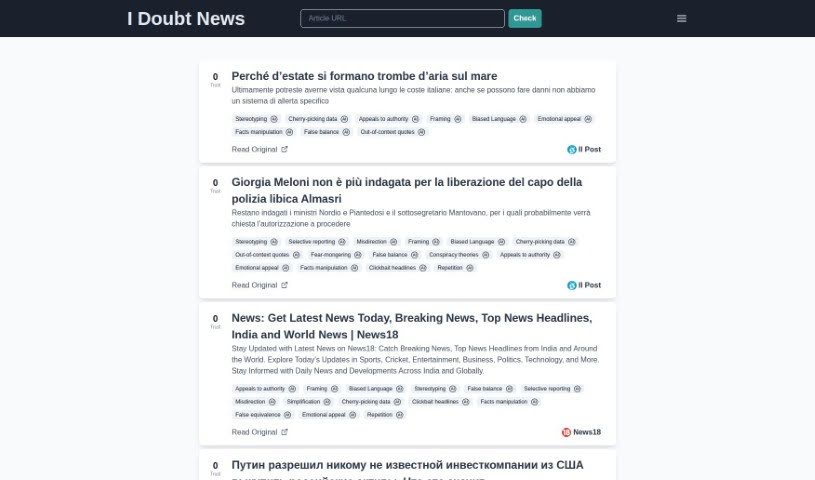
- I Doubt News: Detects biased language in articles.