Wrestling with complex calculus, linear algebra, or multivariable equations is exhausting. Spending hours stuck on a multi-step integral or hunting down a dropped negative sign drains your momentum fast. When you get bogged down in tedious arithmetic or dense notation, keeping your focus on core mathematical principles gets tough.
These math platforms act as high-speed tutors and calculation assistants. They don’t replace logical reasoning, mathematical intuition, or rigorous proof, but they break down complex equations step by step, spot calculation mistakes, and help you grasp tricky concepts faster.
Breaking Down Equations and Visualizing Concepts
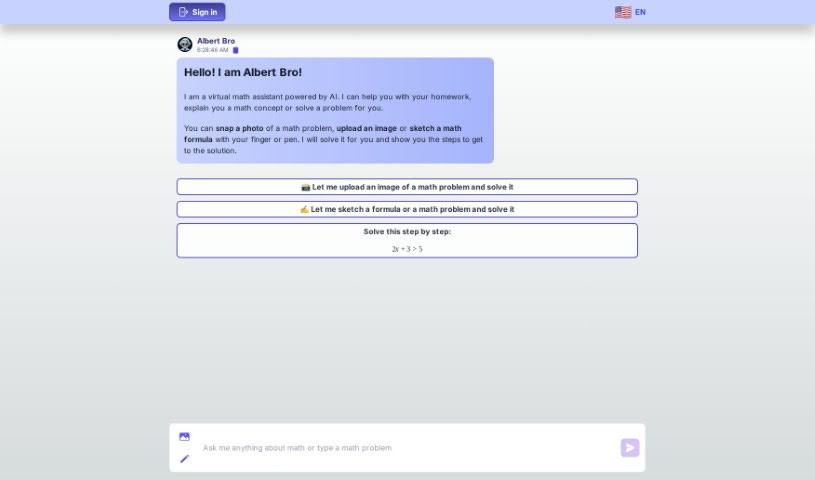
Step-by-step problem solving makes learning and verifying work far more effective. Getting stuck on a static final answer in an answer key leaves you guessing where you made a wrong turn. Modern AI math solvers walk you through each step, explaining why a specific substitution, derivative rule, or algebraic transformation applies so you learn the method, not just the output.
Parsing technical papers and dense mathematical notation gets much easier, too. Reading research papers or advanced textbooks often means deciphering pages of unfamiliar symbols. Intelligent document tools analyze mathematical notation, explain complex variable definitions in plain English, and translate multi-step derivations into clear summaries.
Symbolic computation and script generation also take the frustration out of technical setups. Writing custom scripts in Python, MATLAB, or Mathematica to plot 3D surfaces or run numerical simulations usually requires precise syntax. AI coding assistants convert plain English math prompts into clean, runnable code for visualization, numerical analysis, and statistical modeling in seconds.
Key Features to Look For:
- Step-by-step solution breakdowns: Systems that show every intermediate algebraic step and explain underlying rules instead of just printing a final number.
- OCR and handwritten formula recognition: Features that let you snap a photo of a whiteboard or notebook page and turn it into clean, editable equations.
- Interactive graphing and 3D visualization: Software that renders dynamic 2D and 3D plots to help you visualize vector fields, geometric surfaces, and function behaviors.
- LaTeX and code export options: Tools that convert solved derivations directly into LaTeX code or runnable scripts for papers and programming projects.
- Natural language concept explanations: Applications that break down abstract theorems and definitions using simple explanations and relatable examples.
Software can run algorithms, plot functions, and verify algebraic steps, but knowing how to frame a problem and interpret the results still requires your mathematical intuition. Offloading mechanical calculations simply gives you the mental space to focus on the big picture.
Check out the math tools below to streamline your study or research workflow.
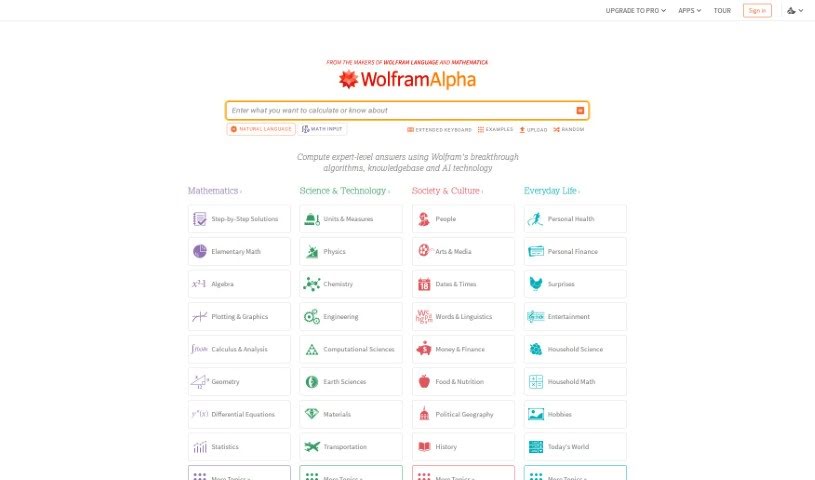
- Alpha Wolfram: for step-by-step integral problem solving
- Pi: for circle area and circumference calculations
- Mathgptpro: for advanced equation solver for researchers
- Synthesis: for interactive math problem solving.
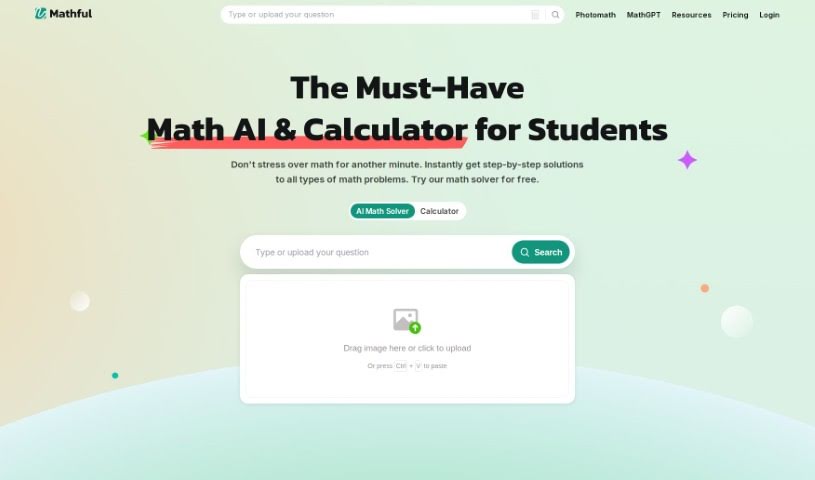
- Mathful: for solving complex geometry equations
- Socratic by Google: for solving algebraic equations easily.
- Snap Xam: for step-by-step math problem solver
- Interactive Mathematics AI Problem Solver: for step-by-step equation explanations
- Interactive Mathematics: for step-by-step math problem solving
- Bytelearn: for personalized math problem solver.
- Mathgpt: for comprehensive math toolkits for students.
- AI Math: for instant math problem solver for students.
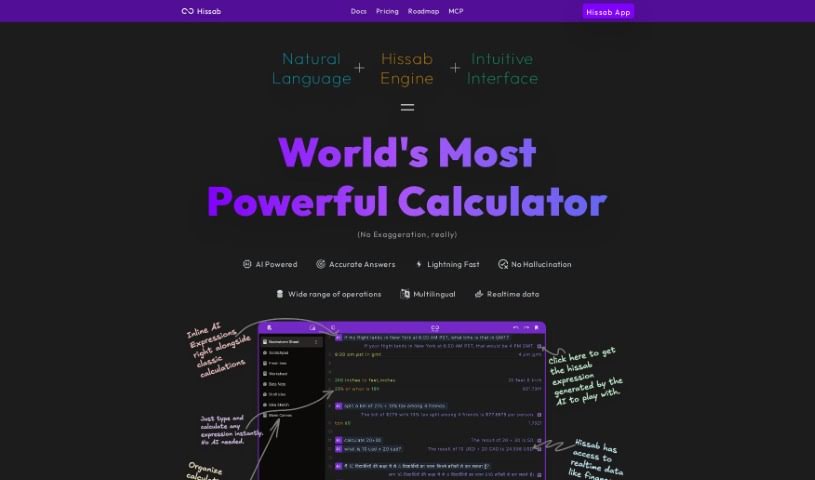
- Hissab: for advanced statistics calculations tool
- AI Math Coach: Turns photos of school math problems into printable practice sheets.