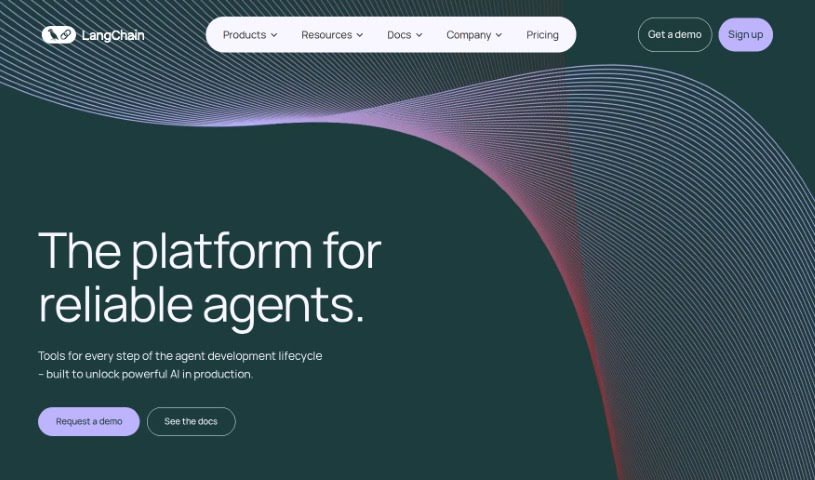
Screenshot of LangChain

LangChain

Discover what LangChain is and how to use it effectively in 2025. We'll explore its features and compare it to other app builders.

Screenshot

What is LangChain?

LangSmith is a developer platform built specifically for a new kind of application: those powered by language models (LLMs). It is your go-to toolkit for building, testing, and monitoring these sophisticated apps. It offers features like observability, testing, and evaluation tools, all designed to give you a deeper understanding of how your applications are working. This helps you build more complex apps with greater confidence and get them deployed smoothly.

LangSmith comes packed with key features. You can curate datasets, compare how different chains (sequences of LLM calls) perform, and even use AI to help with evaluation. It also makes collaboration easier, encourages best practices, and provides stats on your application’s usage, feedback, and costs. All of this helps you understand your app’s behavior in real-time.

It really shines when it comes to observability and testing LLM apps. LangSmith lets you see exactly what’s happening at each step of your application chain, visualizing inputs and outputs. You can also perform unit tests right within the platform, creating test datasets to make sure everything works as expected. Plus, you can compare how different chains stack up against each other, use AI for evaluation, and keep an eye on performance in real-time. This means you can fine-tune your apps and really understand how they’re being used and what users think.

Getting LangSmith into your current setup is straightforward. Its flexible, open-source SDK means you can adapt it easily to fit your specific needs and user feedback. For those who need it, the platform also offers enterprise deployment options, ensuring your data is handled securely.

Who created LangChain?

LangSmith was developed by a team based in San Francisco. The company officially launched on July 18, 2023, with a clear mission: to help developers build Language Model (LLM) applications more efficiently. LangSmith provides the tools developers need to go from a simple idea to working code really fast. Their goal is to support every stage of the AI engineering process, helping to get applications into production quicker. Beyond LangSmith itself, they also offer products like LangChain and LangGraph, all aimed at improving LLM app development from the initial prototype all the way to a live product.

What is LangChain used for?

  • Keeping an eye on how LLM apps perform (Observability)
  • Testing LLM apps to make sure they work right
  • Making unit testing simpler
  • Creating sets of data for testing
  • Comparing how different chains perform
  • Helping teams work together more easily
  • Ensuring you’re following the best ways to build things
  • Gathering user feedback
  • Measuring costs and performance
  • Watching how your app behaves in real-time
  • Using its open-source SDK
  • Integrating it flexibly into your projects
  • Adapting it to different ways people use it
  • Seeing stats on app usage
  • Understanding the unpredictable nature of LLMs

Who is LangChain for?

  • Developers
  • Data scientists
  • AI engineers
  • Software engineers
  • Application Developers

How to use LangChain?

To get the most out of LangSmith, here’s a simple guide:

  1. Get to Know LangSmith: First off, remember LangSmith is a platform designed for Language Model (LLM) applications. It gives you tools for observability, testing, evaluation, and monitoring.
  2. Explore the Key Features: It offers great observability and testing tools, plus evaluation features, all to help you manage your LLM apps. You can curate datasets, compare how your chains perform, use AI for evaluation, collaborate with others, and stick to best practices.
  3. Integrate It Easily: LangSmith is designed to be integrated into your current projects smoothly. Its flexible, open-source SDK is agnostic, meaning it can adapt to whatever you need.
  4. Visualize and Test: Use the observability tools to see inputs and outputs clearly. You can also run unit tests directly within the platform, checking results without ever leaving LangSmith.
  5. Get Access: You can sign up for the beta version or request early access if you’re an open-source contributor or part of the community.
  6. Collaborate Better: LangSmith makes teamwork easier with features like dataset curation and AI-assisted evaluation.
  7. Monitor Performance: Keep track of costs and performance metrics to understand your application’s expenses and key indicators.
  8. Find Learning Resources: Want to dive deeper? Check out the user guide, documentation (Docs), community forums, and blog for all the details on LangSmith.
  9. See the Advantages: Switching to LangSmith from your own custom tools can save you a lot of resources and cut down development time significantly. One user even mentioned it took them 10 times less time to develop, resulting in a tool that was 1000 times better!

By following these steps, you’ll be well-equipped to use LangSmith effectively for building, running, and managing your Language Model applications, with much better observability, testing, and evaluation capabilities.

Related AI Tools

Discover more tools in similar categories that might interest you

Stay Updated with AI Tools

Get weekly updates on the latest AI tools, trends, and insights delivered to your inbox

Join 25,000+ AI enthusiasts. No spam, unsubscribe anytime.