AI Academic Research Tools

AI Tools for Academic Research

Discover the best Academic Research AI tools to enhance your productivity and creativity.

Page 2 of 8 • 93 total tools
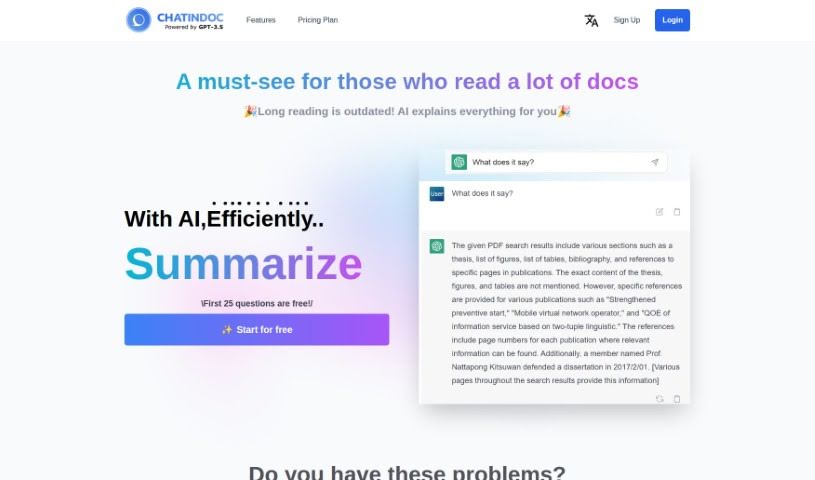
Screenshot of ChatInDoc

ChatInDoc

Freemium

ChatInDoc is a PDF viewer built on OpenAI's ChatGPT that lets you converse with your documents. It targets long, dense PDFs — academic papers, detailed reports, instruction manuals — and lets you ask questions directly in a chat interface. The AI summarizes sections, explains difficult terms, and analyzes entire reports. It runs on GPT-3.5 and GPT-4 and supports multiple languages.

Academic Research View Tool →
Screenshot of ChaturGPT

ChaturGPT

Freemium

ChaturGPT is an AI-powered document reader developed by Mystic Labs. Upload a PDF — whether it's a textbook, research paper, legal document, or tax report — and ask questions about its content to get instant answers. The AI is built to understand complex documents and extract the information you need quickly. It can also produce summaries and adapts how it presents answers so they're easy to follow regardless of the original format.

Academic Research View Tool →
Screenshot of ChatwithPDFai

ChatwithPDFai

Freemium

ChatwithPDFai is an AI tool that extracts text from PDF files. Built on natural language processing and optical character recognition (OCR), it reads and understands your PDFs, then converts them into editable text. This makes the information inside PDF documents easier to access, change, and work with.

Academic Research View Tool →
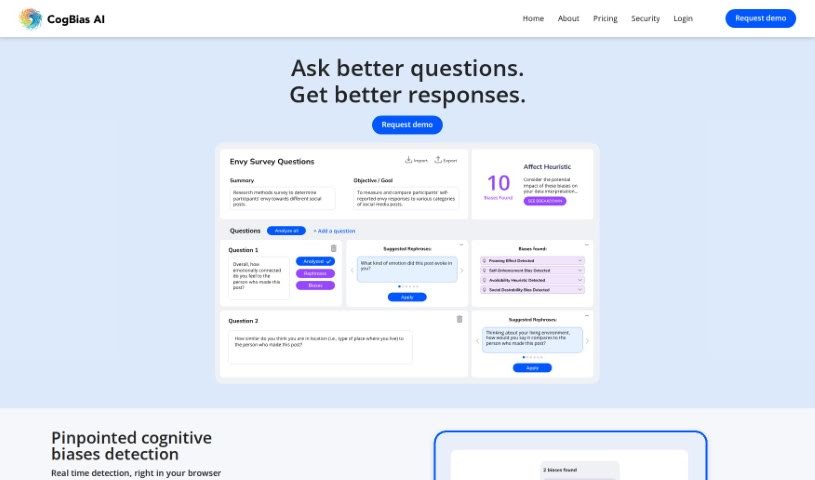
Screenshot of Cogbias Ai

Cogbias Ai

Freemium

CogBias AI is a platform that detects cognitive biases in conversations. It analyzes how questions are asked and how responses are interpreted, using machine learning to surface subtle biases that humans often miss. Core capabilities include:

Academic Research View Tool →
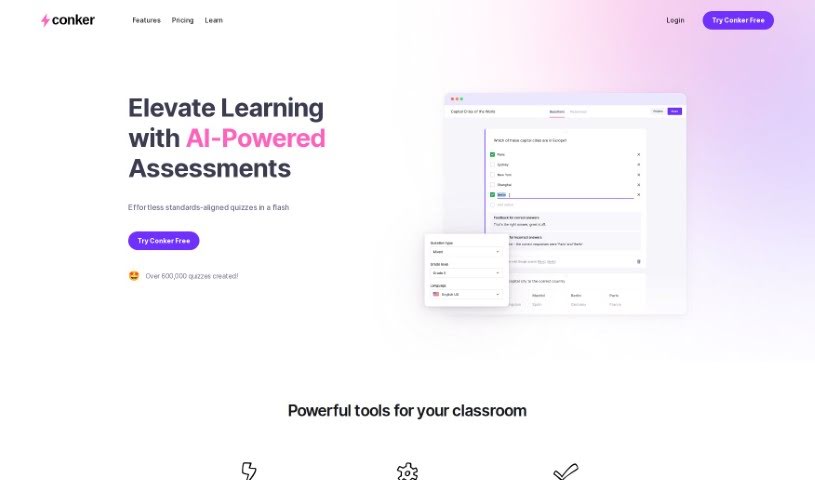
Screenshot of Conker

Conker

Freemium

Conker is an AI-powered quiz creation tool for educators. It generates unique quizzes tailored to your students' needs, making it easier to differentiate instruction. The platform includes a large library of assessments aligned with K12 standards, plus accessibility features such as a built-in read-aloud option to support every learner.

Academic Research View Tool →
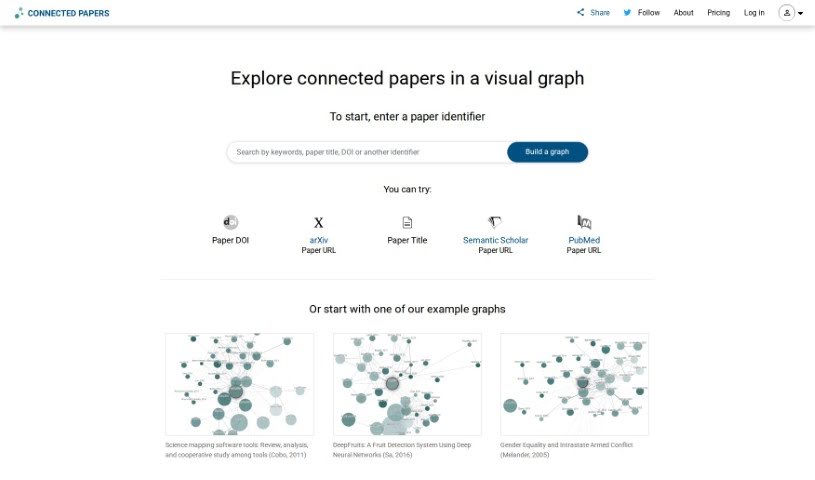
Screenshot of Connected Papers

Connected Papers

Freemium

Connected Papers is an online platform that helps researchers, scholars, and scientists explore academic literature. It presents papers as a connected graph, making it easier to see how studies relate to each other, how ideas have developed, and which works are foundational in a field. Results are field-specific, so you can trace the evolution of concepts within your area of research, start new projects, or stay current with recent studies.

Academic Research View Tool →
Screenshot of Consensus

Consensus

Freemium

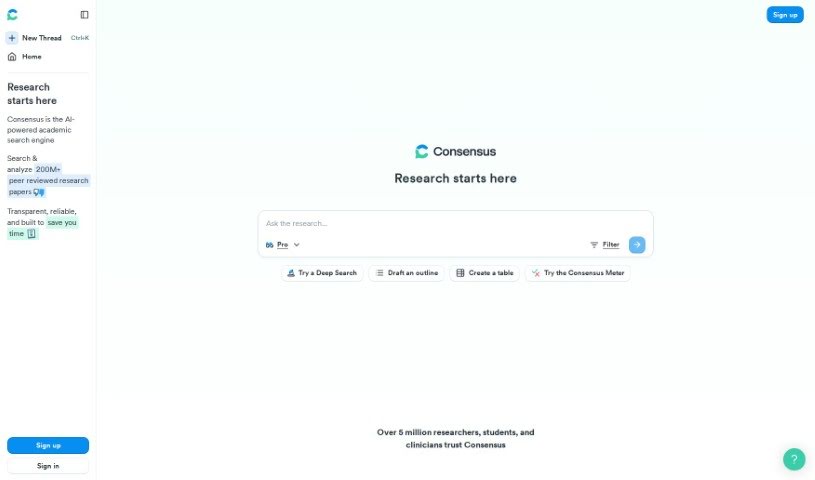
Consensus is a search engine designed to help people find evidence-based answers directly from research papers. It uses AI to extract insights from scientific studies faster and more efficiently, aiming to connect researchers with the general public by making reliable information easy to find.

Academic Research View Tool →
Screenshot of Cradle Bio

Cradle Bio

Freemium

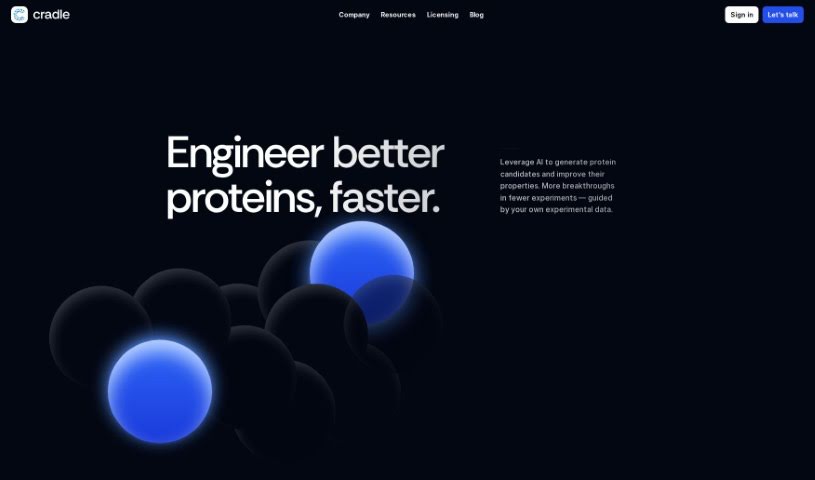
Cradle Bio is an AI tool that helps biologists design better proteins. It uses advanced prediction algorithms and AI-driven recommendations to visualize, analyze, and predict potential protein candidates. The tool can handle several properties and optimization tasks at once, and it learns from your experiments to suggest better variants over time, reducing the time it takes to bring a product to market. Cradle keeps your data private and secure, and you retain full ownership of your intellectual property.

Academic Research View Tool →
Screenshot of Cramly.ai

Cramly.ai

Freemium

Cramly.ai is an AI study assistant built for students who want to study more efficiently and improve their grades. It acts as a digital assistant for academic tasks, offering features including:

Academic Research View Tool →
Screenshot of Dankgpt

Dankgpt

Freemium

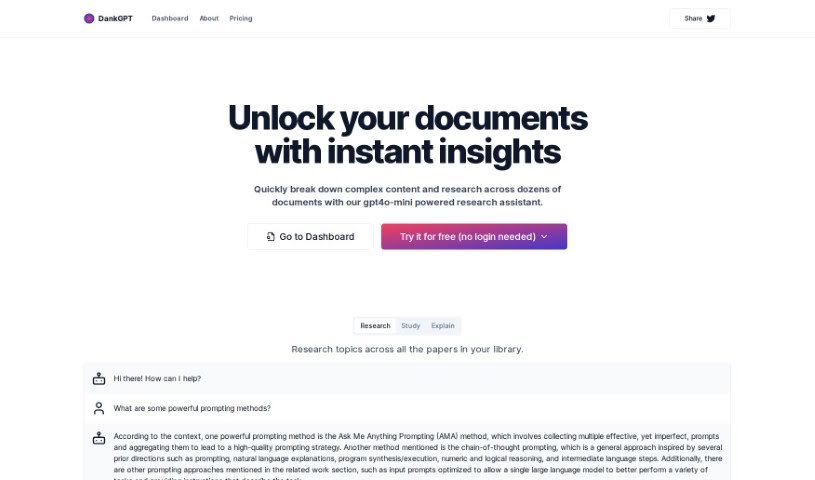
DankGPT is a research tool built for students and academics, powered by GPT4 and GPT5 technology. It processes complex academic content across a range of document types and can analyze multiple documents at once. Its feature set includes Ask Me Anything (AMA) prompting, chain-of-thought prompting, optimized input prompts, and instructions tailored to specific tasks. No account is required to start using it, and findings can be shared on social media such as Twitter.

Academic Research View Tool →
Screenshot of Dobb-E

Dobb-E

Freemium

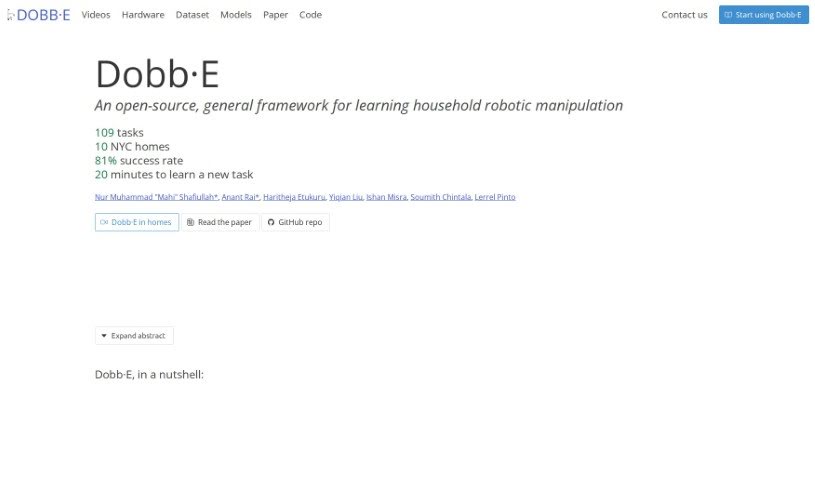
Dobb-E is an open-source framework for teaching robots household tasks through imitation learning — robots learn by watching demonstrations rather than being explicitly programmed. It tackles a core challenge in home robotics: collecting training demonstrations affordably. Data is gathered with "The Stick," a simple capture tool built from a $25 Reacher-grabber stick, 3D-printed parts, and an iPhone.

Academic Research View Tool →
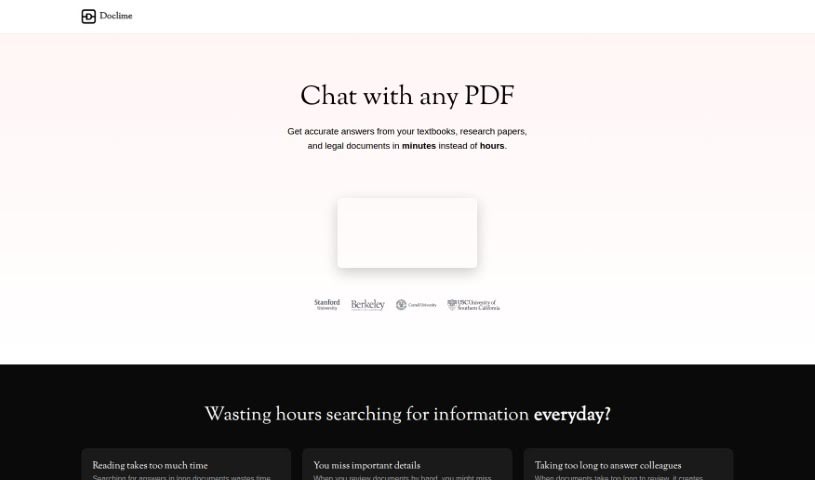
Screenshot of Doclime

Doclime

Freemium

Doclime is a platform for chatting with your documents. You upload files and get answers instantly, without searching through them yourself. It uses AI to understand and find information quickly, returning exact answers with citations. No special technical skills are required, making it accessible to anyone who deals with a lot of paperwork — whether for research, studying, or professional work.

Academic Research View Tool →

About Academic Research tools

Anyone who’s ever tackled a major research project knows the drill. You’re staring at a mountain of downloaded PDFs, trying to connect the dots across dozens of studies, and suddenly it’s 3 AM. It’s exhausting work. But recently, a new wave of software has stepped in to help manage that heavy load.

Rather than trying to write your dissertation for you (which they definitely shouldn’t do), these platforms act more like a tireless research assistant, helping you cut through the initial noise.

Finding relevant papers used to mean typing exact keywords into a database and hoping for the best. Modern AI search engines actually understand the context behind your question. Think of it like talking to a specialized librarian. Ask about “how sleep affects memory,” and the tool knows to pull in related terms like “memory consolidation” or “REM cycle.” You end up finding key studies you might have otherwise missed entirely.

Once you track down those papers, you still have to digest them. That’s where document chat tools prove their worth. Instead of skimming a forty-page paper just to check if the methodology matches your project, you can ask direct questions: “What was the sample size and demographic?” The application scans the file and hands you exact figures in seconds.

Organizing your work is another huge time saver. Modern citation managers automatically extract author names, publication dates, and journal titles straight from your files. Later, when you’re drafting, writing assistants help polish awkward phrasing so your core arguments come through clearly.

What to look for when picking a tool:

  • Contextual search: Engines that understand the meaning behind your query rather than matching rigid keywords.
  • Document chat: Applications that let you query uploaded PDFs or datasets directly.
  • Citation formatting: Software that automatically organizes references without manual entry.
  • Drafting support: Grammar and clarity checkers tailored specifically for academic writing.

The research process will always require critical thinking and deep analysis; that’s the whole point of scholarship. But the tedious busywork of searching, manual formatting, and early-stage skimming? You can finally hand that off.

Take a look through the options below to find the right fit for your next project.

The Best AI Academic Research Tools

  1. Semantic Scholar: AI-powered search that understands the meaning behind research queries, not just keywords. Shows the most influential papers and how they connect.
  2. ResearchRabbit: Maps your research library visually. Finds new papers and authors in your field, and tracks what cites your saved work.
  3. Elicit: Spots gaps in the literature and extracts claims from papers automatically. Built for systematic reviews and meta-analyses.
  4. Consensus: Search engine that finds evidence-based answers straight from research papers. Shows whether studies support or contradict a claim.
  5. Connected Papers: Builds a graph of related academic papers. Lets you see how studies connect, and follow trails through the literature.
  6. Scholarcy: Turns long articles into summary flashcards. Checks how findings fit into the broader literature, with inline citations.
  7. Scite: Adds Smart Citations to every paper that references your work. Shows whether citing studies support, contradict, or just mention your claims.
  8. Alpha Inquire: AI research assistant that scans Google, arXiv, Hacker News, and financial news. Built by a small team at the intersection of search and synthesis.
  9. Sourcely: Finds credible sources for academic writing. Gives you summaries and references so you can cite with confidence.
  10. Enago Read: Literature review platform with a Copilot that answers questions directly from your PDFs. Speeds up the exploration and critical reading phase.
  11. Otio: Research assistant for managing information from many sources. Import PDFs, Word docs, blog links, and YouTube videos, then chat with everything.
  12. NotebookLM: Uploads your own documents and helps you dig into them. Good for asking questions across a personal corpus of PDFs and transcripts.
  13. Unriddle AI: Helps you read and write research papers faster. Offers AI autocompletion, writing suggestions, and a graph view for mapping your work.
  14. ChatInDoc: Chat directly with your PDFs. Ask questions about academic papers, reports, or instruction manuals without scrolling through pages.
  15. Doclime: Chat with your documents and get instant answers. Returns exact answers with citations, so you can trust where the information came from.
New tools, in your inbox.

Weekly picks of the best AI tools we've researched and added — no spam, unsubscribe anytime.

Join 25,000+ AI enthusiasts. No spam, unsubscribe anytime.