AI Academic Research Tools

AI Tools for Academic Research

Discover the best Academic Research AI tools to enhance your productivity and creativity.

Page 7 of 8 • 93 total tools
Screenshot of Skimit.ai

Skimit.ai

Freemium

Skimit.ai is an AI tool that simplifies article summarization. It produces short, informative summaries of articles quickly, using natural language processing to identify the main points and ideas and condense them while preserving important details.

Academic Research View Tool →
Screenshot of Sourcely

Sourcely

Freemium

Sourcely is an AI-powered tool that helps you find sources for academic research and writing. It acts as a real-time assistant for the often tedious job of referencing, providing credible summaries and sources while helping keep citations accurate. More than 10,000 students, researchers, and industry professionals have used the platform.

Academic Research View Tool →
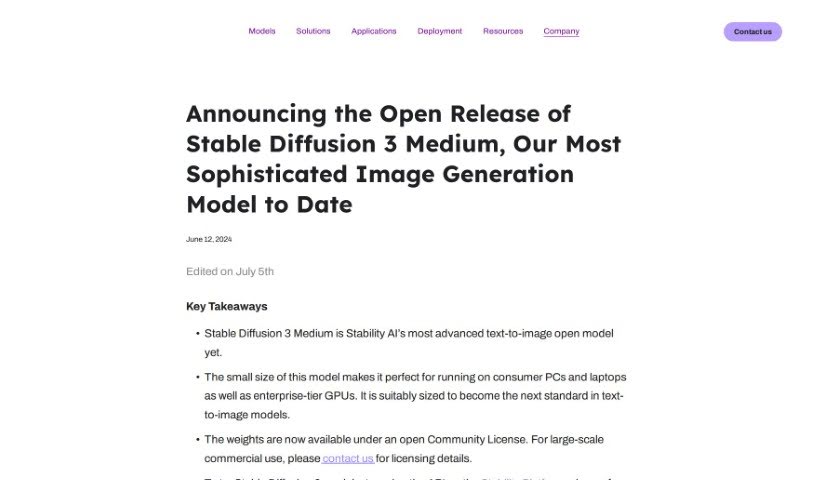
Screenshot of Stability AI Stable Diffusion 3 Medium

Stability AI Stable Diffusion 3 Medium

Freemium

Stable Diffusion 3 Medium (SD3 Medium) is Stability AI's latest image generation model. According to the company, it delivers strong image quality, handles complex prompts well, supports typography, is resource-efficient, and can be fine-tuned.

Academic Research View Tool →
Screenshot of Studyable

Studyable

Freemium

Studyable is a study platform for students that combines several learning tools in one place. Its core features include:

Academic Research View Tool →
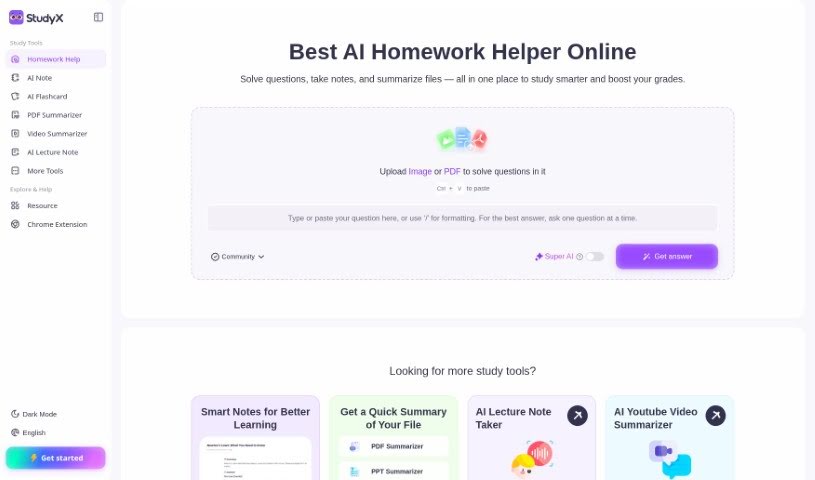
Screenshot of StudyX

StudyX

Freemium

StudyX is a homework assistant platform that combines AI-generated answers with a large community Q&A library. It recognizes questions automatically and generates answers using models like GPT-4 and ChatGPT, while drawing on a community section with millions of shared answers. For additional help, StudyX offers a personalized editor and expert Q&A services available 24/7.

Academic Research View Tool →
Screenshot of Summarizepaper

Summarizepaper

Freemium

SummarizePaper.com is an open-source AI tool that provides clear, easy-to-understand summaries of arXiv research articles. It is designed to help professionals and anyone curious about science keep up with the latest research without reading lengthy papers. You can search for articles using keywords, arXiv IDs, or specific authors, and an AI chatbot lets you have a one-on-one conversation with the articles themselves. The goal is to make scientific discoveries more accessible to researchers, students, journalists, and anyone who wants to follow academic progress.

Academic Research View Tool →
Screenshot of Summarizer AI

Summarizer AI

Freemium

Summarizer AI condenses lengthy texts into clear, concise summaries. It uses artificial intelligence and natural language processing to identify main ideas, key arguments, and important details, producing accurate summaries that make reading faster and easier.

Academic Research View Tool →
Screenshot of SummaVerse

SummaVerse

Freemium

SummaVerse is a document summarization tool that uses natural language processing to turn long documents into shorter, informative summaries. Instead of reading everything start to finish, you can extract the main points automatically. It is designed to be fast and easy to use, helping you condense complex information and work through large volumes of content more efficiently.

Academic Research View Tool →
Screenshot of Talk To Books

Talk To Books

Freemium

Talk To Books is an experimental platform from Google that lets you explore ideas and discover books in a new way. You type in a statement or question, and the tool uses AI language models to surface passages from books that relate to what you entered — matching by meaning rather than keywords.

Academic Research View Tool →
Screenshot of TextLayer

TextLayer

Freemium

TextLayer is a platform that uses GPT-4 to give you direct access to the latest machine learning research from ArXiv. It turns complex papers into usable insights, offering personalized research suggestions, easy-to-understand summaries, and Q&A sessions to clarify machine learning concepts. It also provides support for applying AI research in your own projects. Subscription plans range from the free Explorer plan to the premium Trailblazer subscription with unlimited interaction.

Academic Research View Tool →
Screenshot of The Drive AI

The Drive AI

Freemium

The Drive AI is an AI-powered platform that turns your uploaded documents into an intelligent library. You can manage files in one place, ask questions to find specific information, and create new content based on what you've stored. It's designed for a wide audience: students can gather study materials together, job seekers can polish their resumes, professionals can quickly locate documents, and researchers can break down complex topics. You can start for free, with options to upgrade for more features.

Academic Research View Tool →
Screenshot of Three Sigma AI

Three Sigma AI

Freemium

Three Sigma AI is a research tool that uses smart search technology to find the information you need quickly. Built on OpenAI's algorithms, it is designed to cut reading time by up to 90%, locate specific answers fast, and handle large-scale data analysis without manually digging through documents. The team refines its algorithms by processing millions of pages, improving accuracy over time. A planned GPT-4 upgrade will add image understanding within documents, enabling interpretation of tables and charts. The tool was founded by a group of researchers.

Academic Research View Tool →

About Academic Research tools

Anyone who’s ever tackled a major research project knows the drill. You’re staring at a mountain of downloaded PDFs, trying to connect the dots across dozens of studies, and suddenly it’s 3 AM. It’s exhausting work. But recently, a new wave of software has stepped in to help manage that heavy load.

Rather than trying to write your dissertation for you (which they definitely shouldn’t do), these platforms act more like a tireless research assistant, helping you cut through the initial noise.

Finding relevant papers used to mean typing exact keywords into a database and hoping for the best. Modern AI search engines actually understand the context behind your question. Think of it like talking to a specialized librarian. Ask about “how sleep affects memory,” and the tool knows to pull in related terms like “memory consolidation” or “REM cycle.” You end up finding key studies you might have otherwise missed entirely.

Once you track down those papers, you still have to digest them. That’s where document chat tools prove their worth. Instead of skimming a forty-page paper just to check if the methodology matches your project, you can ask direct questions: “What was the sample size and demographic?” The application scans the file and hands you exact figures in seconds.

Organizing your work is another huge time saver. Modern citation managers automatically extract author names, publication dates, and journal titles straight from your files. Later, when you’re drafting, writing assistants help polish awkward phrasing so your core arguments come through clearly.

What to look for when picking a tool:

  • Contextual search: Engines that understand the meaning behind your query rather than matching rigid keywords.
  • Document chat: Applications that let you query uploaded PDFs or datasets directly.
  • Citation formatting: Software that automatically organizes references without manual entry.
  • Drafting support: Grammar and clarity checkers tailored specifically for academic writing.

The research process will always require critical thinking and deep analysis; that’s the whole point of scholarship. But the tedious busywork of searching, manual formatting, and early-stage skimming? You can finally hand that off.

Take a look through the options below to find the right fit for your next project.

The Best AI Academic Research Tools

  1. Semantic Scholar: AI-powered search that understands the meaning behind research queries, not just keywords. Shows the most influential papers and how they connect.
  2. ResearchRabbit: Maps your research library visually. Finds new papers and authors in your field, and tracks what cites your saved work.
  3. Elicit: Spots gaps in the literature and extracts claims from papers automatically. Built for systematic reviews and meta-analyses.
  4. Consensus: Search engine that finds evidence-based answers straight from research papers. Shows whether studies support or contradict a claim.
  5. Connected Papers: Builds a graph of related academic papers. Lets you see how studies connect, and follow trails through the literature.
  6. Scholarcy: Turns long articles into summary flashcards. Checks how findings fit into the broader literature, with inline citations.
  7. Scite: Adds Smart Citations to every paper that references your work. Shows whether citing studies support, contradict, or just mention your claims.
  8. Alpha Inquire: AI research assistant that scans Google, arXiv, Hacker News, and financial news. Built by a small team at the intersection of search and synthesis.
  9. Sourcely: Finds credible sources for academic writing. Gives you summaries and references so you can cite with confidence.
  10. Enago Read: Literature review platform with a Copilot that answers questions directly from your PDFs. Speeds up the exploration and critical reading phase.
  11. Otio: Research assistant for managing information from many sources. Import PDFs, Word docs, blog links, and YouTube videos, then chat with everything.
  12. NotebookLM: Uploads your own documents and helps you dig into them. Good for asking questions across a personal corpus of PDFs and transcripts.
  13. Unriddle AI: Helps you read and write research papers faster. Offers AI autocompletion, writing suggestions, and a graph view for mapping your work.
  14. ChatInDoc: Chat directly with your PDFs. Ask questions about academic papers, reports, or instruction manuals without scrolling through pages.
  15. Doclime: Chat with your documents and get instant answers. Returns exact answers with citations, so you can trust where the information came from.

New tools, in your inbox.

Weekly picks of the best AI tools we've researched and added — no spam, unsubscribe anytime.

Join 25,000+ AI enthusiasts. No spam, unsubscribe anytime.