R
Role Model AI
FreemiumRole Model AI is an open-source project built around four core ideas:
Software Development
View Tool →
Discover the best Software Development AI tools to enhance your productivity and creativity.
Role Model AI is an open-source project built around four core ideas:
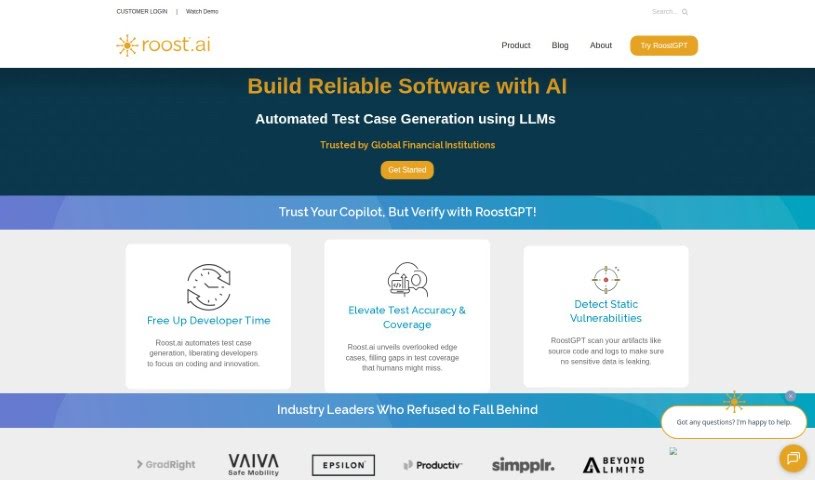
Roost AI is a developer productivity tool that uses Generative AI to create test cases and automate testing in complex software environments. It reads your software's context to turn user stories into test cases, generate tests automatically, automate contract testing, and speed up acceptance testing with preview URLs. It also spins up temporary test environments on demand and integrates with cloud services and DevOps tools to improve software quality.
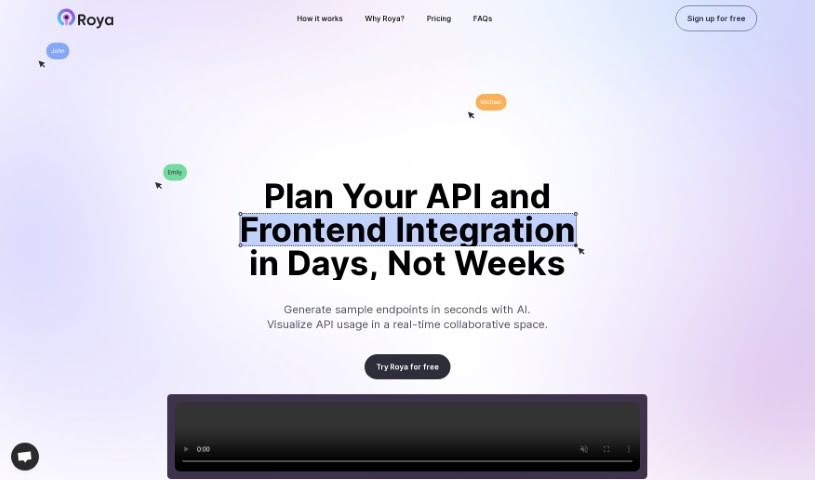
Roya is an AI-powered tool for planning and designing APIs. It automatically generates sample endpoints tailored to your app's specific functions, which speeds up the initial planning stages. Roya supports web and mobile app development, offers real-time collaboration, and includes API documentation features. Its AI assists with tasks like creating request and response bodies, and you can annotate app screenshots to visualize how APIs interact with your application.
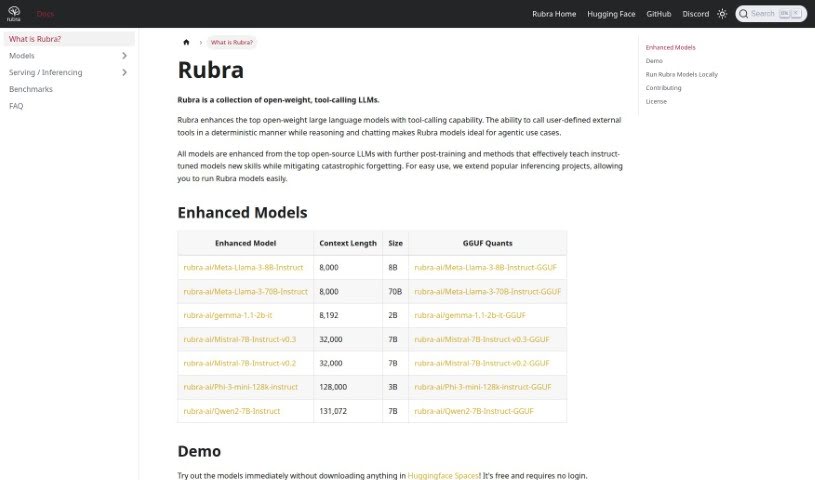
Rubra is an open-source platform for creating AI assistants that run entirely on your own machine. Because all processing happens locally, you avoid costly API tokens, keep chat histories and data private, and still get an efficient chat interface for working with models. Rubra can also handle data from different sources.
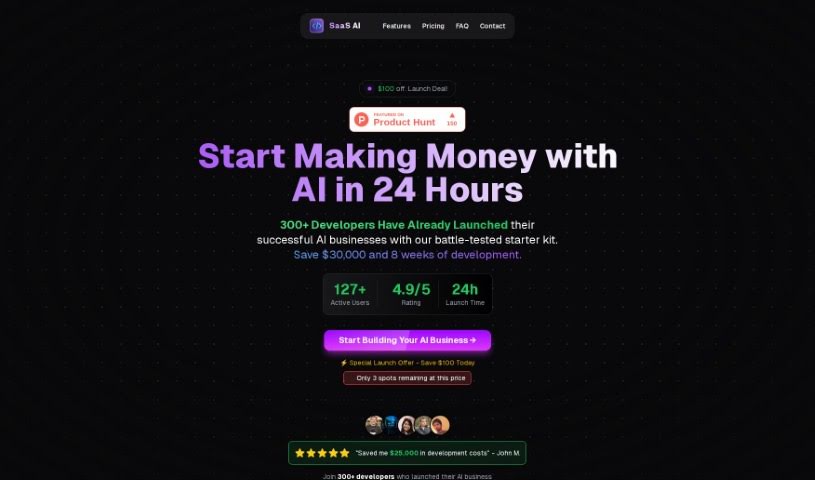
SaaS AI (Software as a Service Artificial Intelligence) is a ready-to-go starter kit built with Next.js, designed as a shortcut for launching AI-focused businesses. It includes the fundamental code for key functions such as GPT-4 integration, payment systems, database management, user logins, and essential UI components. The goal is to speed up development: instead of handling technical groundwork, you can get AI web applications running faster and focus on the features that differentiate your product. While it is designed for AI projects, it is flexible enough to be adapted for any kind of SaaS business, with AI components integrated as your project requires.
Safa.ai is a platform that automates software documentation. It uses language models to read code, determine its purpose, and explain it in plain English, keeping system documentation current and accurate without manual writing. The goal is to improve team communication, reduce misunderstandings and risk, and keep teams aligned.
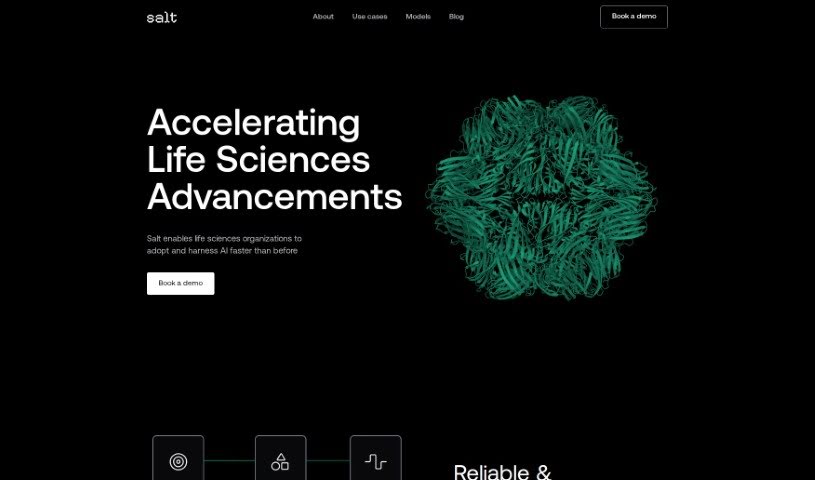
Salt AI is an artificial intelligence company focused on transforming industries with advanced AI solutions. It builds custom AI models designed around specific business needs, with strengths in predictive modeling, streamlining processes, and uncovering insights from data to support better decisions and greater efficiency.
Second is an AI platform focused on automating codebase migrations, upgrades, and maintenance for software engineering teams. The platform uses AI to understand developer intent and automate routine tasks, enabling teams to concentrate on strategic work.
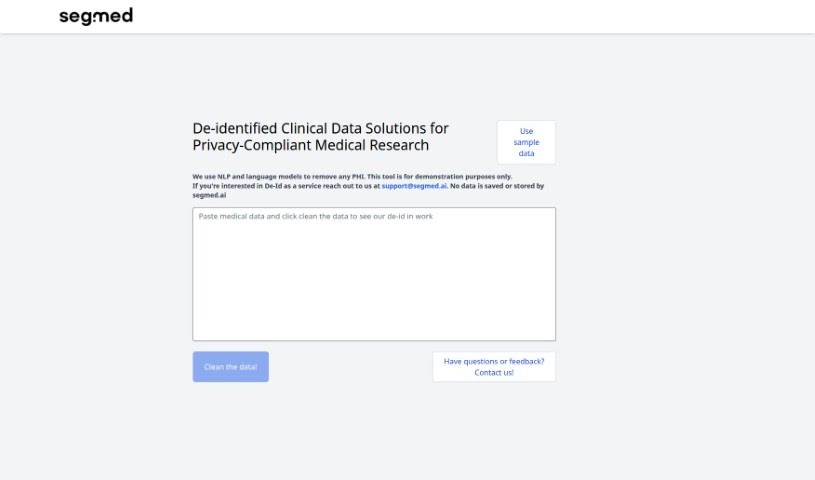
Segmed offers a web-based demonstration tool called the De-Id Playground. It showcases Segmed's de-identification service, which uses language models to remove personally identifiable information from sample data. You can input your own sample data to see how well the de-identification performs, and a "clean the data" feature lets you sanitize it further.
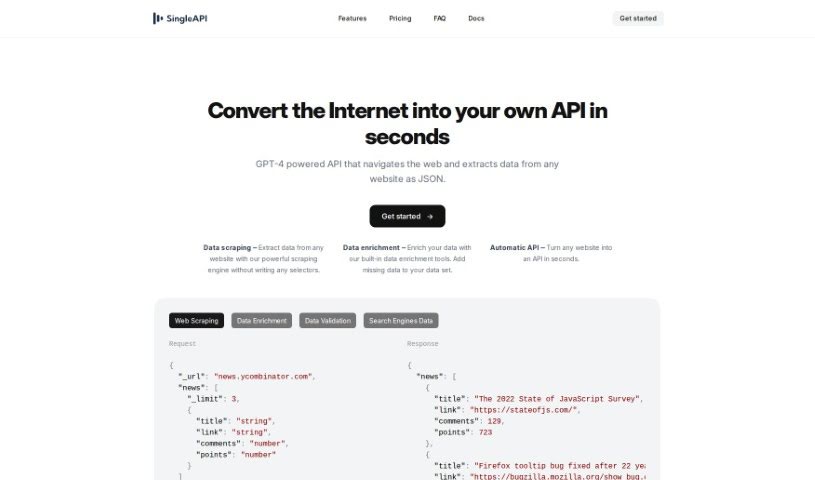
SingleAPI uses GPT-4 to turn any website into an API in seconds. It navigates websites, extracts content, and formats the results as JSON. Core capabilities include data scraping, data enrichment, and automatic API generation — no code or selectors required.
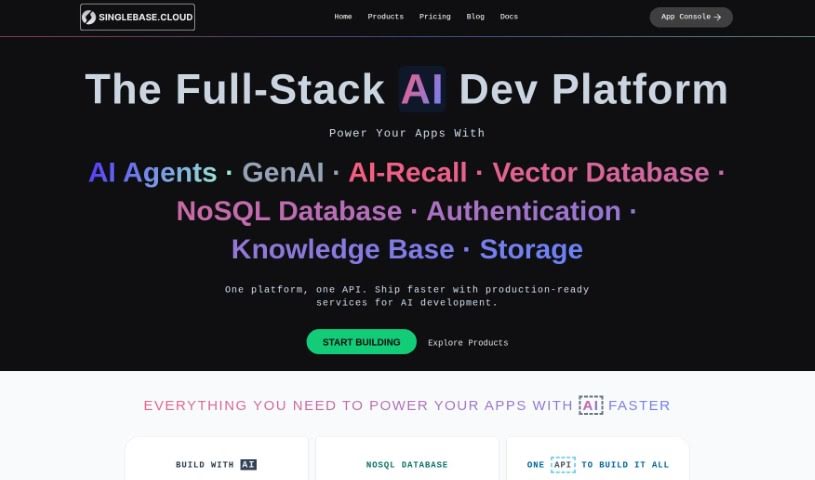
SinglebaseCloud is an AI-powered low-code backend platform for building web and mobile apps. Its core features include:
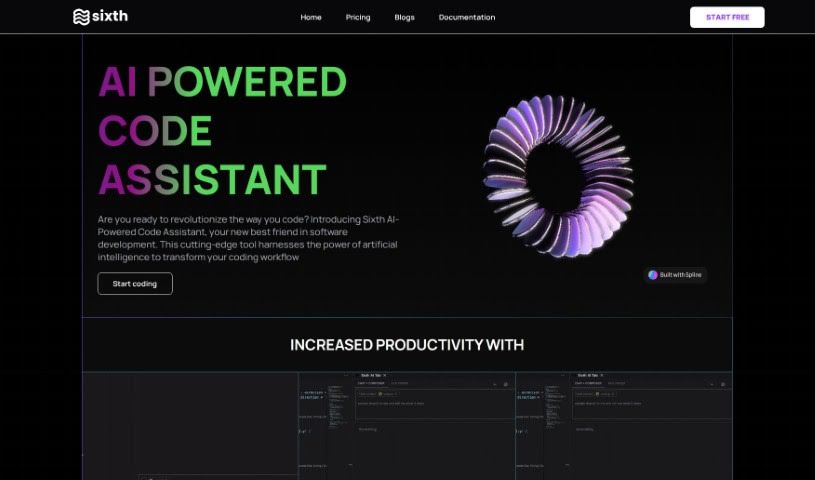
Sixth is a developer security platform focused on strengthening cybersecurity, with a particular emphasis on financial systems. It is a code and API security tool built to be developer-friendly, using AI-powered, real-time Static Application Security Testing (SAST) to provide instant feedback as you code and catch vulnerabilities early in the development process.
Staring at a terminal screen at two in the morning while trying to trace a subtle memory leak or decipher a cryptic build stack trace can test any developer’s patience. (I once spent four straight hours hunting down a bug in an API integration, only to discover a missing comma in a JSON config file.) Between writing repetitive boilerplate, untangling legacy codebases, updating dependencies, and building out test coverage, everyday coding tasks often keep you away from solving core logic problems.
These development platforms act as high-speed pair programmers for software engineers, web developers, system architects, and open-source contributors. They write routine code, catch edge cases, and explain unfamiliar syntax in seconds without replacing human logic, algorithmic thinking, or system design choices.
Accelerating daily coding tasks and generating boilerplate code turns ideas into working software much faster. Writing repetitive CRUD endpoints, database schemas, or API wrapper functions by hand eats up valuable sprint hours. Modern AI coding assistants auto-complete functions, suggest context-aware logic based on your existing codebase, and turn plain English comments into tested functions right inside your favorite editor.
Debugging complex errors and refactoring legacy systems becomes far less tedious. Trying to trace how a massive legacy module works or figuring out why a specific build failed often leads to endless web searches. Intelligent development agents scan your repository structure, pinpoint failing lines of code, explain the root cause in simple terms, and offer clean refactoring suggestions that preserve your application’s original intent.
Writing unit tests and generating documentation keeps codebases healthy without extra overhead. Most developers love building features, but few enjoy writing test suites or updating API docs. AI development tools analyze your code pathways, generate comprehensive test cases that cover tricky edge cases, and auto-generate inline documentation, ensuring your project remains maintainable for your entire team.
Key Capabilities to Look For:
- Context-aware code completion: Systems that read your entire project repository to suggest code that matches your existing patterns and conventions.
- Interactive terminal and chat assistants: Tools that let you ask questions about your codebase, debug stack traces, and run terminal commands directly from your IDE.
- Automated test and doc generation: Features that automatically create unit tests, integration scenarios, and inline docstrings for your functions.
- Multi-language and framework support: Software that works smoothly across Python, JavaScript, TypeScript, Rust, Go, SQL, and popular web frameworks.
- Privacy and repository security controls: Platforms built with strict security models that ensure your proprietary code remains private and is never used to train external models.
Building great software will always depend on human problem-solving, architectural vision, and a deep understanding of user needs. Software can suggest a function, flag a syntax error, or draft a unit test, but designing scalable architecture and making core system choices requires your developer brain.
Browse the software development tools below to upgrade your engineering stack.
Weekly picks of the best AI tools we've researched and added — no spam, unsubscribe anytime.
Join 25,000+ AI enthusiasts. No spam, unsubscribe anytime.