Top Large Language Models: What They Are & How to Choose

AI Tools for Large Language Models

Discover the best Large Language Models AI tools to enhance your productivity and creativity.

Page 3 of 7 • 75 total tools
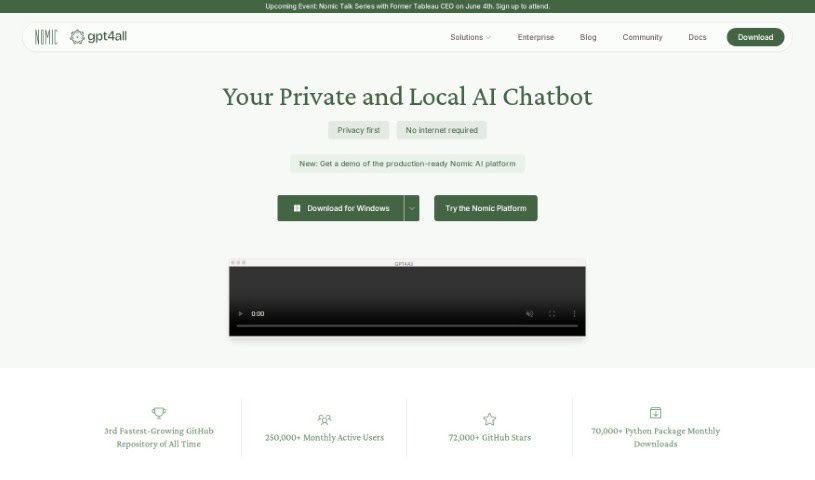
Screenshot of Gpt4All

Gpt4All

Freemium

GPT4All is an open-source AI tool developed by Nomic AI that runs locally on your computer. It works on standard CPUs — no internet connection or dedicated graphics card required. It provides text understanding, document summarization, writing assistance, coding advice, and a chat feature that works across most devices. You can also create your own custom language models while keeping your data local. Nomic AI built it as a privacy-focused tool, and an active open-source community supports it with a focus on quality, security, and customization.

Large Language Models View Tool →
Screenshot of GradientJ

GradientJ

Freemium

GradientJ is an AI toolkit for building and managing Natural Language Processing (NLP) applications, particularly those built on Large Language Models (LLMs) like GPT-4. It covers the full lifecycle: developing and integrating LLMs, fine-tuning, testing performance, deploying, and managing applications over time.

Large Language Models View Tool →
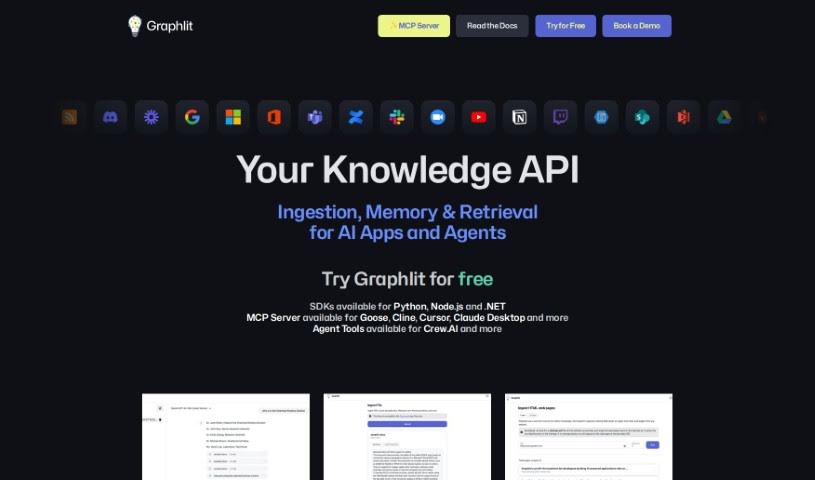
Screenshot of Graphlit

Graphlit

Freemium

Graphlit is an API-first platform for developers building AI-powered applications that work with unstructured data. It provides cloud infrastructure and automates backend data workflows: ingestion, knowledge extraction, semantic search, and integration with other systems via webhooks.

Large Language Models View Tool →
Screenshot of H2Ogpt

H2Ogpt

Freemium

H2Ogpt is a text generation tool built around GPT models, available at [gpt.h2o.ai](https://gpt.h2o.ai/). It lets users work with large language models to produce responses, summaries, and completions based on text input.

Large Language Models View Tool →
Screenshot of HoneyHive

HoneyHive

Freemium

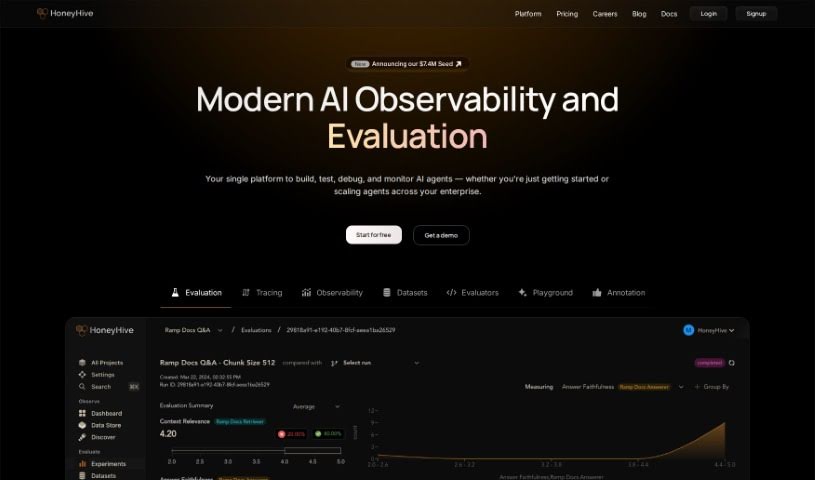
HoneyHive is an AI developer platform that helps teams securely deploy and improve LLMs in production. It works with any model, framework, or environment, and includes tools for monitoring and evaluating LLM agents to ensure performance and quality. Features include offline model evaluation, monitoring, collaborative prompt engineering, debugging, evaluation metric tracking, and model version management.

Large Language Models View Tool →
Screenshot of Inferkit Ai

Inferkit Ai

Freemium

Inferkit AI is a "Cheaper & Faster" LLM router — a platform that helps developers integrate advanced AI capabilities into their products affordably. It offers APIs compatible with major models, including those from OpenAI, acting as a bridge between your application and large language models. The goal is to improve the reliability of AI-powered apps while keeping development costs down.

Large Language Models View Tool →
Screenshot of Jailbreak AI Chat

Jailbreak AI Chat

Freemium

Jailbreak AI Chat is a community-driven platform for sharing and exploring creative prompts designed to reveal unique insights, capabilities, and quirks in Large Language Models (LLMs). "Jailbreaking" here means crafting prompts that bring out responses you might not see from standard interactions with models like ChatGPT 4.0 and ChatGPT 3.5. The platform serves as a global hub where people contribute innovative prompts and connect with others curious about what LLMs can do.

Large Language Models View Tool →
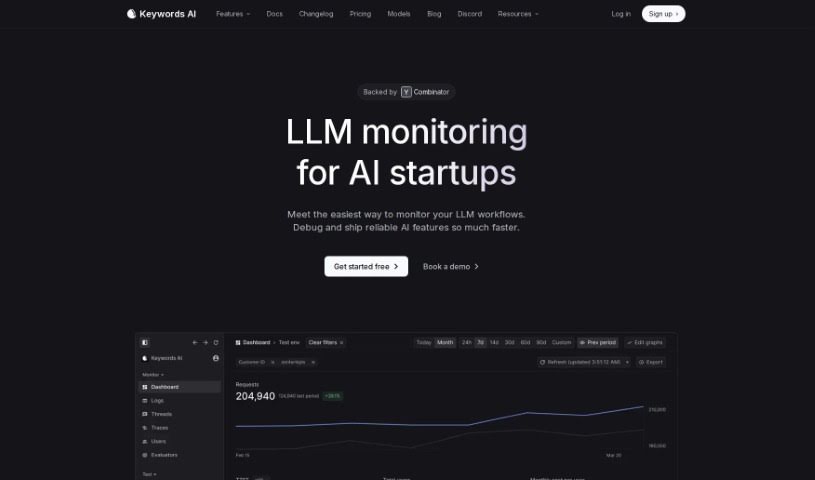
Screenshot of Keywords AI

Keywords AI

Freemium

Keywords AI is a DevOps platform for developers building applications with large language models (LLMs). It is designed to get LLM applications production-ready with as little as two lines of code, speeding up deployment and providing monitoring for AI applications once they are live.

Large Language Models View Tool →
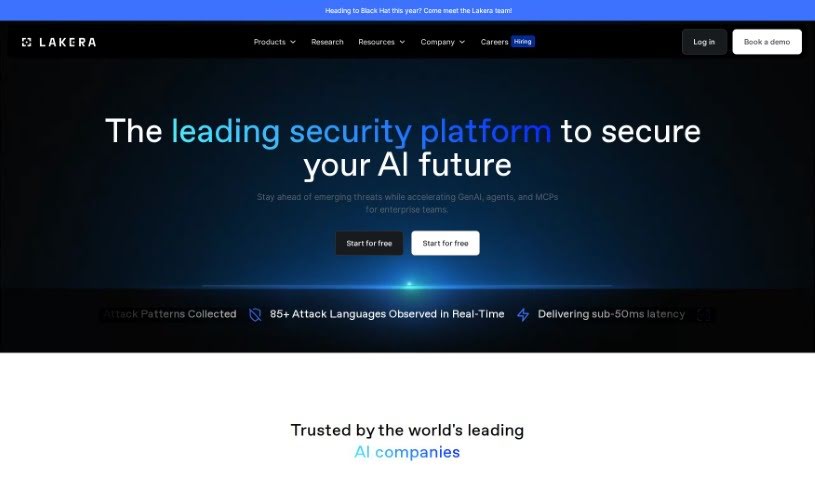
Screenshot of Lakera AI

Lakera AI

Freemium

Lakera AI is a security platform for applications powered by Large Language Models (LLMs). It protects against prompt injection attacks, hallucinations, data leakage, and toxic language.

Large Language Models View Tool →
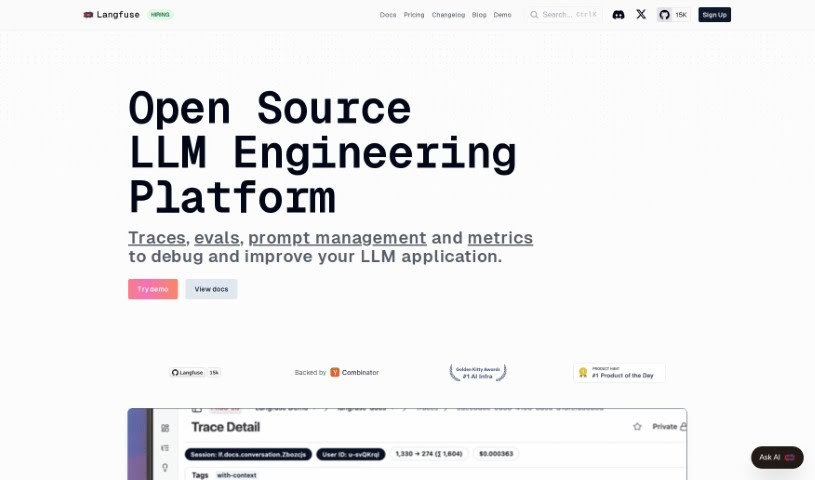
Screenshot of Langfuse

Langfuse

Freemium

Langfuse is an open-source platform built for LLM Engineering. It provides observability, metrics tracking, evaluations, prompt management, and a playground for debugging and improving LLM applications. It works with any model or framework, supports complex nested applications, and offers open APIs for building custom tools on top of it.

Large Language Models View Tool →
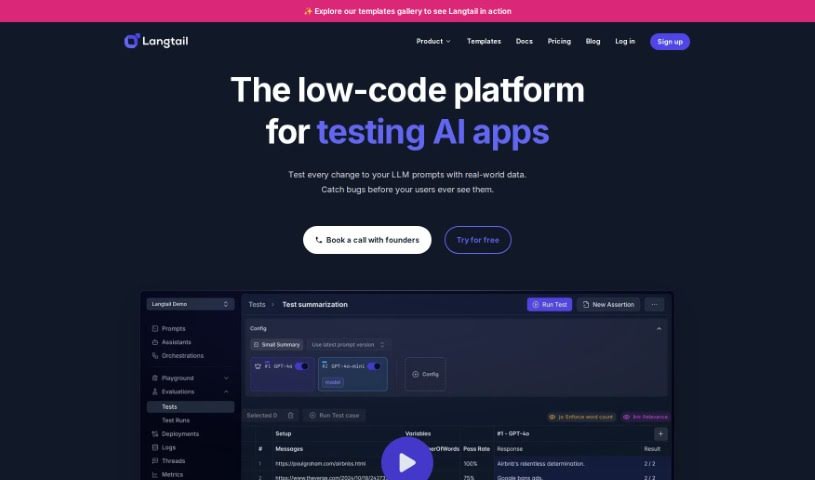
Screenshot of Langtail

Langtail

Freemium

Langtail is a platform for developing and deploying LLM-powered applications. It combines prompt engineering, testing, monitoring, and deployment in one toolkit, with collaborative workflows built in for teams.

Large Language Models View Tool →
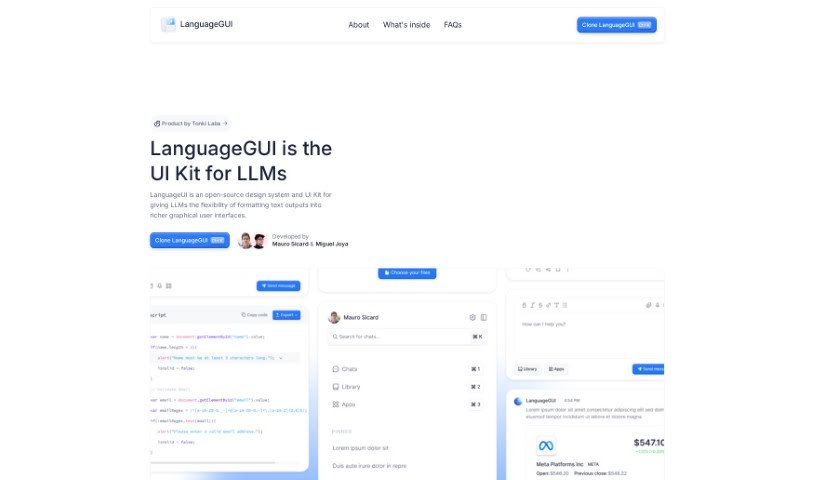
Screenshot of LanguageGUI

LanguageGUI

Freemium

LanguageGUI is an open-source UI kit that extends what large language models (LLMs) can do by adding graphical user interfaces to their text outputs. It makes AI conversations more visual and interactive, and includes over 100 UI components, widgets, and ready-made screens for chat bubbles, sidebars, multi-prompt workflows, and other conversational interfaces. Released under the MIT License, it is free to use for both personal and commercial projects, giving developers a solid starting point for building AI applications.

Large Language Models View Tool →

About Large Language Models tools

Building an application with a large language model can feel equal parts exciting and overwhelming. Whether you’re trying to pick the right base model, connect private company documents to a chatbot, or figure out why your prompts fail in production, the technical landscape moves fast. (It’s easy to waste days tweaking system prompts and wrestling with vector databases.) Setting up custom workflows often turns a simple software idea into a complex infrastructure project.

The developer platforms and orchestration frameworks in this directory serve as specialized building blocks and testing environments. They help you connect data, monitor model behavior, and deploy reliable features without building everything from scratch.

Data Orchestration, Testing, and Inference

Connecting foundational models to your proprietary business data requires more than a standard API request. When you need a chatbot to read internal company files or search product catalogs, Retrieval-Augmented Generation (RAG) tools handle the heavy lifting. They split documents into searchable chunks, store them in vector databases, and pull relevant facts into the prompt automatically so the model gives accurate answers.

Evaluating model performance and tracking prompt quality becomes far easier, too. When you update a system prompt or switch model providers, figuring out whether your changes actually improved response quality takes systematic testing. LLM evaluation and tracing tools log user interactions, flag incorrect responses, and benchmark output quality across different versions before you launch changes to production.

Managing local inference and model hosting saves computing costs while keeping sensitive data private. Running every user request through cloud APIs gets expensive fast as your user base grows. Modern serving engines and local runtime tools let you host open-weight models on your own servers, giving you complete control over data privacy and system latency.

Key Capabilities to Look For:

  • Vector database and RAG integration: Frameworks that connect foundational models to custom documentation, internal databases, and external APIs.
  • Prompt evaluation and testing platforms: Tools that let you test prompt variations, benchmark accuracy, and track model responses in real time.
  • Local inference and model serving: Applications that allow you to host open-weight models on private servers to reduce API costs and protect privacy.
  • Observability and session tracing: Systems that log latency, track token costs, and pinpoint errors across complex, multi-step agent workflows.
  • Dataset curation and fine-tuning: Software that helps clean training data, gather user feedback, and fine-tune smaller models for specialized tasks.

Building reliable LLM applications will always depend on solid software engineering, thoughtful UX design, and careful human oversight. Frameworks can route prompts, store document vectors, and track token costs, but choosing what problems are worth solving rests with your team. Letting smart developer tools handle orchestration and model monitoring simply frees you up to build great user experiences.

Explore the LLM frameworks below to find the right fit for your tech stack.

The Best AI Large Language Models

  1. Ollama: for building custom chatbots
  2. OpenAI Chat Playground: for creating personalized chatbot responses.
  3. LM Studio: for trying out LLMs locally
  4. Sapling: for better customer interactions through automation
  5. Chatx: for advanced text generation prompts.
  6. Snowflake: for customer support analytics powered by LLMs
  7. Llama Index: for custom chatbots that can retrieve knowledge
  8. AlphaSense: for automating market analysis with AI
  9. Tavily: for researching new developments in AI linguistics
  10. Addy AI: Fine-tunes large language models on your own private data.
  11. Langfuse: for making LLM responses more accurate
  12. AnythingLLM: for chatbots used in customer support
  13. LiveKit: for AI-powered voice interfaces for LLMs
  14. Vellum AI: for prompt engineering for complex questions
  15. Gpt4All: for chatting with your local files for insights
New tools, in your inbox.

Weekly picks of the best AI tools we've researched and added — no spam, unsubscribe anytime.

Join 25,000+ AI enthusiasts. No spam, unsubscribe anytime.