Top Large Language Models: What They Are & How to Choose

AI Tools for Large Language Models

Discover the best Large Language Models AI tools to enhance your productivity and creativity.

Page 6 of 7 • 75 total tools
Screenshot of SingleAPI

SingleAPI

Freemium

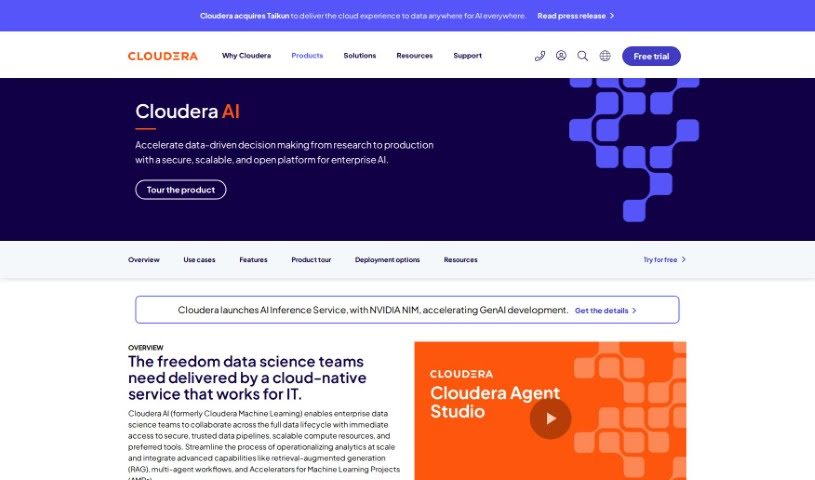
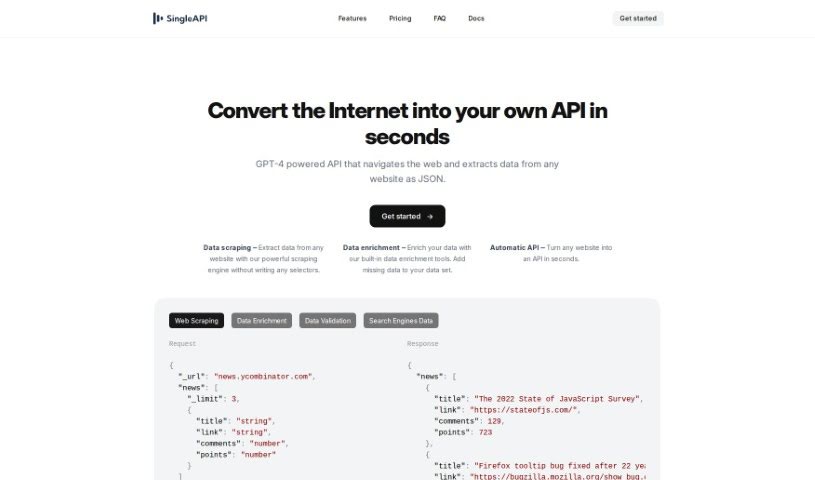
SingleAPI uses GPT-4 to turn any website into an API in seconds. It navigates websites, extracts content, and formats the results as JSON. Core capabilities include data scraping, data enrichment, and automatic API generation — no code or selectors required.

Large Language Models View Tool →
Screenshot of Snowflake

Snowflake

Freemium

Snowflake Cortex is Snowflake's offering for LLM-powered analysis and app development. It enables users to integrate large language models into data analysis tasks, develop LLM-based applications, and embed LLMs into existing workflows without specialized AI or cloud infrastructure knowledge. The platform focuses on fast, easy, and secure LLM app development, making LLM capabilities accessible for a broader audience.

Large Language Models View Tool →
Screenshot of Stack AI

Stack AI

Freemium

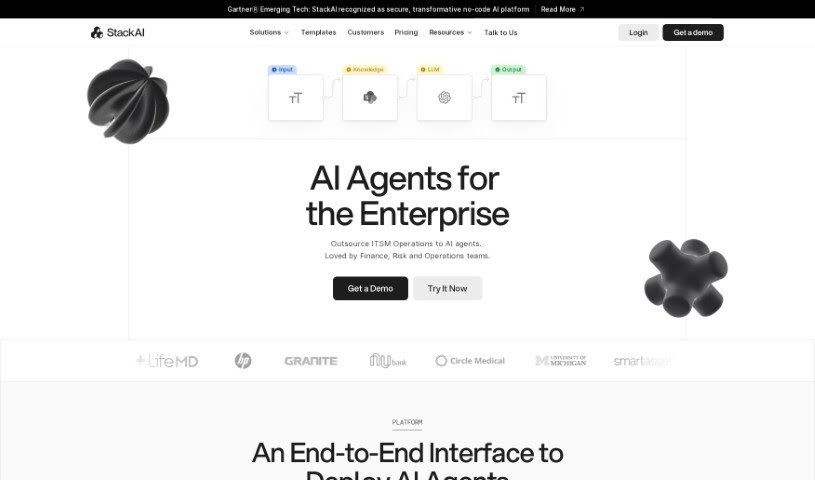
Stack AI is a no-code platform for building custom AI applications powered by Large Language Models. Teams can use it to create and deploy their own AI tools — similar to building a custom version of ChatGPT — directly into their products or services.

Large Language Models View Tool →
Screenshot of Stochastic AI

Stochastic AI

Freemium

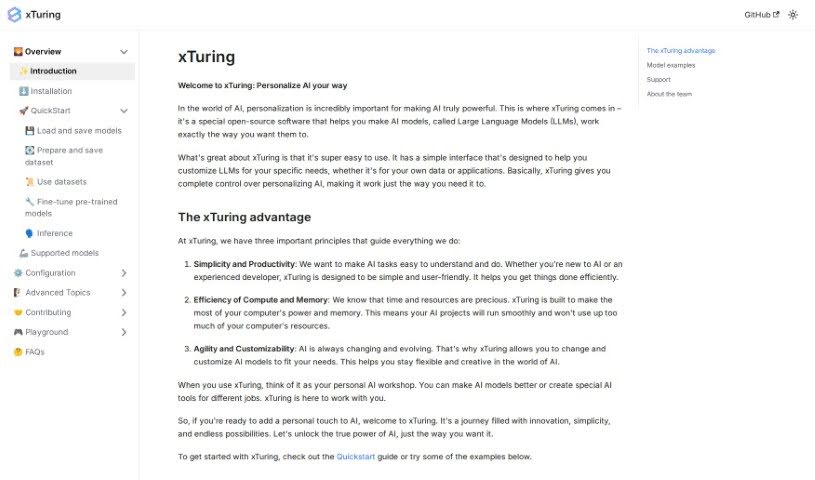
Stochastic AI is an open-source library called XTURING — a toolkit for building and managing personalized Large Language Models (LLMs). XTURING simplifies fine-tuning LLMs on your own data using algorithms optimized for hardware efficiency. You can create LLMs with your personal information in as few as three lines of code. The core goal is to reduce the complexity of setting up and running personalized AI systems, with features for training models locally, deploying them to the cloud, and monitoring them in real time.

Large Language Models View Tool →
Screenshot of Stochastic AI Xturing

Stochastic AI Xturing

Freemium

Xturing is an open-source library from Stochastic that simplifies building and fine-tuning large language models. It provides a straightforward way to customize LLMs and create datasets from your own data, supporting models such as LLaMA, GPT-J, GPT-2, OPT, Cerebras-GPT, Galactica, and Bloom. The library is approachable for newcomers while offering the flexibility experienced developers need.

Large Language Models View Tool →
Screenshot of Takomoai

Takomoai

Freemium

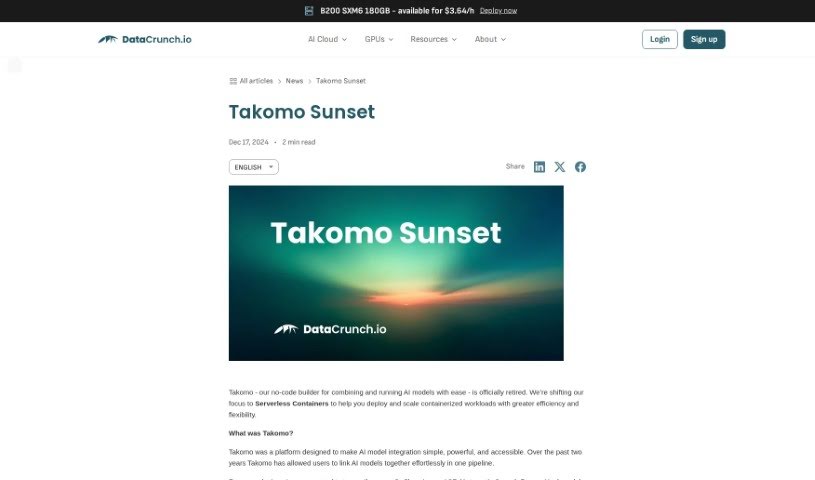
Takomoai is a no-code platform for connecting and running AI models through a drag-and-drop builder. Link AI components into visual workflows, start from ready-made templates, or build with pre-trained models. Uploading your own model weights is planned but not yet available.

Large Language Models View Tool →
Screenshot of Tavily

Tavily

Freemium

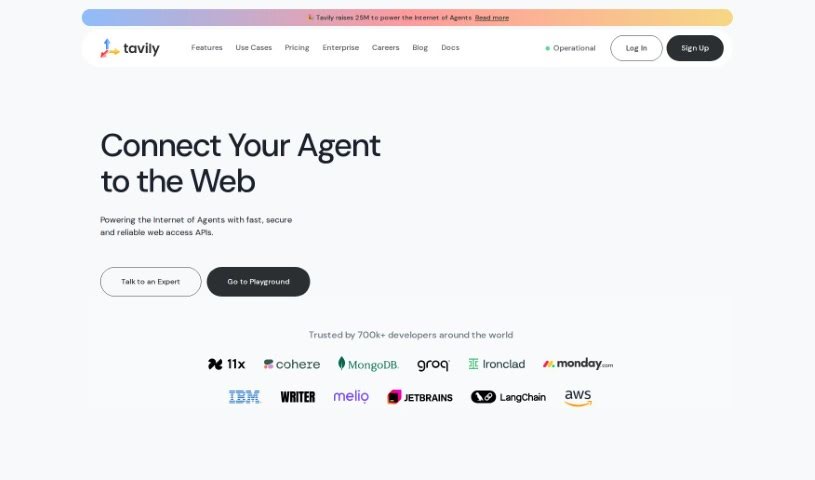
Tavily is a research platform built to make search results accurate and reliable. Its algorithms gather information from a wide range of sources, and experts review the data before it is delivered. The platform handles everything from simple questions to complex academic topics. You can prioritize which sources matter most, give feedback on results, explore findings, and share them with your team directly on the platform. Every piece of information includes a citation, and by automating search, data collection, analysis, and delivery, Tavily uses AI to speed up research.

Large Language Models View Tool →
Screenshot of Ultraai

Ultraai

Freemium

Ultra AI is a central hub for managing LLM operations. Its core features include:

Large Language Models View Tool →
Screenshot of UpTrain

UpTrain

Freemium

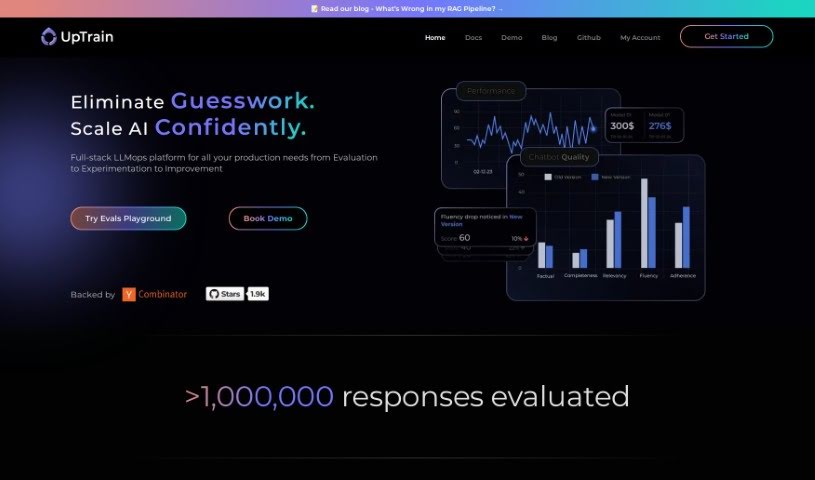
UpTrain is an open-source platform for LLMOps — the management of large language model (LLM) applications. It provides enterprise-level features for building, testing, and improving LLM applications, including model evaluations, systematic experimentation, automated regression checks, root cause analysis for errors, dataset enrichment, and a flexible evaluation framework.

Large Language Models View Tool →
Screenshot of Vellum AI

Vellum AI

Freemium

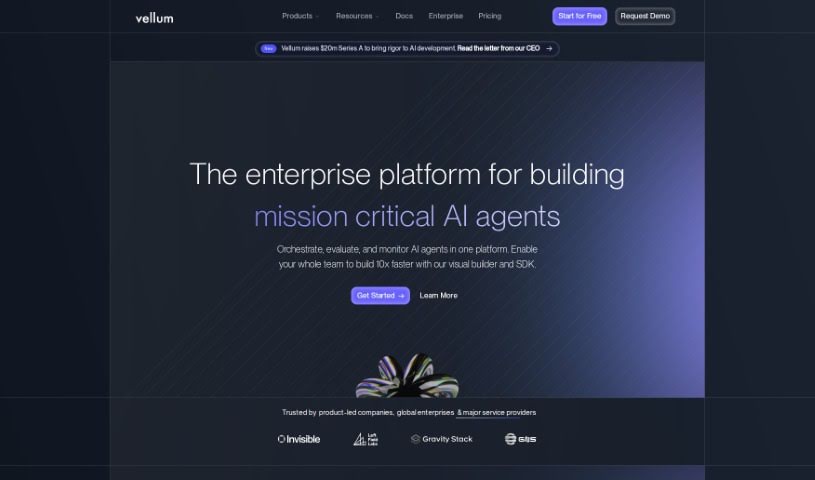
Vellum AI is a development platform for creating Large Language Model (LLM) applications. It covers prompt engineering, semantic search, version control, testing, monitoring, and collaboration. You can compare and test prompts and models, connect your own data to improve accuracy, and deploy, version, and monitor changes to your LLMs. It also includes a no-code builder, workflow automation, and AI features such as chatbots and sentiment analysis. Users cite its ease of use, fast deployment, monitoring tools, and collaboration features as strengths.

Large Language Models View Tool →
Screenshot of Verifai

Verifai

Freemium

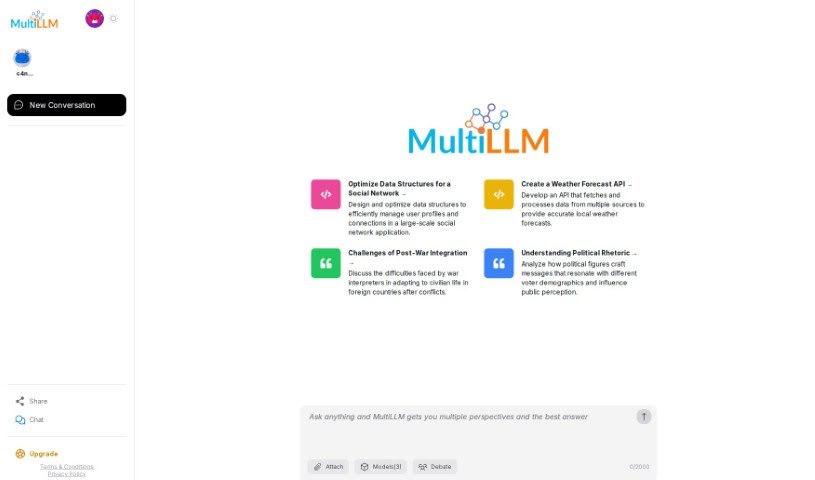
VerifAI's MultiLLM is an open-source Python framework that runs multiple language models (LLMs) in parallel, compares their outputs, and ranks the results to identify the most accurate answers. It is built primarily for comparing code generated by popular LLMs such as GPT3, GPT5, and Google-Bard. You can add new LLMs and customize how outputs are ranked. Cross-checking results across models reduces the risk of relying on incorrect information from a single LLM. The framework is available on GitHub.

Large Language Models View Tool →
Screenshot of Vertaai

Vertaai

Freemium

Verta AI is a platform for developing, deploying, and managing machine learning models. Built for data scientists and machine learning engineers, it provides a central place to manage and version models, with experiment tracking, model versioning, team collaboration, and integrations with popular machine learning frameworks. Detailed metrics let teams monitor and analyze model performance in real time, keeping a clear history of their work from training through production.

Large Language Models View Tool →

About Large Language Models tools

Building an application with a large language model can feel equal parts exciting and overwhelming. Whether you’re trying to pick the right base model, connect private company documents to a chatbot, or figure out why your prompts fail in production, the technical landscape moves fast. (It’s easy to waste days tweaking system prompts and wrestling with vector databases.) Setting up custom workflows often turns a simple software idea into a complex infrastructure project.

The developer platforms and orchestration frameworks in this directory serve as specialized building blocks and testing environments. They help you connect data, monitor model behavior, and deploy reliable features without building everything from scratch.

Data Orchestration, Testing, and Inference

Connecting foundational models to your proprietary business data requires more than a standard API request. When you need a chatbot to read internal company files or search product catalogs, Retrieval-Augmented Generation (RAG) tools handle the heavy lifting. They split documents into searchable chunks, store them in vector databases, and pull relevant facts into the prompt automatically so the model gives accurate answers.

Evaluating model performance and tracking prompt quality becomes far easier, too. When you update a system prompt or switch model providers, figuring out whether your changes actually improved response quality takes systematic testing. LLM evaluation and tracing tools log user interactions, flag incorrect responses, and benchmark output quality across different versions before you launch changes to production.

Managing local inference and model hosting saves computing costs while keeping sensitive data private. Running every user request through cloud APIs gets expensive fast as your user base grows. Modern serving engines and local runtime tools let you host open-weight models on your own servers, giving you complete control over data privacy and system latency.

Key Capabilities to Look For:

  • Vector database and RAG integration: Frameworks that connect foundational models to custom documentation, internal databases, and external APIs.
  • Prompt evaluation and testing platforms: Tools that let you test prompt variations, benchmark accuracy, and track model responses in real time.
  • Local inference and model serving: Applications that allow you to host open-weight models on private servers to reduce API costs and protect privacy.
  • Observability and session tracing: Systems that log latency, track token costs, and pinpoint errors across complex, multi-step agent workflows.
  • Dataset curation and fine-tuning: Software that helps clean training data, gather user feedback, and fine-tune smaller models for specialized tasks.

Building reliable LLM applications will always depend on solid software engineering, thoughtful UX design, and careful human oversight. Frameworks can route prompts, store document vectors, and track token costs, but choosing what problems are worth solving rests with your team. Letting smart developer tools handle orchestration and model monitoring simply frees you up to build great user experiences.

Explore the LLM frameworks below to find the right fit for your tech stack.

The Best AI Large Language Models

  1. Ollama: for building custom chatbots
  2. OpenAI Chat Playground: for creating personalized chatbot responses.
  3. LM Studio: for trying out LLMs locally
  4. Sapling: for better customer interactions through automation
  5. Chatx: for advanced text generation prompts.
  6. Snowflake: for customer support analytics powered by LLMs
  7. Llama Index: for custom chatbots that can retrieve knowledge
  8. AlphaSense: for automating market analysis with AI
  9. Tavily: for researching new developments in AI linguistics
  10. Addy AI: Fine-tunes large language models on your own private data.
  11. Langfuse: for making LLM responses more accurate
  12. AnythingLLM: for chatbots used in customer support
  13. LiveKit: for AI-powered voice interfaces for LLMs
  14. Vellum AI: for prompt engineering for complex questions
  15. Gpt4All: for chatting with your local files for insights
New tools, in your inbox.

Weekly picks of the best AI tools we've researched and added — no spam, unsubscribe anytime.

Join 25,000+ AI enthusiasts. No spam, unsubscribe anytime.