Turning a software idea into a functional application used to demand two things: deep coding skills or a heavy development budget. If you couldn’t write code, you had to hire a full engineering team or spend months learning programming syntax. Because of that barrier, countless practical ideas never made it past early sketches.
AI app builders clear those technical roadblocks. While software development still requires clear product logic, these platforms handle the mechanical coding and layout work so you can focus on building something people actually want to use.
From Plain English to Functional Software
Instead of staring at an empty code editor, modern AI app builders let you describe your project in plain text. Type a request like “build an inventory tracking dashboard for a local bakery,” and the system generates a working prototype in minutes. It structures screen layouts, sets up data tables, and creates interactive buttons automatically.
Behind the scenes, these tools handle complex backend tasks that usually trip up non-technical creators. They configure databases, set up user authentication, and manage security permissions without requiring server setup. Need your app to process payment forms or pull live weather data? AI assistants connect those external services automatically.
Refining your product is equally straightforward. Need to move a button or add a custom form field? Tell the assistant what to tweak, and it edits the underlying code instantly. For developers who want full technical control, many of these platforms let you export clean source code or edit files directly inside your repository.
Core Capabilities to Consider:
- Prompt-driven generation: Tools that create working web or mobile interfaces directly from text descriptions.
- Automated backend setup: Systems that build data structures, user logins, and logic flows behind the scenes.
- Visual customization: Drag-and-drop controls that let you tweak layouts, colors, and fonts manually after generation.
- Code export options: Features that let you download source code or sync directly with external repositories like GitHub.
- Cross-platform deployment: Platforms capable of publishing web apps or packaging projects for iOS and Android app stores.
The distance between an idea and a working product is shorter than ever. While building software still requires thoughtful planning and user testing, getting stuck on syntax and server configuration is officially optional.
Explore the options below to build your next application.
The Best AI App Builders
- Lovable: Great for improving user onboarding experiences.
- Replit AI: Offers code suggestions to speed up app development.
- Supabase: Helps with real-time app data synchronization.
- Bubble: Ideal for quickly prototyping web applications.
- Weights & Biases: Streamlines integrating models into apps.
- LangChain: Simplifies testing for LLM applications.
- FlutterFlow: Perfect for rapid mobile app prototyping.
- Appifytext: Builds custom business applications from plain-English descriptions.
- Dify: Provides customizable AI chat support for apps.
- Writer: Helps you quickly develop customized AI applications.
- Softr: For no-code app development with custom layouts.
- Appy Pie: Lets you build apps without needing to code.
- Glif: Streamlines app UI design processes.
- Coze: Lets you craft intelligent chatbots for apps.
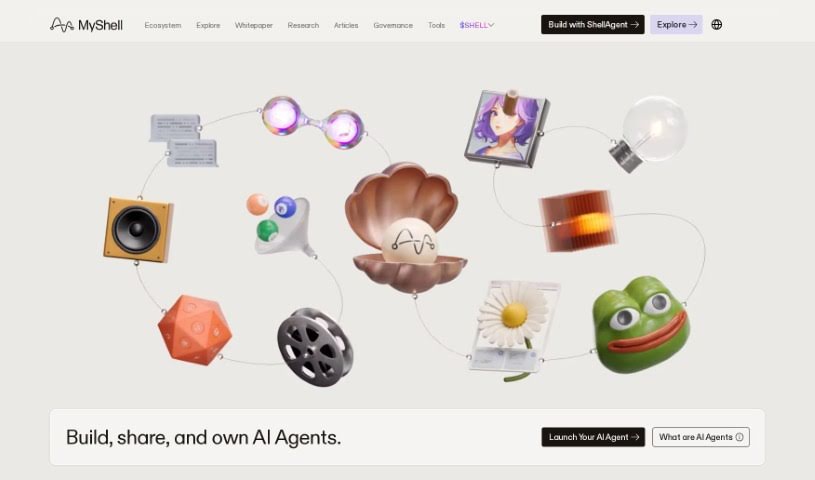
- MyShell AI: Simplifies app creation using AI tools.