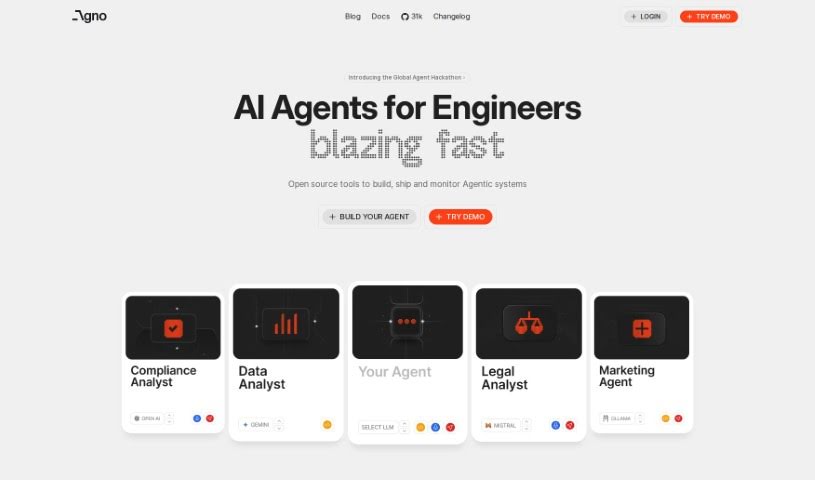
Discover what Phidata is and learn how to use it effectively in 2025. We'll explore its features, compare it to other App Builders, and guide you through its capabilities.

Phidata is an open-source tool built to help you construct, deploy, and keep an eye on your AI applications. It is a way to make building AI stuff much smoother. It comes with ready-made templates, lets you run things locally using Docker, and makes deploying to AWS a breeze. Plus, Phidata helps you continuously check your AI apps for quality and performance. It also supports deploying applications as a Function as a Service (FaaS), which is great for scaling, and generally aims to make workflows better for both individual developers and teams.
What’s really neat is that Phidata offers pre-built templates for all sorts of applications. Whether you’re building an AI app, an AI API, a Django app, a Streamlit app, or even a template for junior data engineers, Phidata has you covered. These templates are already set up with everything you need, so you can get your AI applications up and running super fast.
Beyond just building, Phidata is also fantastic for keeping tabs on how your AI applications are performing. It helps you monitor their quality and performance consistently. This means your AI apps will run smoothly and reliably, which is key to keeping users happy and engaged.
Phidata, this handy open-source tool for AI applications, was actually created to really speed up the whole process of developing AI products. It does this by offering pre-built templates for popular frameworks like FastApi, Django, and Streamlit. It officially launched on February 11, 2024, with the goal of helping developers and their teams build and deploy AI applications much more quickly. Phidata puts a strong emphasis on providing advanced monitoring for both the quality and performance of these applications. It supports running things locally as well as deploying to AWS, and it also enables Function as a Service (FaaS) deployment, which is a big plus for scalability. Ultimately, the tool is designed to boost user satisfaction and retention by making sure AI applications perform at their best.
If you want to use Phidata to build your AI applications, here’s a simple breakdown of the steps:
phi ws create.phi ws up to make sure everything is working just the way you expect.phi ws up prd:aws.Phidata offers these great pre-built templates for all sorts of applications, like general AI Apps and Django Apps, and it works smoothly with FastApi, Django, and Streamlit. You can pick the template that fits your needs, clone it, and then dive right into building your AI application. Phidata makes sure all the components are ready for production, so you won’t have to spend extra time tweaking things before you deploy.
What’s more, Phidata really helps you keep an eye on the quality and performance of your AI applications, allowing you to fine-tune them continuously. It also makes it easy to run things locally with Docker and offers a straightforward way to deploy to AWS. The tool encourages efficient scaling by supporting Function as a Service (FaaS) deployment, and they offer dedicated support to help you through any challenges you might run into during development.
If you’re looking for more details, you can always check out Phidata’s official documentation on their website. Exploring their templates and resources is a great way to really streamline your AI application development process.
Discover more tools in similar categories that might interest you
Get weekly updates on the latest AI tools, trends, and insights delivered to your inbox
Join 25,000+ AI enthusiasts. No spam, unsubscribe anytime.