Practicing medicine has increasingly turned into a full-time job of data entry. Between updating electronic health records (EHRs), typing detailed SOAP notes after every visit, drafting referral letters, and wrestling with insurance paperwork, physicians spend hours chained to a screen. This administrative burden regularly follows doctors home, leading to late-night charting and relentless burnout.
The clinical assistants in this category don’t replace medical judgment, diagnostic reasoning, or the physician-patient relationship. Instead, they automate routine charting, simplify reference searches, and free up time to focus on patient care.
Lightening the Administrative Load
Ambient clinical scribes are one of the biggest time-saving breakthroughs for modern practices. With patient consent, these secure tools listen to clinical visits in real time and automatically draft structured SOAP notes. Instead of typing into a computer while a patient speaks, you can maintain full eye contact. Once the visit wraps up, you simply review, edit, and approve the generated draft before it syncs to your EHR.
Keeping up with medical literature and complex treatment guidelines gets much faster, too. AI decision-support software scans vast databases of peer-reviewed journals, clinical trials, and drug interaction records in seconds. Whether you need an evidence-based reference for a rare condition or an automated check on potential contraindications, these assistants bring relevant data straight to the point of care.
Managing patient follow-ups and paperwork becomes far simpler as well. AI tools help draft personalized discharge instructions, translate complex medical terminology into clear language for patients, and generate detailed specialist referrals—keeping your clinic running smoothly without extending your workday.
Capabilities Worth Considering:
- HIPAA and privacy compliance: Strong security protocols, including Business Associate Agreements (BAAs) and encrypted data handling, to protect patient data.
- Ambient audio capture: Speech recognition that filters background noise, parses complex medical terminology, and distinguishes multiple speakers.
- EHR system integration: Direct sync capabilities with major health record platforms to eliminate manual copy-pasting.
- Specialty-specific templates: Custom note formats tailored for primary care, pediatrics, cardiology, dermatology, and other fields.
- Physician review safeguards: Intuitive editing interfaces ensuring the clinician maintains final control and approval over every chart entry.
Technology will never replace clinical intuition, physical exams, or genuine empathy. But clearing away administrative friction allows you to practice medicine the way you originally intended.
Browse the clinical tools below to find the right assistant for your practice.
- Skinive: Helps dermatologists diagnose skin conditions.
- Tempus: Supports doctors in making treatment decisions based on data.
- Therapy: A system for tracking patient progress.
- Upheal: Offers AI-guided insights for diagnosis.
- Athelas: Automates clinical documentation for doctors.
- Nabla Copilot: Streamlines clinical documentation for doctors.
- Anatolink: Interactive 3D software with generative AI for injury guidance.
- Glass Health: Enhances tools for medical decision-making.
- Powerful Medical: Offers instant ECG diagnostics for quick assessments.
- Suki AI: Simplifies how doctors enter patient notes.
- Sunoh.ai: Provides tools for streamlined clinical documentation.
- Hippocratic AI: Offers smart diagnosis support for physicians.
- Qventus: Helps optimize patient flow for various tasks.
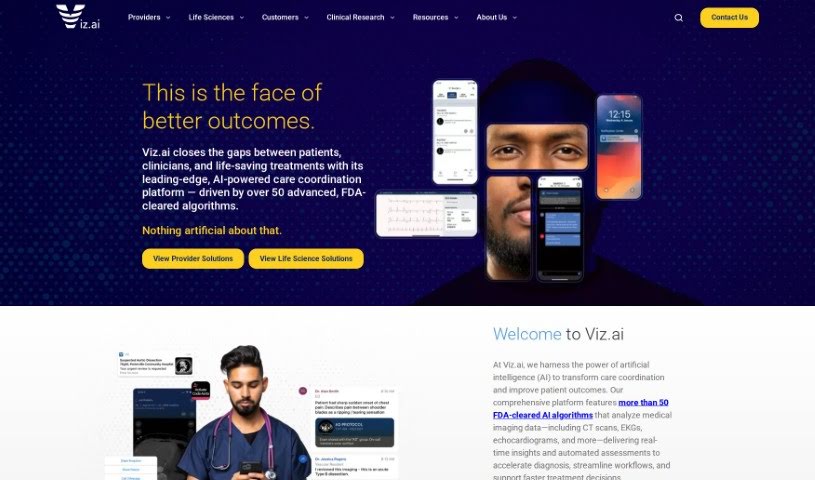
- Viz.ai: Sends real-time alerts for patient conditions.
- Astra Health AI: Drafts clinical notes from consultations and patient-friendly summaries.