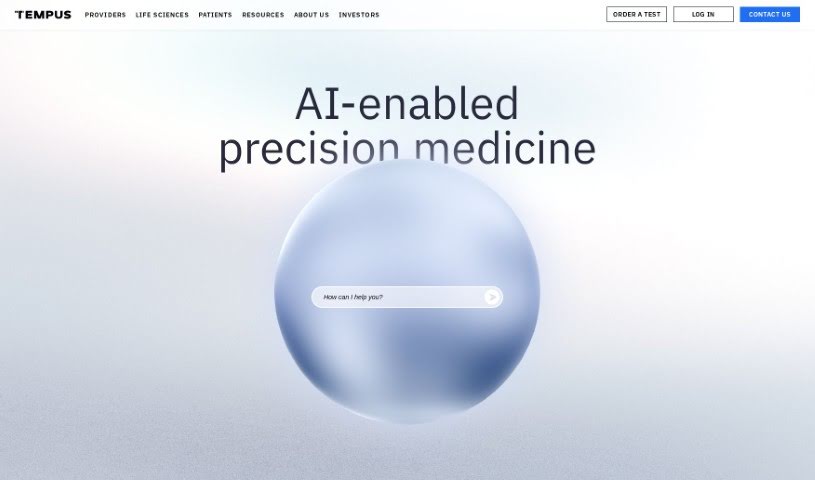
Screenshot of Tempus

Tempus

Discover what Tempus is and how to use it effectively in 2025. We'll explore its features and compare it to other doctor's tools.

Screenshot

What is Tempus?

Tempus is a tool that uses AI to bring precision medicine to healthcare. It is a smart system that gathers and analyzes a huge amount of clinical and molecular data, starting with cancer research. By using artificial intelligence, Tempus helps speed up the process of finding new ways to treat diseases, predict how well treatments might work, find the right clinical trials for patients, help diagnose diseases earlier, and even suggest personalized treatment plans. It’s designed to help doctors make better treatment decisions with data-backed insights, assist life science companies in developing new drugs more efficiently, and help patients find therapies tailored just for them.

Who created Tempus?

Eric Lefkofsky founded Tempus. The company officially launched on June 15, 2021, with a clear goal: to help doctors personalize patient care by collecting and analyzing massive amounts of data. As an AI-powered precision medicine tool, Tempus initially focused on cancer. It uses data and AI to speed up the discovery of new treatment targets, predict how effective treatments might be, match patients with suitable clinical trials, help diagnose diseases in their early stages, and ultimately improve patient results. The platform is a valuable resource for many in healthcare, including doctors, life science companies, and patients.

What is Tempus used for?

Tempus helps in several key areas:

  • Speeding up research: It accelerates the discovery of new treatment targets by using extensive clinical and molecular datasets.
  • Predicting treatment success: It analyzes patient data and uses machine learning to predict how effective treatments will be.
  • Finding clinical trials: It helps identify potentially life-saving clinical trials by matching patients to trials that fit their specific medical needs.
  • Early diagnosis: It aids in the early detection of various diseases by analyzing clinical and molecular data.
  • Informing doctors: It helps providers make better treatment decisions by providing data-driven insights.
  • Improving drug development: It helps life science companies make their drug development processes more efficient.
  • Personalized treatments: It allows patients to explore therapy options that are tailored specifically to them.
  • Precision medicine: It offers a complete AI platform for precision medicine.
  • Advancing healthcare: It drives progress in healthcare through data analytics and machine learning.
  • Access to research: It increases patient access to new treatments and research studies by matching them with suitable clinical trials.
  • EHR Integration: It can be integrated with Electronic Health Records.
  • Discovery of novel targets: It helps find new targets for treatments more quickly.
  • Predicting treatment effectiveness: It forecasts how well treatments might work.
  • Clinical trial matching: It connects patients with appropriate clinical trials.
  • Early disease diagnosis: It assists in diagnosing diseases early on.
  • Informing provider decisions: It helps doctors make better choices about treatments.
  • Improving drug development: It supports life science companies in their drug development efforts.
  • Powering precision medicine: It drives advancements in precision medicine.
  • Driving healthcare advancements: It pushes healthcare forward.
  • Algorithmic Tests: It offers tests based on algorithms.
  • Clinical Trial Matching: It specifically matches patients to trials.
  • Digital Pathology: It provides digital pathology services.
  • Financial Assistance: It can offer financial assistance.
  • Tempus One: A specific product or service.
  • Tempus+: Another specific product or service.
  • Care Pathway Solution: A solution for managing care pathways.
  • Tempus Hub: A central platform or resource.
  • Neurology & Psychiatry: Focuses on these medical fields.
  • Accelerating novel targets: It speeds up finding new targets using vast clinical and molecular data.
  • Predicting treatment effectiveness: It forecasts treatment success by analyzing patient data and using machine learning.
  • Identifying clinical trials: It finds potentially life-saving trials by matching patients to those that align with their medical conditions and needs.
  • Early disease diagnosis: It helps diagnose multiple diseases early by analyzing clinical and molecular data.
  • Informing treatment decisions: It helps providers make better decisions based on data-driven insights.
  • Improving drug development: It assists life science companies in improving their drug development processes.
  • Exploring personalized therapies: It enables patients to look into personalized treatment options.
  • Next-gen diagnostics: It brings advanced algorithmic diagnostics to immuno-oncology.
  • Atrial fibrillation detection: It uses AI to identify patients at higher risk of atrial fibrillation/flutter.
  • MRD testing: It helps detect residual disease or early cancer recurrence and monitor immunotherapy response with its MRD testing portfolio.

Who is Tempus for?

Tempus is a valuable tool for a wide range of professionals and groups in the healthcare sector:

  • Sales and medical affairs teams
  • Software engineering and technology professionals
  • Laboratory sciences staff
  • Healthcare providers
  • Life science companies
  • Patients
  • The broader Life Sciences industry
  • Oncologists
  • Neurologists
  • Psychiatrists
  • Cardiologists
  • Dermatologists
  • Radiologists
  • Researchers at academic and research centers

How to use Tempus?

To get the most out of Tempus, here’s a simple guide:

  1. Explore Tempus’s Features: Take some time to learn what Tempus can do. This includes things like speeding up the discovery of new treatment targets, predicting how well treatments might work, finding the right clinical trials, and helping with early disease diagnosis.
  2. Access the Platform: Use Tempus as your AI clinical assistant. It helps you bridge any gaps in care, access different types of data, and use smart algorithms for deeper insights.
  3. Engage as a Stakeholder:
    • For Providers: Make well-informed treatment decisions using data-driven insights.
    • For Life Science Companies: Improve your drug development processes with Tempus’s capabilities.
    • For Patients: Explore personalized therapy options to achieve better health outcomes.
  4. Stay Up-to-Date: Keep informed about new research, webinars, and other resources Tempus publishes. This will help you understand the platform’s capabilities even better.
  5. Get Support from Tempus:
    • Contact Customer Service: If you need help, don’t hesitate to reach out to Tempus’s customer service team.
    • Consider Career Opportunities: If you’re passionate about transforming healthcare, check out Tempus’s job openings.

By following these steps, you can effectively use Tempus to harness the power of data and artificial intelligence in healthcare, leading to better patient outcomes and medical breakthroughs.

Related AI Tools

Discover more tools in similar categories that might interest you

Stay Updated with AI Tools

Get weekly updates on the latest AI tools, trends, and insights delivered to your inbox

Join 25,000+ AI enthusiasts. No spam, unsubscribe anytime.