Remember the feeling of studying a language for months, opening your mouth to speak to a native speaker, and suddenly freezing up? Textbook drills and flashcards build a good foundation, but turning grammar rules into real conversation is where most learners get stuck. Spending hours memorizing verb tables won’t automatically help you order food in Madrid or chat with colleagues in Tokyo.
The language learning tools in this section act as low-pressure speaking partners and instant tutors. They help you practice talking out loud, polish your accent, and unpack complex grammar without any fear of making mistakes.
Building Conversational Confidence
Building speaking confidence is usually the hardest hurdle when picking up a new language. Most people feel nervous trying out new phrases in front of others. Intelligent voice assistants let you practice speaking anytime, anywhere. You can roleplay everyday scenarios like checking into a hotel, asking for directions, or ordering coffee. Because your partner is AI, you can pause, check your notes, or repeat a sentence five times until you get it right.
Getting immediate feedback on mistakes keeps bad habits from taking root. When you study solo, it’s easy to mispronounce a tricky word or misuse a verb tense without realizing it. Modern language assistants analyze your speech in real time, catching subtle pronunciation errors and suggesting clearer phrasing while you talk.
Customizing practice to your specific goals makes study time far more efficient. Standard courses often push you through rigid topics that might not match what you actually need. AI tutors let you simulate situations aligned with your real life, like prepping for a job interview, planning a vacation, or reading industry news. If you hit a confusing grammar rule, you can ask for a simple breakdown in plain English before jumping right back into conversation.
Key Capabilities to Look For:
- Interactive voice conversation: Systems that support open-ended spoken dialogue with real-time audio responses so you can practice listening and speaking naturally.
- Speech and pronunciation analysis: Features that evaluate your accent, pitch, and word stress to offer precise feedback.
- Custom scenario generators: Settings that let you simulate specific real-life situations, like attending a business meeting or ordering at a restaurant.
- Instant grammar breakdowns: Applications that explain complex sentence structures, verb tenses, and idioms on demand.
- Adaptive difficulty scaling: Software that tracks your vocabulary growth and automatically adjusts conversational speed as you improve.
Fluency will always depend on real practice, curiosity, and authentic human connection. Software can help you memorize vocabulary, adjust your accent, and explain grammar rules, but connecting with real people remains the ultimate goal. Handing off daily speaking practice and quick grammar checks simply gives you the confidence to start real conversations.
Check out the language learning tools below to find the right partner for your study routine.
- Duolingo: for a fun, game-like learning experience
- Memrise: for practicing with native speakers
- Talkpal: for daily practice with native speakers.
- Bold Voice: for improving how you pronounce words
- Trancy: for custom learning decks for studying languages
- Clozemaster: for practicing vocabulary using context clues.
- Speak: for immediate feedback during language practice.
- Jumpspeak: for practicing conversations in real-life situations.
- ELSA Speak: for improving English pronunciation skills
- Gliglish: for boosting fluency with interactive practice
- Pronounce: for better pronunciation and grammar learning.
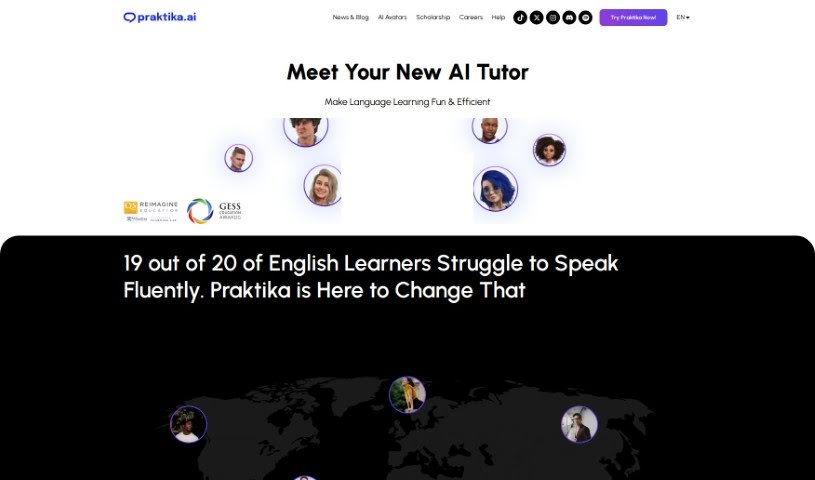
- Praktika: for interactive speaking practice
- Leya AI: for interactive language practice sessions.
- Langotalk: for improving grammar with AI-powered tips
- Get Fluently: for improving English fluency through feedback