As AI writing tools become standard equipment, a practical question pops up every day: who actually wrote this? Whether you’re a teacher reviewing essays, an editor vetting blog submissions, or a hiring manager scanning cover letters, telling human writing apart from machine output is harder than ever.
The tools in this category help you spot those underlying patterns. They aren’t magic bullet detectors, and they aren’t meant to play police officer. Instead, think of them as specialized editorial assistants that help verify authenticity and flag suspicious text before you make a final call.
The Mechanics Behind Content Detection
Most detectors evaluate two main linguistic patterns: vocabulary predictability and sentence rhythm. AI language models select the most statistically probable word that comes next in a sequence. Because of that mathematical design, machine writing follows a steady, uniform rhythm that reads a bit like a metronome.
Human writers are far less predictable. We mix short, punchy statements with sprawling explanations that meander across three lines. We drop in casual turns of phrase, parenthetical thoughts, and unexpected word choices. When a detector scans a text, it looks for that natural variation. If every sentence follows the exact same structure and probability score, the tool flags it as computer-generated.
Practical Applications
In education, these platforms give instructors a starting point for conversations about academic integrity. Rather than making immediate accusations, a teacher can review detailed breakdown reports to see if an essay was written from scratch or generated in moments. Some tools even track document version history to show how a draft evolved over time.
For marketers and online publishers, verification tools protect editorial credibility. Readers and search engines value genuine human experience and original opinions. Catching generic AI filler before it goes live keeps your site trustworthy and prevents your team from publishing cookie-cutter advice.
It’s worth noting that detection software isn’t infallible. False positives happen, especially in formal academic writing or work by non-native English speakers who naturally rely on precise, conventional phrasing. That’s why experienced teams treat detection scores as a helpful signal rather than absolute proof, combining software scans with human review.
Useful Features to Look For:
- Sentence-level analysis: Tools that highlight specific passages in color rather than giving a single pass-or-fail percentage score.
- Plagiarism integration: Systems that check for copied web text and machine-generated patterns in the same scan.
- Multilingual support: Software capable of evaluating documents across different languages accurately.
- Batch processing: Features that let you upload multiple files or full folders at once to save time.
- Version tracking: Platforms that analyze document revision history to show how a piece of writing was built.
Verifying content will always require a balance of technology and good old-fashioned human judgment. While software highlights unusual patterns, your intuition and careful reading remain the most critical part of the review process.
Browse the tools below to find the right detection setup for your workflow.
The Best AI Detectors
- AI Cheat Check: Flags AI-written assignments for teachers and academic staff.
- Turnitin: Great for spotting AI content in exams.
- GPTZero: Identifies AI use in academic work.
- Undetectable AI: Helps avoid AI detection.
- QuillBot AI Content Detector: Finds AI-generated text in essays.
- Originality.ai: Reduces false positives from AI detectors.
- Grammarly AI Detector: Spots AI-generated content.
- Scribbr AI Detector: Identifies AI-generated content in essays.
- GPTinf: Finds AI-generated content online.
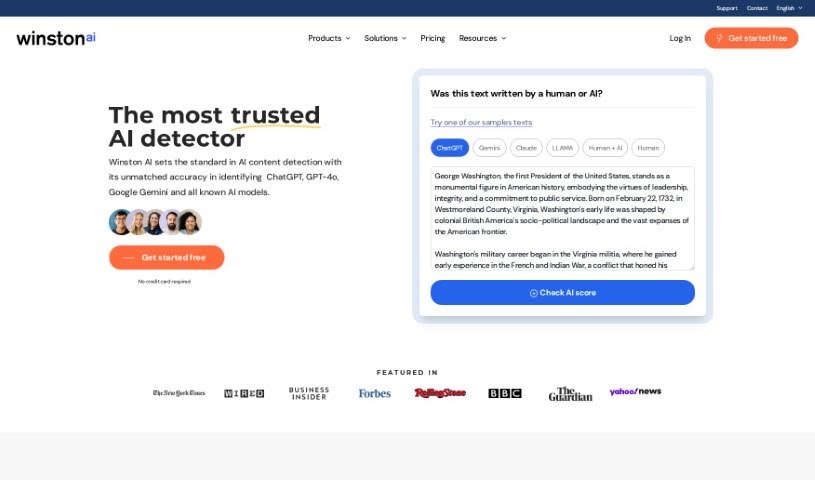
- Winston AI: Verifies the authenticity of AI-generated content.
- AI Undetect: Helps evade AI detection tools.
- Plagiarismcheck.org: Verifies AI-generated content authenticity.
- Plagium: Detects machine-generated content.
- Merlin AI Detection: Verifies academic integrity.
- AI or Not: Detects AI-generated content.