AI Tools for Science

Discover the best Science AI tools to enhance your productivity and creativity.

Page 1 of 2 • 16 total tools

In science, AI tools are starting to feel like a real game-changer. We’re moving past just manual research and data analysis as new technology changes how scientists work. With solutions for everything from visualizing data to coming up with new ideas, these AI tools can make workflows smoother and lead to better discoveries.

As research gets more complicated, the need for smart, efficient tools keeps growing. Scientists want ways to sort through huge amounts of data, spot patterns, and even predict what might happen. Luckily, AI is stepping up, offering abilities that can really speed up the research process.

After spending a good amount of time looking into the latest developments, I’ve put together a list of the best AI tools for scientists. These cover a range of needs—from automating boring tasks to offering insights you might miss without computer help. Each tool is meant to empower researchers, making it easier to focus on the science itself instead of getting stuck in the details.

So, whether you’re a seasoned researcher or just starting out, there’s an AI tool that can help with your scientific questions. Let’s look at the options that really stand out in this fast-moving field.

The best AI Science Tools

  1. Semantic Scholar: Helps you find scientific papers more easily.
  2. Pi: Useful for calculating wavelengths in lab experiments.
  3. Question AI: Assists with scientific questions and analyzing data.
  4. Socratic by Google: Makes understanding scientific concepts simple.
  5. Cradle Bio: For analyzing and visualizing genomic data.
  6. Science Cast: Shows off innovative research instruments.
  7. Stability AI Stable Diffusion 3 Medium: Helps visualize complex scientific ideas.
  8. Genesis Therapeutics: Offers 3D modeling tools for exploring proteins.
  9. Animalia AI: Lets you explore animal behaviors and their habitats.
  10. System Pro: Speeds up research data analysis.
  11. Code Kidz: Provides interactive coding for science experiments.
  12. Nekton: Makes collecting data for lab experiments much simpler.
  13. Satlas: Analyzes how environmental conditions change over time.
  14. Papers Gpt: Gives you specific insights for scientific discoveries.
  15. Cebra: Helps decode neural activity during behavior trials.

How do AI science tools work?

AI science tools use smart algorithms and large databases to help with research, analysis, and understanding data. These tools often use machine learning models trained on tons of information, like scientific papers and experimental data from different fields.

At their core, these models can process and analyze huge amounts of information. They find patterns, make predictions, and even suggest ideas based on the knowledge they’ve accessed. This can really speed up research.

For example, natural language processing helps AI science tools summarize complex articles, pull out key findings, or even help with literature reviews. By turning dense academic text into manageable insights, researchers can focus on their scientific questions without feeling overwhelmed.

Some AI platforms also help with scientific modeling and simulations. They can analyze experimental results and adjust settings to predict outcomes, letting scientists design experiments more precisely. This not only improves accuracy but also saves valuable time and resources.

Plus, collaboration is another plus for AI science tools. Researchers can share insights more effectively, as these platforms often have features that let teams work together smoothly, no matter where they are.

Basically, AI science tools boost what humans can do in research and experiments. They help scientists get insights from massive datasets, make their work smoother, and explore new ideas efficiently and creatively. As these tools get better, their potential to change scientific discovery becomes clearer.

Our best AI science tools at a glance

RankNameBest forPlans and PricingRating
1Semantic Scholarenhancing scientific literature discoveryN/A4.75 (12 reviews)
2Picalculating wavelengths in lab experimentsN/A4.73 (11 reviews)
3Question AIscientific query assistance and data analysis.N/A4.67 (12 reviews)
4Socratic by Googleunderstanding scientific concepts easily.N/A4.73 (11 reviews)
5Cradle Biogenomic data analysis and visualization.N/A3.60 (5 reviews)
6Science Castshowcase innovative research instruments.Paid plans start at $$250/month.3.50 (6 reviews)
7Stability AI Stable Diffusion 3 Mediumvisualize complex scientific concepts.N/A4.47 (19 reviews)
8Genesis Therapeutics3d modeling tools for protein explorationN/A4.77 (26 reviews)
9Animalia AIexplore animal behaviors and habitatsN/A3.83 (6 reviews)
10System Proaccelerated research data analysisN/A4.73 (11 reviews)
11CodeKidzinteractive coding for science experiments.N/A3.91 (11 reviews)
12Nektonstreamline lab experiment data collectionPaid plans start at $9/month.4.80 (44 reviews)
13Satlasanalyzing environmental changes over timeN/A4.10 (10 reviews)
14Papers Gpttailored insights for scientific discoveriesN/A4.82 (11 reviews)
15Cebradecoding neural activity during behavior trialsN/A4.69 (13 reviews)
Screenshot of Ash

Ash

Freemium

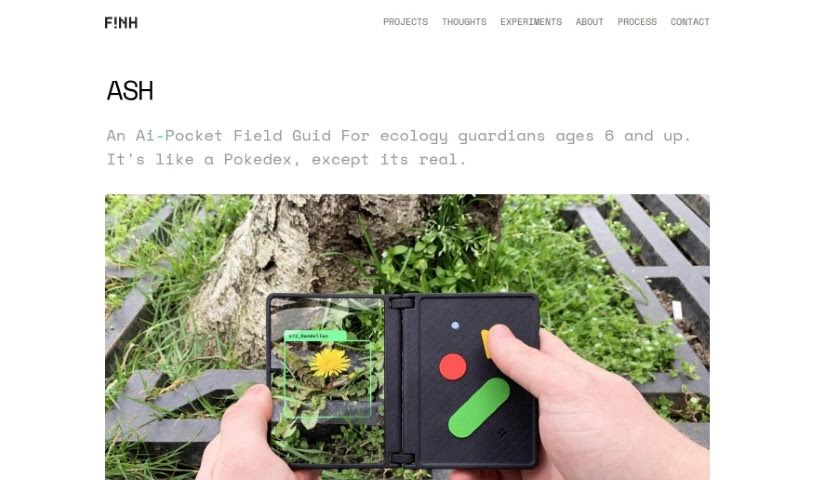
ASH is your AI Pocket Field Guide, designed to help kids really connect with and learn about all the amazing biodiversity right in their own backyards. It's all about making nature discovery an adventure! Kids can use a simple point-and-click digital camera to snap photos of whatever life-forms they find. Then, the AI magically turns those pictures into cool, informative animal cards. The whole idea came about because of the growing concern over losing global biodiversity; ASH aims to teach children why protecting nature is so important and get them excited about exploring different species.

Screenshot of Cebra

Cebra

Freemium

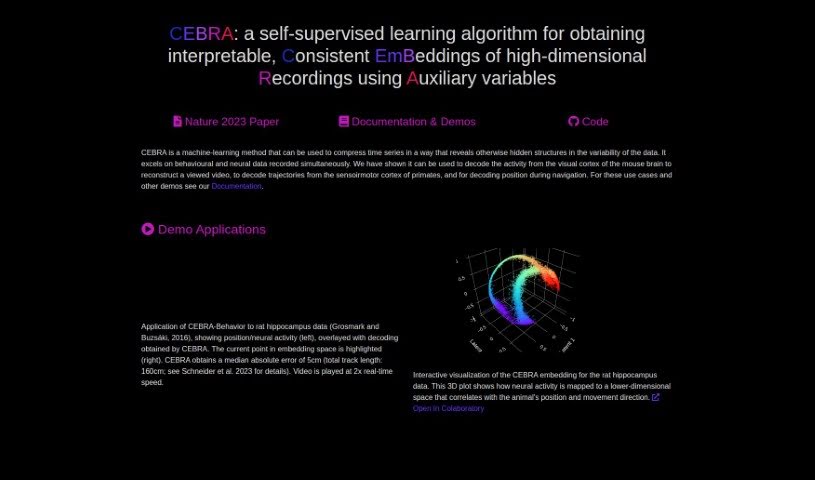
CEBRA is a smart machine-learning tool that's really good at shrinking down time series data. It's designed to help us spot those hidden patterns in how data changes over time. What's particularly cool is that it can analyze both behavioral and brain data at the same time. For instance, it's shown it can actually figure out what a mouse was seeing just by looking at its brain activity in the visual cortex, and then reconstruct the video! It uses clever, non-linear methods to blend behavioral and neural information, giving us a much deeper look into brain activity than older, linear approaches. CEBRA is super flexible, too – you can use it with all sorts of data, like calcium imaging and electrophysiology, whether it's for sensory or motor tasks. A big plus is its label-free decoding; this means it can reconstruct complicated movement patterns and even visual experiences without needing any extra labels. Plus, it handles multi-session analysis, which helps us find consistent patterns across different datasets, making it easier to test our ideas. It can even quickly and accurately decode natural movies from the visual cortex, really boosting our understanding of how the brain represents things.

Screenshot of Cradle Bio

Cradle Bio

Freemium

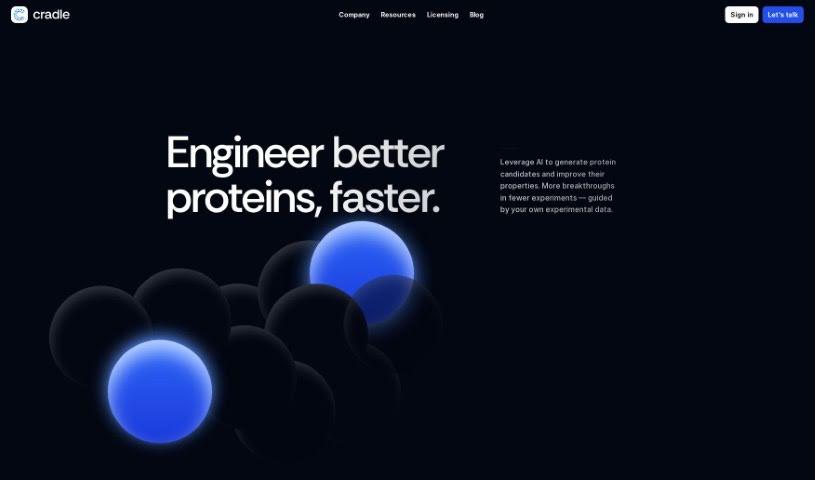
Cradle Bio is a really neat AI tool that helps biologists design better proteins. It is a smart assistant for protein design. It uses advanced prediction algorithms and AI-driven recommendations to help you visualize, analyze, and predict potential protein candidates. This means you can save a lot of time and make your protein design process much more efficient. What's cool is that it can handle several properties and optimization tasks all at once. Plus, it actually learns from your experiments, giving you better variants each time and significantly cutting down the time it takes to get your product to market. And don't worry about your data – Cradle keeps it private, secure, and you own all your intellectual property.

Screenshot of Dobb-E

Dobb-E

Freemium

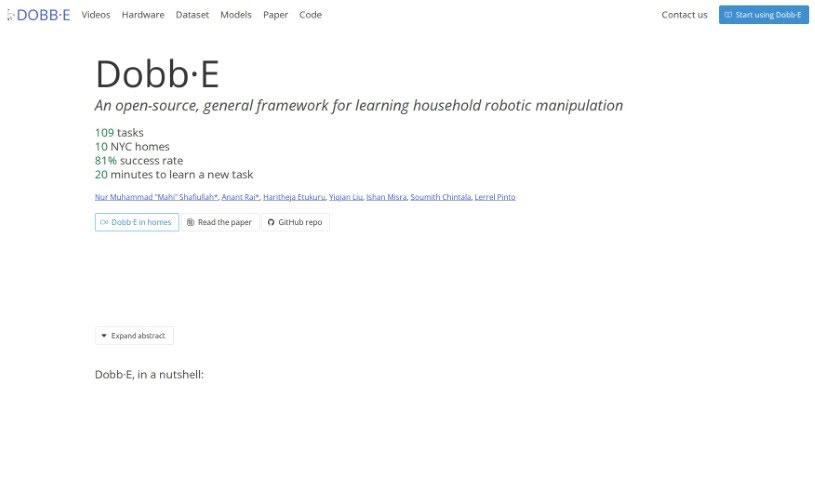
Dobb·E is an open-source framework designed to teach robots how to do household chores by watching and learning from demonstrations. It is a way to help robots learn by imitation. It's a pretty neat solution for the challenges in home robotics, especially because it offers an affordable way to collect the necessary demonstrations. How? With a tool called 'The Stick.' This tool is pretty straightforward to make – it uses a $25 Reacher-grabber stick, some 3D printed parts, and an iPhone. Dobb·E uses The Stick to gather data from the Homes of New York (HoNY) dataset. This dataset is quite extensive, featuring 13 hours of interactions recorded in 22 different homes across New York City. The framework then trains a special model called Home Pretrained Representations (HPR). This model is built on the ResNet-34 architecture and uses self-supervised learning objectives. The goal here is to enable robots to tackle new tasks in all sorts of different environments.

Screenshot of Genesis Therapeutics

Genesis Therapeutics

Freemium

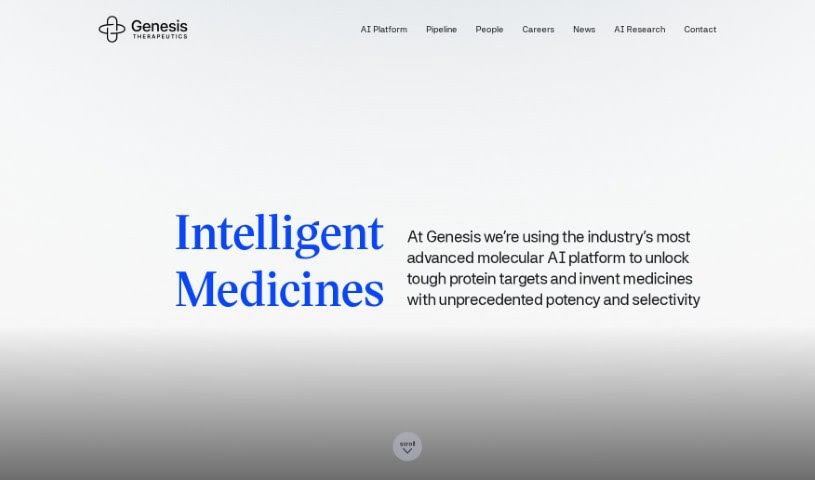
Genesis Therapeutics is an AI-driven platform designed to speed up the discovery of new medicines. It's all about finding new protein targets, exploring uncharted chemical possibilities, and ultimately, getting new treatments to people faster. The company uses advanced molecular AI, including techniques like 3D spatial graph modeling and molecular simulation, to create promising drug candidates. The team behind Genesis Therapeutics is a powerhouse of experienced drug hunters, deep learning experts, and software engineers. They're working together to really push AI forward in biochemistry and develop therapies for serious illnesses. Big names like Andreessen have invested in Genesis Therapeutics, contributing to a $200 million funding round. Plus, they've teamed up with major players in the industry, such as Eli Lilly, Roche, and Genentech, to boost their drug discovery efforts.

Screenshot of HeyOctopus

HeyOctopus

Freemium

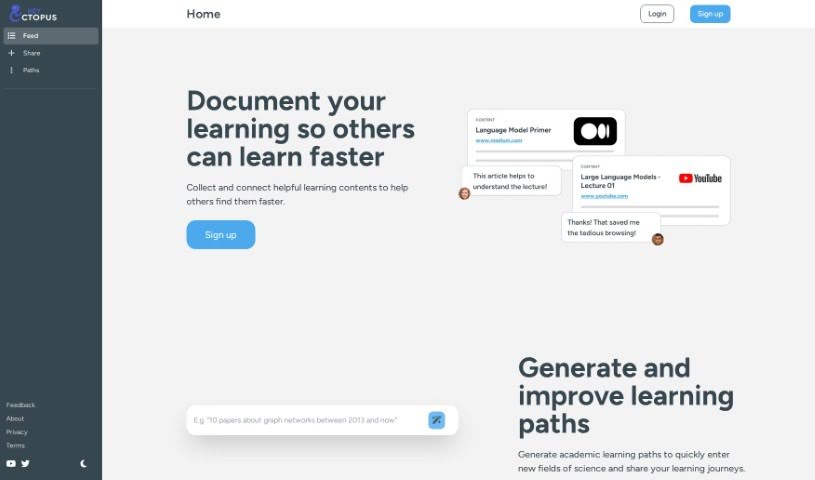
HeyOctopus is a smart tool that uses AI to help you build learning paths, especially in science. You can create these paths based on what you're interested in and what you want to learn. It guides you through the materials and resources you'll need to pick up knowledge efficiently. You can even chat with the learning content, share your paths with others, and get personalized recommendations. Essentially, HeyOctopus aims to make learning smoother and more accessible by creating paths that are just right for your interests and goals.

Screenshot of Insight AI

Insight AI

Freemium

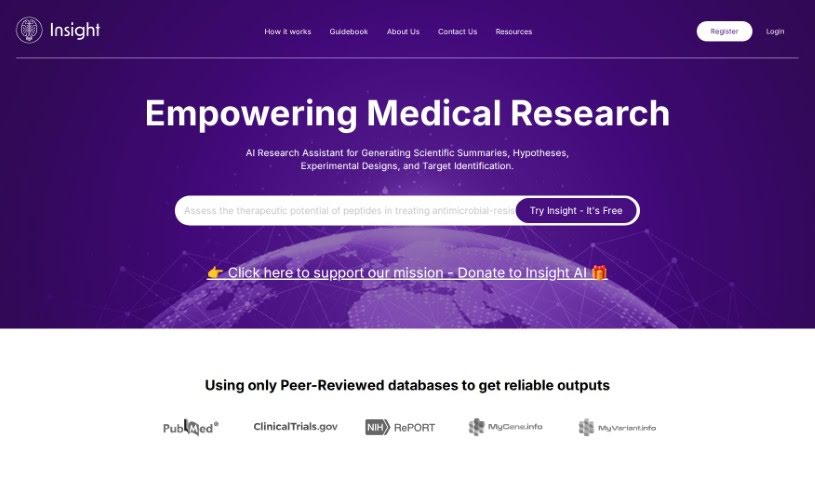
Insight AI is a really helpful platform designed to boost your research, especially in drug discovery. It's packed with information, pulling data from over 400 million human variants, 22 million genes across more than 22,000 species, and it can search through a massive 36 million peer-reviewed biomedical articles from 30,000 different journals.

Screenshot of Nekton

Nekton

Freemium

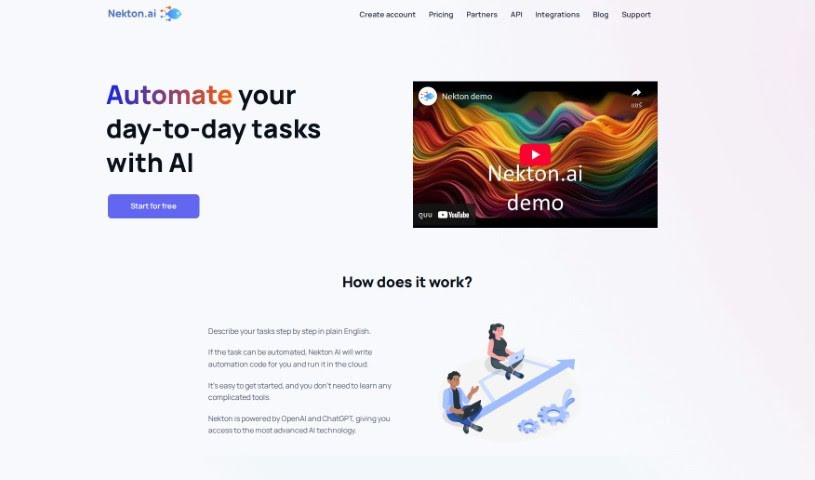
Nekton is a really interesting platform all about exploring and researching our oceans. It's designed to help us study and protect aquatic life. It is an immersive window into the latest marine science, showing off new techniques in marine biology and oceanography, cool advanced technology, and a deep commitment to conservation. Nekton wants to make it easy for everyone to learn about and help protect marine animals and their homes. You can find all sorts of great stuff on there, like engaging content, the latest research findings, advanced tech in action, conservation projects, and plenty of educational resources.

Screenshot of Papers Gpt

Papers Gpt

Freemium

Papers GPT is a specialized AI tool built for researchers, data analysts, and developers. It's designed to let you bring different data sources right into your AI model. It is a way to create custom AI models that can answer very specific questions, pulling information from your own knowledge bases – like scientific papers, industry data, or any custom datasets you have. It's got features for connecting data sources, customizing things via an API, and it's pretty straightforward to use if you've got some background in data science or AI. Papers GPT really helps boost accuracy, improve decision-making, and make you more productive by giving you precise answers, helping you make decisions based on data, and automating your queries. While it works great on a desktop, there isn't a full mobile version yet. It uses a freemium model, meaning you can start for free, and there are subscription plans available for both individual researchers and businesses.

Screenshot of Pi

Pi

Freemium

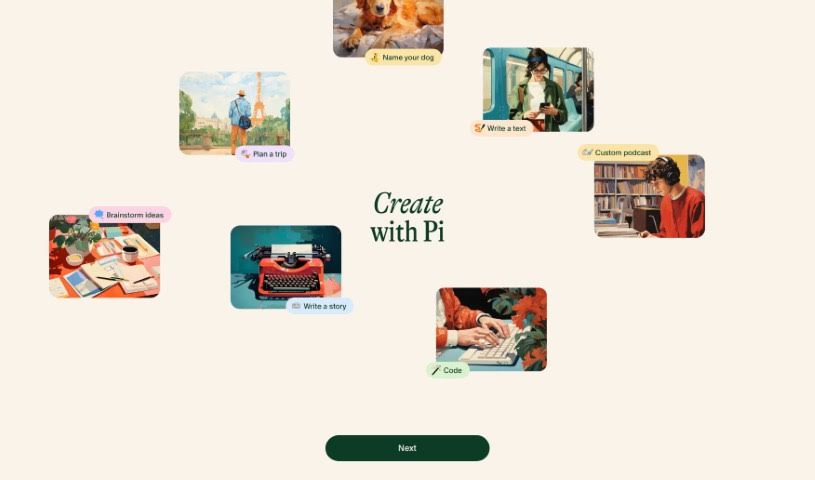
Pi, represented by the Greek letter π, is a fundamental mathematical constant. It's essentially the ratio you get when you divide a circle's circumference by its diameter. It is a universal ratio that applies to all circles, no matter their size. This number is irrational, meaning its decimal representation goes on forever without ever repeating a pattern. We often approximate it as 3.14159, but that's just the beginning!

Screenshot of Question AI

Question AI

Freemium

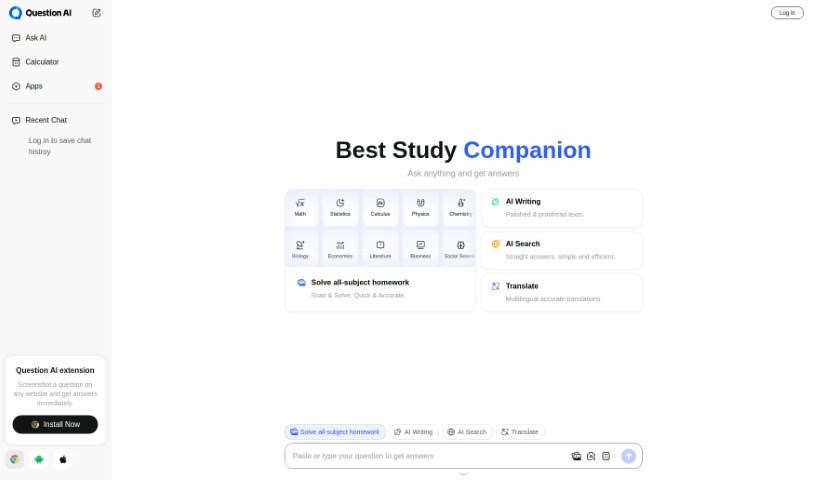
Question AI, sometimes called Homework AI, is your personal AI assistant for schoolwork. It's built to help you get answers to your questions and quickly summarize long texts. One of its really neat features is the 'snap and solve' capability – you can just take a picture of a math problem, and it'll give you the solution in a flash. It also acts like a 24/7 AI copilot, ready to provide clear, professional answers anytime, day or night. It's super easy to use and works wherever you do, whether you're on your computer or your phone, across Windows, Mac, iOS, and Android. Because it's been trained on such a massive and varied amount of information, Question AI can handle even really complex or technical language with ease. It's fast, too, making it a go-to homework helper for more than 10 million students.

Screenshot of Satlas

Satlas

Freemium

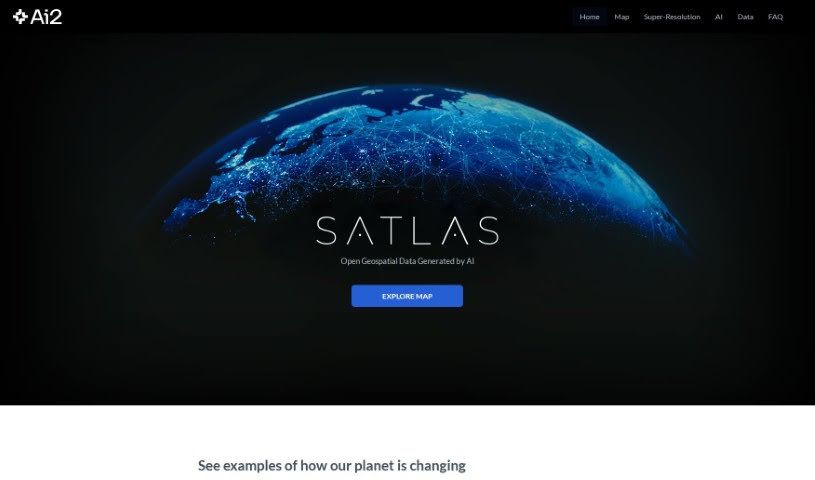
Satlas is a really cool tool from AI2 that lets you see how our planet is changing, using satellite pictures that have been marked up by AI. It’s a dynamic way to watch transformations in the environment and how cities develop over time. You can easily jump between different time periods and look at various places to see these changes unfold. It’s built to be straightforward, so whether you're a teacher, a researcher, or just someone curious about our world, you can use it. Satlas combines advanced satellite tech with artificial intelligence, offering an engaging way to keep an eye on Earth's ever-changing face.

Previous 1 of 2 Next

Stay Updated with AI Tools

Get weekly updates on the latest AI tools, trends, and insights delivered to your inbox

Join 25,000+ AI enthusiasts. No spam, unsubscribe anytime.