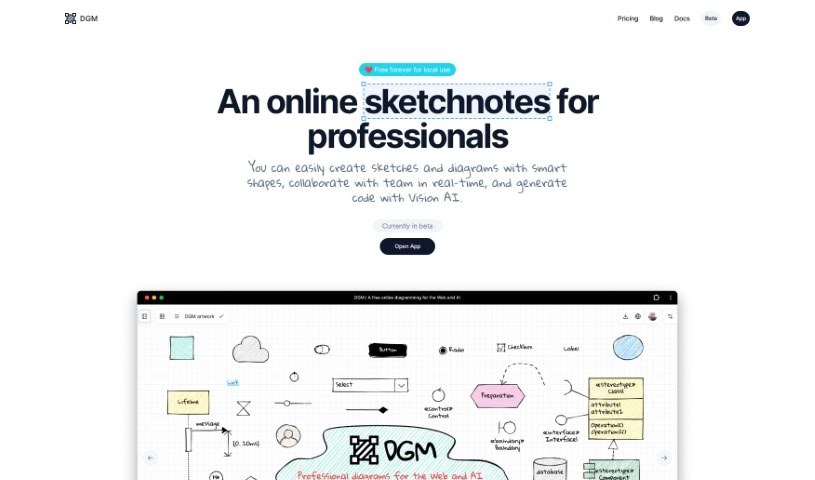
Screenshot of Dgm

Dgm

Discover what Dgm is and how to use it effectively in 2025. We'll explore its features, compare it to other diagramming tools, and show you how to get the most out of it.

Screenshot

What is Dgm?

Dgm, which stands for Diagram, is a really handy tool that lets you create all sorts of diagrams. Think flowcharts, UML diagrams, ER diagrams, and even UI wireframes. It comes packed with features like smart shapes that make diagramming a breeze, dedicated support for flowcharts, and the ability to build UI wireframes. Plus, it offers cloud storage so you can access your work from anywhere, and you can export your creations as PNG or SVG files. You can also really make your diagrams your own with aesthetic customization options, including hand-drawn styles and different fonts. There’s even an experimental Vision AI feature that’s pretty interesting – it’s designed to potentially generate code directly from your diagrams, using future versions of OpenAI’s GPT technology. Because Dgm offers cloud storage, you can easily get to your diagrams no matter which device you’re using.

Who created Dgm?

The diagramming tool Dgm was actually developed by a team, led by its founder. While the founder’s name isn’t specifically mentioned in the information we have, Dgm first launched on January 17, 2024. The company behind Dgm provides a really comprehensive set of diagramming features. You get smart shapes, and they offer tools for collaboration across various diagram types, including flowcharts, UML, ER diagrams, and UI wireframes. Users have a lot of freedom to customize their diagrams, with options for hand-drawn styles, fonts, and even color themes. You can also export your work as PNG or SVG images. Dgm also includes cloud storage, making it super easy to access your diagrams from anywhere. They’re also looking into adding real-time collaboration features in the future, which will be a great addition.

How to use Dgm?

To really get the most out of Dgm, here’s a simple guide:

  1. Create Your Diagrams: Start by using Dgm to build all sorts of diagrams – flowcharts, UML diagrams, ER diagrams, and UI wireframes are all on the table.
  2. Work with Smart Shapes: Dgm’s smart shapes are a game-changer for making diagramming easier. You can set up these shapes with specific rules, properties, and even scripts to make them work exactly how you need them to.
  3. Save to the Cloud: Make sure to save your diagrams using Dgm’s cloud storage. This way, you can easily access them from any device you use.
  4. Export Your Work: Need to share your diagrams? You can export them as PNG or SVG files, which are perfect for presentations or sharing with others.
  5. Personalize Your Designs: Get creative with how your diagrams look! You can use hand-drawn styles, different fonts, and shape libraries. You can also easily switch colors to match light or dark themes.
  6. Try the Vision AI: Don’t hesitate to experiment with the Vision AI feature. It’s designed to generate code from your diagrams, which could be a huge time-saver.
  7. Use the History Feature: Dgm keeps a 30-day history, which is fantastic for restoring previous versions of your diagrams and managing your work.
  8. Share Your Diagrams Online: You can publish your diagrams directly to the web, making them easy for others to see and share.
  9. Look Forward to Collaboration: While real-time collaboration isn’t here yet, keep an eye out for future updates that will bring this feature.
  10. Explore Shape Libraries: You can import and even share shape libraries with the Dgm community, which is a great way to collaborate and discover new tools.

Keep an eye on Dgm for upcoming features and updates that will make your diagramming experience even better. Following these steps should help you really maximize what Dgm can do for creating, customizing, and sharing your diagrams efficiently.

Related AI Tools

Discover more tools in similar categories that might interest you

Stay Updated with AI Tools

Get weekly updates on the latest AI tools, trends, and insights delivered to your inbox

Join 25,000+ AI enthusiasts. No spam, unsubscribe anytime.