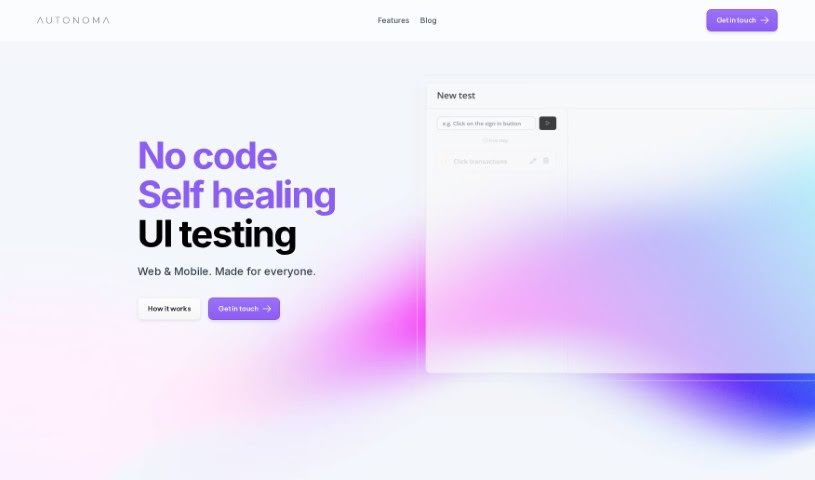
Screenshot of Autonoma

Autonoma

Discover what Autonoma is and how to use it effectively in 2025. We'll explore its features and see how it stacks up against other documentation tools.

Screenshot

What is Autonoma?

Autonoma is an AI-powered tool designed to automate the process of generating and maintaining your codebase documentation. Think of it like Confluence, but for code! It offers a user-friendly interface where you can easily access the documentation that’s automatically created for you. Here’s how it works: you create an account, connect it to your code repository, and then Autonoma’s AI gets to work. It generates comprehensive documentation for every file in your codebase, including handy installation guides and clear explanations of how everything functions. Ultimately, Autonoma helps developers save a ton of time, makes team communication smoother, speeds up the onboarding process for new team members, and ensures your documentation stays current. It supports a wide variety of programming languages and stacks, so whether you’re using Python, JavaScript, Java, C++, C#, Ruby, or PHP, Autonoma has you covered.

Autonoma is a really valuable tool that simplifies the whole documentation process. It can seriously boost developer productivity, saving you hours every single week. Plus, they really prioritize your data privacy – they don’t use your customer data to improve their AI models, so your information stays secure. This tool is especially great for developers who need efficient and accurate code documentation across all sorts of programming languages and frameworks.

Who created Autonoma?

Autonoma officially launched on October 24, 2023. The company was actually founded by a team of engineers who previously worked on AI and infrastructure at Google, hailing all the way from Argentina. They bring a wealth of experience from some pretty significant projects, including engineering design for a LATAM unicorn that involved a 9-figure deal, building AI models for US intelligence agencies, developing infrastructure security for Fortune 500 companies, and even creating computer vision systems for airlines and mining companies. As mentioned, Autonoma itself is an AI-powered tool designed to automate the generation, structuring, and upkeep of codebase documentation, which really helps developers save time and improves how teams communicate with each other and with stakeholders.

What is Autonoma used for?

  • It automates the entire process of generating, structuring, and maintaining your codebase documentation.
  • It provides a familiar, Confluence-like interface for accessing all the documentation that gets created.
  • It generates comprehensive documentation for each file in your codebase, including guides for installation, features, and how things work.
  • It frees up developers’ time, letting them focus on other crucial tasks like coding, debugging, and testing.
  • It really improves communication between developers and other important stakeholders.
  • It makes onboarding new team members to any project much smoother and faster.
  • It ensures that your documentation is always kept up-to-date, which is super important.
  • It supports popular code stacks, meaning you can document your code no matter the programming languages or frameworks you’re using.
  • Crucially, it doesn’t use your customer data to improve its AI models, so your data privacy is protected.
  • It supports a wide range of programming languages like Python, JavaScript, Java, C++, C#, Ruby, PHP, and many more.

Who is Autonoma for?

  • Developers
  • Software engineers
  • Team members
  • New team members joining a project
  • Stakeholders who need to understand the codebase

How to use Autonoma?

Using Autonoma is pretty straightforward. Just follow these steps:

  1. Create an Account: First, you’ll want to create a new account on Autonoma. Once that’s done, connect it to the code repository you want to document.
  2. Installation: After setting up your account, you can proceed with the installation. Autonoma’s AI system will then automatically generate detailed documentation for every single file in your codebase. This includes everything from installation guides to explanations of features and functionalities.
  3. Access and Interface: Autonoma offers a user-friendly interface that’s quite similar to Confluence, making it easy for you to access all the documentation that’s been generated.
  4. Documentation Generation: The tool really streamlines the whole documentation process. It automates the creation, structuring, and maintenance of your codebase documentation, which saves developers valuable time. This means they can spend more time on other essential tasks like coding, testing, and debugging.
  5. Documentation Updates: Autonoma makes sure that the documentation is always current. This is really important for preventing errors and maintaining accuracy. This feature also helps improve communication among developers and stakeholders, and it makes bringing new team members up to speed on each project much easier.
  6. Compatibility: Autonoma supports a wide array of popular programming languages, such as Python, JavaScript, Java, C++, C#, Ruby, PHP, and more. This means you can document your code effectively, no matter the language or framework you’re using.
  7. Data Privacy: Just to reiterate, Autonoma does not use your customer data to improve its AI models. This ensures your data privacy and security are maintained.
  8. Effectiveness: While the tool is quite effective for mainstream languages, you might find its efficiency varies a bit for less common languages.

By following these steps, developers can really make the most of Autonoma. It’s a great way to automate your documentation, improve how your team collaborates, and keep all your codebase documentation accurate and up-to-date.

Related AI Tools

Discover more tools in similar categories that might interest you

Stay Updated with AI Tools

Get weekly updates on the latest AI tools, trends, and insights delivered to your inbox

Join 25,000+ AI enthusiasts. No spam, unsubscribe anytime.