What is a SWOT Analysis?
A SWOT analysis is a really useful strategic planning tool. It helps you look at the Strengths, Weaknesses, Opportunities, and Threats related to your organization or a specific project. It is a way to map out what’s going well internally – like having a great team or a well-known brand (those are your Strengths and Weaknesses). Then, you also look at what’s happening outside your organization – like new markets opening up or increased competition (Opportunities and Threats). By doing this, you can figure out smart ways to build on what you’re good at, fix what’s not working so well, grab those new chances, and protect yourself from potential problems. It’s a solid way to make better decisions and plan your strategy.
Who Created the SWOT Analysis?
The SWOT analysis was actually developed by Albert Humphrey back in the 1960s and 70s while he was at the Stanford Research Institute. It’s become a go-to tool for lots of organizations and individuals who want to get a clear picture of their internal Strengths and Weaknesses, alongside external Opportunities and Threats that could affect their success. It really gives you a comprehensive understanding of where things stand right now, helping you create plans to use your strengths, deal with weaknesses, explore new possibilities, and avoid potential pitfalls.
What is a SWOT Analysis Used For?
- It helps you pinpoint the internal factors – your strengths and weaknesses – that can really make or break your organization or project.
- You can evaluate the external factors, like opportunities and threats, that might influence your path.
- It gives you a solid, overall understanding of your current situation.
- This analysis can help you figure out if you have good potential for future growth or if you might face challenges ahead.
- It’s great for developing strategies that build on your strengths and tackle your weaknesses.
- You can use it to make the most of opportunities and minimize potential threats.
- It really boosts your strategic planning and decision-making processes.
- Businesses can use it to adapt more easily when the market changes.
- It helps you spot where you have a competitive edge.
- It’s useful for lining up your company’s goals with what’s happening in the market.
- It helps identify both internal and external factors that impact your organization’s success.
- You get a clear understanding of your organization’s current standing.
- It helps assess your potential for future growth or any challenges you might face.
- It aids in creating strategies to build on your strengths.
- It helps you address any weaknesses you might have.
- You can take advantage of new opportunities that arise.
- It helps you mitigate potential threats.
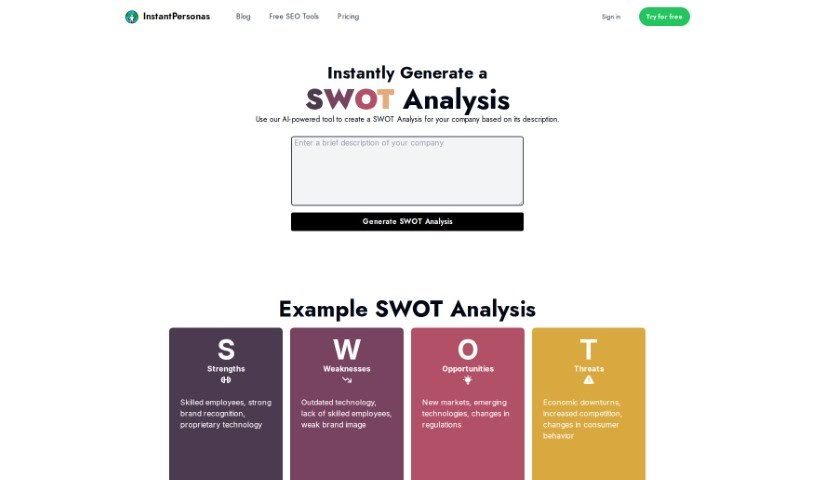
- You can even generate a SWOT analysis quickly by just entering company details.
- It allows you to edit the fields in the SWOT analysis once it’s generated.
- You can download the completed SWOT analysis as an image file.
Who is a SWOT Analysis For?
- Business analysts
- Strategic planners
- Project managers
- Entrepreneurs
- Marketing professionals
- Consultants
- Business professionals in general
How to Use a SWOT Analysis?
A SWOT analysis is a strategic planning tool that helps you assess the Strengths, Weaknesses, Opportunities, and Threats for your organization or a specific project. Here’s a simple step-by-step guide to using it effectively:
- Identify Your Strengths: What internal advantages do you have? Think about things like having skilled employees or strong brand recognition that give you an edge.
- Recognize Your Weaknesses: What internal factors might be holding you back? This could be things like outdated technology or a less established brand image.
- Explore Opportunities: What external factors could help you grow? Look for things like new markets to enter or emerging technologies you can use.
- Analyze Threats: What external factors could potentially harm your success? Consider things like increased competition or economic downturns.
- Conduct the Analysis: Gather information from research, discussions, and data. Then, list out the factors you’ve identified under each of the four categories (Strengths, Weaknesses, Opportunities, Threats).
- Evaluate Relationships: Think about how your strengths can help you overcome weaknesses. Also, consider how you can use opportunities to your advantage while managing any threats you’ve identified.
- Develop Strategies: Use everything you’ve learned from the analysis to create actionable strategies. Focus on using your strengths, fixing your weaknesses, seizing opportunities, and minimizing threats.
- Regular Review: It’s important to revisit and update your SWOT analysis regularly. Conditions inside and outside your organization can change, so your analysis should reflect that.
- Utilize Tools: Don’t hesitate to explore tools, like AI-powered SWOT generators, that can help you create analyses quickly. Using visual presentations is also a great way to share your insights effectively.
By following these steps, you and your organization can really make the most of a SWOT analysis to make smarter strategic decisions and drive your success forward.