04-X
Text Generation Chatbots
Learn more
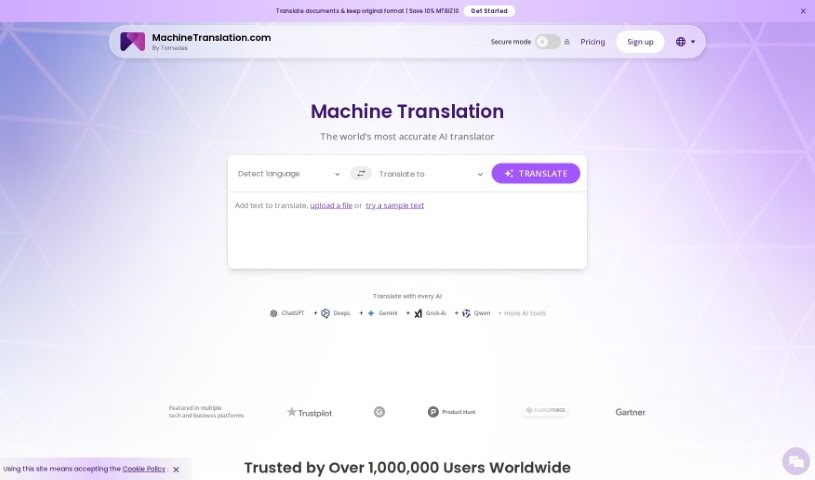
Discover what Machinetranslation is, how it works, and what it offers for translating text across languages.
Machine translation is the use of software or AI systems to automatically translate text from one language to another, making it easier for people who speak different languages to communicate. There are several approaches: rule-based systems rely on linguistic rules, statistical systems analyze large volumes of text data, and neural machine translation uses artificial neural networks to improve translation quality. Neural systems in particular have driven significant improvements, producing more accurate and natural-sounding translations. Even so, achieving perfect translations remains difficult because language is complex and full of subtle meanings.
The specific creators of Machinetranslation are not publicly documented. The company was started by a group passionate about both language and technology, with the goal of developing modern translation technologies to bridge language gaps across industries. It offers solutions designed to improve global communication and understanding.
The service is free to use and has a user-friendly interface that is easy to navigate.
Related
Discover more tools in similar categories
Weekly picks of the best AI tools we've researched and added — no spam, unsubscribe anytime.
Join 25,000+ AI enthusiasts. No spam, unsubscribe anytime.