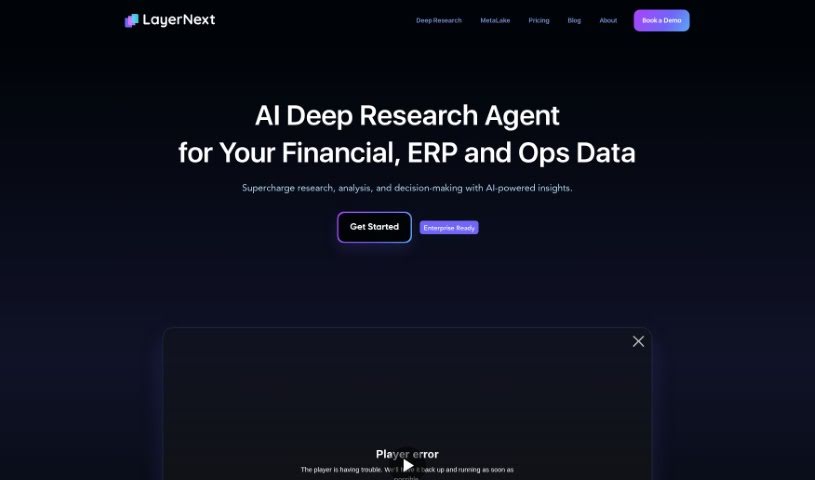
Screenshot of LayerNext

LayerNext

Discover what LayerNext is and how to use it effectively in 2025. Dive into its features, compare it with other Data Analytics Tools, and see how it can streamline your computer vision projects.

Screenshot

What is LayerNext?

LayerNext is a complete, end-to-end platform designed specifically for managing data in computer vision projects. It is your central hub for everything related to your AI data. It makes collecting, organizing, labeling, and searching through massive amounts of computer vision data much simpler and more efficient. The platform includes several key components: the DataLake, which acts as a central storage for all your data; the Annotation Studio, where you can label images and videos; and the Dataset Manager, for keeping everything organized. It also comes with built-in tools to help you analyze your data. You can visualize your data, label it at a large scale, manage your datasets effectively, and even connect it with other applications you might be using. Plus, it’s built with compliance in mind, adhering to regulations like HIPAA and GDPR, and it’s customizable to fit your specific way of working. Ultimately, LayerNext is all about boosting your team’s productivity and collaboration, making your AI projects run smoother and more securely.

To put it simply, LayerNext is a powerful platform built for computer vision projects. It offers essential tools like DataLake for storing all your data, Annotation Studio for labeling, and Dataset Manager for keeping things tidy. It really focuses on making dataset management easier and connects well with other systems. This helps teams cut down on busywork and concentrate on the important parts of their AI projects. LayerNext lets you visualize your data, label it efficiently, and ensures you meet important data regulations like HIPAA and GDPR. Because you can host it yourself and customize it, LayerNext keeps your data secure and adapts to your unique needs. It’s a great tool for any industry looking to improve how they work with AI, making teams more productive and collaborative.

Who created LayerNext?

Layernext Overview:

Founder: Layernext was started by a dedicated team of AI enthusiasts and experienced software engineers.

Launch Date: The platform officially launched on January 30, 2023.

Company Details: Layernext’s main goal is to provide easy-to-use AI tools. They aim to harness the power of data and AI to help businesses perform better. The company’s vision is a future where AI handles routine tasks, allowing people to focus on more challenging and creative work.

What is LayerNext used for?

LayerNext helps with a variety of tasks crucial for computer vision projects:

  • Organizing large datasets efficiently
  • Sharing datasets easily among team members
  • Comparing and contrasting the performance of different models or datasets
  • Connecting with virtually any computer vision application
  • Reducing manual effort in data handling
  • Storing metadata and labels securely
  • Accessing various pipeline processes
  • Linking up with third-party applications
  • Simplifying the entire computer vision workflow
  • Focusing on building a strong data infrastructure

Who is LayerNext for?

LayerNext is a valuable tool for professionals in several key industries:

  • Retail
  • Agriculture
  • Healthcare
  • Construction

How to use LayerNext?

Getting started with LayerNext is straightforward. Here’s a step-by-step guide:

  1. Use DataLake: Start by using the DataLake feature. It’s your central place for all AI data, from raw images and videos to processed data and model results.
  2. Visualize Data: Take advantage of the built-in viewer in DataLake to easily see and understand your data.
  3. Manage Datasets: The Dataset Manager helps you keep your training datasets organized and track different versions, which is key for efficient management.
  4. Annotate at Scale: Use the Annotation Studio for labeling your image and video data. It’s designed for handling annotation tasks on a large scale.
  5. Analyze Performance: Leverage the built-in analytic tools to check how well your training data is performing, spot any missing data, and fix errors.
  6. Integrate with Apps: Connect LayerNext with your other computer vision applications using the provided SDKs and APIs.
  7. Ensure Data Control: Since LayerNext is self-hosted, you maintain full control over your data and can easily comply with regulations like HIPAA and GDPR.
  8. Boost Productivity: Benefit from tools specifically designed for computer vision projects that automate workflows and improve team productivity.
  9. Customize Your Workflow: Tailor LayerNext to fit your specific workflow and integrate it smoothly with other AI tools you use.

Following these steps will help you make the most of LayerNext for all your computer vision projects.

Related AI Tools

Discover more tools in similar categories that might interest you

Stay Updated with AI Tools

Get weekly updates on the latest AI tools, trends, and insights delivered to your inbox

Join 25,000+ AI enthusiasts. No spam, unsubscribe anytime.