11Sight
Business Customer Service
Learn more
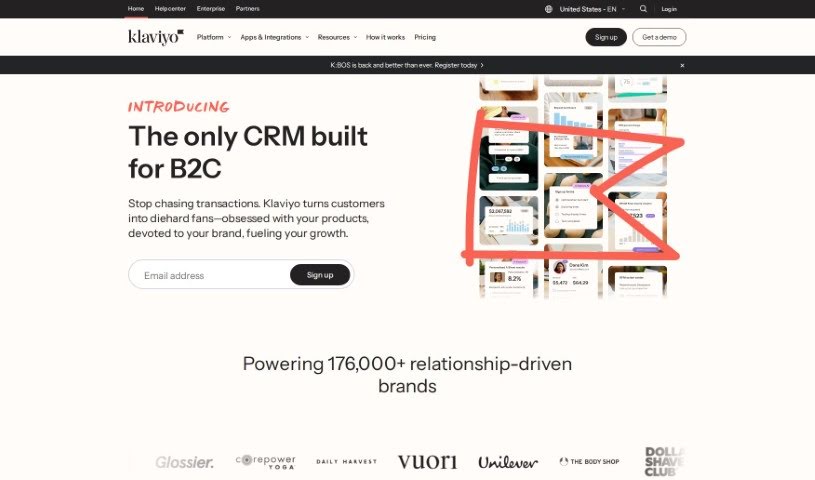
Klaviyo is an email and SMS marketing platform that builds detailed customer profiles, powers AI-written campaigns, and tracks conversions across channels.
Klaviyo is an email and SMS marketing platform built to give businesses a deep understanding of their customers. It compiles detailed customer profiles from past purchases, current interactions, and predictive signals, then uses that data to suggest products customers are likely to buy and to track conversions across marketing channels.
A standout feature is the AI-powered writing assistant, which helps you draft SMS and email campaigns, create customer segments, and respond to reviews. Klaviyo also builds real-time segments from predictive data, customer profiles, and activity logs, so messages reach the right audience. Peer benchmarks show how your brand compares to similar companies and offer practical advice on where to improve.
Andrew Bialecki and Ed Hallen founded Klaviyo in 2012 after seeing how many businesses struggled to use their customer data effectively for personalized marketing. Today, the platform is used by more than 151,000 brands worldwide. Bialecki frequently emphasizes empowering creators with ownership and control so their products and ideas can succeed.
Related
Discover more tools in similar categories
Weekly picks of the best AI tools we've researched and added — no spam, unsubscribe anytime.
Join 25,000+ AI enthusiasts. No spam, unsubscribe anytime.