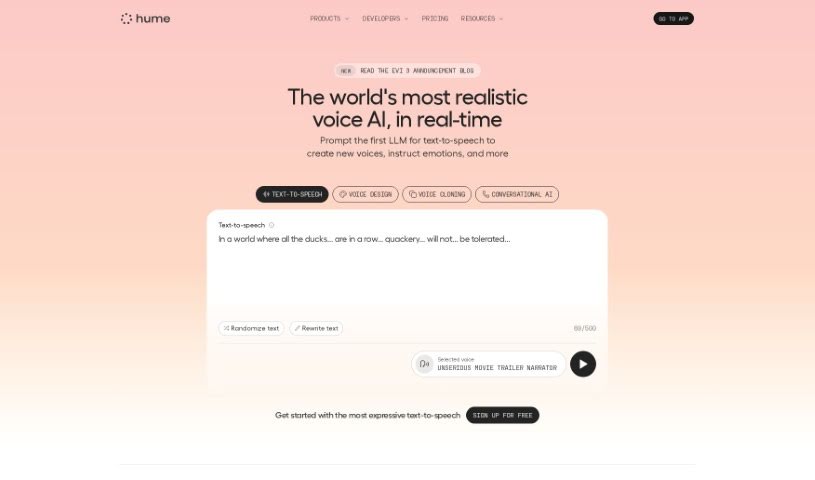
Screenshot of Hume AI

Hume AI

Discover what Hume AI is and how to use it effectively in 2025. We'll explore its unique features, compare it to other AI assistants, and guide you through its applications.

Screenshot

What is Hume AI?

Hume AI is a fascinating conversational AI system that really zeroes in on emotional intelligence. The whole idea is to make technology work better with us, focusing on our well-being. It’s got this neat Empathic Voice Interface, or EVI for short. It is an AI that understands feelings, powered by empathic AI. It’s designed to pick up on subtle shifts in your voice and then guide how it talks and generates language to match. On top of that, Hume AI offers an Expression Measurement API. This tool can interpret what your voice and even your facial expressions are saying, which helps it predict how you’re feeling much better than many other AI models out there. At its heart, Hume AI’s mission is pretty straightforward: to make sure artificial intelligence is built to actually help us achieve our goals and support our emotional health. They’re really committed to ethical principles like doing good, showing empathy, and making sure everyone feels included.

Who created Hume AI?

Hume AI was actually started by a research lab and a technology company. Their main goal is to ensure that artificial intelligence is developed in a way that truly serves human goals and supports our emotional well-being. They’re all about making technology align with our emotions and overall well-being, with a strong emphasis on emotional intelligence within AI systems. They really stress ethical AI principles. This means building algorithms that are guided by human emotions, recognizing that our feelings are the main thing that drives our well-being, and always promoting inclusivity and transparency when they put their AI into use. Hume AI has developed some cool products, like that Empathic Voice Interface (EVI) we mentioned, and the Expression Measurement API, which give applications the ability to understand and respond to emotions.

How to use Hume AI?

If you want to get the most out of Hume AI, here’s a simple way to approach it:

  1. Get a Handle on Hume AI’s Ethical Approach:
    • It’s really important to understand how human emotions are key to guiding AI algorithms so they can ethically serve what you prefer.
    • Just remember that Hume AI is all about using emotional intelligence to make sure technology works well with our emotional well-being.
  2. Check Out the Features:
    • You can use the Empathic Voice Interface (EVI). This is a conversational AI voice API that’s designed to understand and respond to human emotions in an empathic way.
    • You’ll also find the Expression Measurement API really useful. It can pick up on subtle emotional cues from your voice, face, and even how you behave, whether it’s in audio, video, or still images.
  3. Play Around with the Tool:
    • To try it out, just head to their homepage and click the “Speak To It” button. You’ll need a microphone for this.
    • You can experiment with specific things, like seeing how it interprets different vocal tones, how it manages the flow of a conversation, and how it generates responses that feel emotionally in tune.
  4. Put it in Your Apps:
    • You can integrate EVI and the Expression Measurement API into your own applications to give them some emotional intelligence.
    • If you want even more tailored insights, you can use the Custom Model API. This lets you build on their advanced models using transfer learning, which can lead to more accurate predictions for your specific needs.
  5. Understand the Company’s Mission:
    • It’s good to know that Hume AI’s mission is to make sure AI is developed to serve human goals and emotional well-being. They do this through scientific methods and a deep focus on emotional intelligence.

By following these steps, you’ll be able to use Hume AI’s empathic AI features effectively, making your applications smarter and more emotionally aware, all while keeping ethical considerations in mind.

Related AI Tools

Discover more tools in similar categories that might interest you

Stay Updated with AI Tools

Get weekly updates on the latest AI tools, trends, and insights delivered to your inbox

Join 25,000+ AI enthusiasts. No spam, unsubscribe anytime.