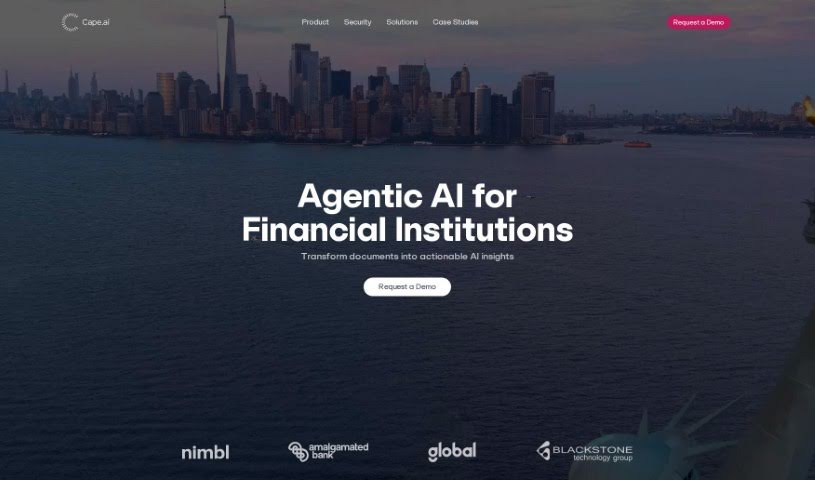
Screenshot of Cape Privacy

Cape Privacy

Discover what Cape Privacy is all about and how you can use it effectively in 2025. We'll dive into its features and see how it stacks up against other Automation Tools.

Screenshot

What is Cape Privacy?

Cape Privacy is a platform built with privacy as its core principle. It cleverly integrates AI technology to offer a range of useful features. Think agentic workflows, AI-driven knowledge retrieval, and a handy chat interface called CapeChat. The company really stands by its values: trust, innovation that has a real purpose, working together, acting ethically, and making sure users succeed. Cape Privacy aims to deliver solutions that put data privacy first. This includes things like automatic encryption, automatically redacting sensitive information, using powerful language models, OCR capabilities, voice features, NDA tools, secure enclaves, and automating your workflows.

Plus, the platform lets you deploy on-premise or within your Virtual Private Cloud (VPC). This means you get secure access to both public and private Large Language Models (LLMs). You can even bring your own models and connectors to the table.

Who created Cape Privacy?

Cape Privacy was founded by a team led by Matt Turck. The company officially launched on June 18, 2024, with a clear mission: to provide robust data privacy solutions through its platform. Cape’s guiding values are all about respect, collaboration, trust, and acting ethically to champion data privacy. They’re committed to innovating with a purpose, creating solutions that are both useful and easy to access, and fostering an inclusive environment where everyone can collaborate effectively. Cape is truly dedicated to user success, making a point of understanding the challenges people face and then delivering solutions that genuinely help.

What is Cape Privacy used for?

  • Automating your workflows
  • Ensuring privacy by default
  • Encrypting data automatically
  • Redacting confidential information
  • Using a powerful language model
  • Its OCR feature
  • Voice capabilities
  • An NDA feature
  • Secure enclaves
  • Improving operational efficiency

How to use Cape Privacy?

Getting started with Cape Privacy is pretty straightforward. Here’s a breakdown of how you can use it:

  1. Accessing Cape Privacy: First off, you’ll want to access the Cape Privacy platform itself. It’s designed specifically for handling data privacy solutions.
  2. Building Custom Applications: You can use the Cape API to create your own custom applications. This gives you full access to everything Cape Enterprise has to offer.
  3. Using the CapeChat Interface: CapeChat is a really intuitive chat interface. It makes it super easy to interact with multiple language models, whether they’re public or private.
  4. Leveraging Data Privacy Features: Take advantage of features like automatic encryption, redacting sensitive information, secure enclaves, and even data destruction after processing. Plus, you get isolated compute environments for that extra layer of data privacy.
  5. Boosting Operational Efficiency: You can really improve how your operations run. Think workflow automation, agentic workflows, making KYC processes smoother, and getting your data more accurate.
  6. Engaging in a Collaborative Environment: Cape fosters a collaborative atmosphere. This is built on their core values: respect, collaboration, trust, innovation, and purpose.
  7. Upholding Ethical Business Conduct: It’s important to conduct business ethically. Cape encourages promoting data privacy through the platform and operating in line with the company’s values.
  8. Focusing on User Success: Cape is all about making sure you succeed. They work to understand your challenges and then create valuable solutions to tackle them effectively.
  9. Finding More Resources: If you want to dig deeper, check out additional resources. There’s the Gartner TRISM Market Guide, the 451 Group Encryption-In-Use Report, and recognition for Matt Turck’s work in the MAD Landscape. These offer great insights and benchmarks.
  10. Weighing the Pros and Cons: It’s helpful to look at both sides. The pros include strong data privacy, powerful language models, and OCR/voice capabilities. On the flip side, consider potential cons like limited storage and network access, its closed ecosystem, and how customization might depend on specific factors.

By following these steps, you can really make the most of Cape Privacy’s features and functionalities, improving both your data privacy and your operational efficiency.

Related AI Tools

Discover more tools in similar categories that might interest you

Stay Updated with AI Tools

Get weekly updates on the latest AI tools, trends, and insights delivered to your inbox

Join 25,000+ AI enthusiasts. No spam, unsubscribe anytime.