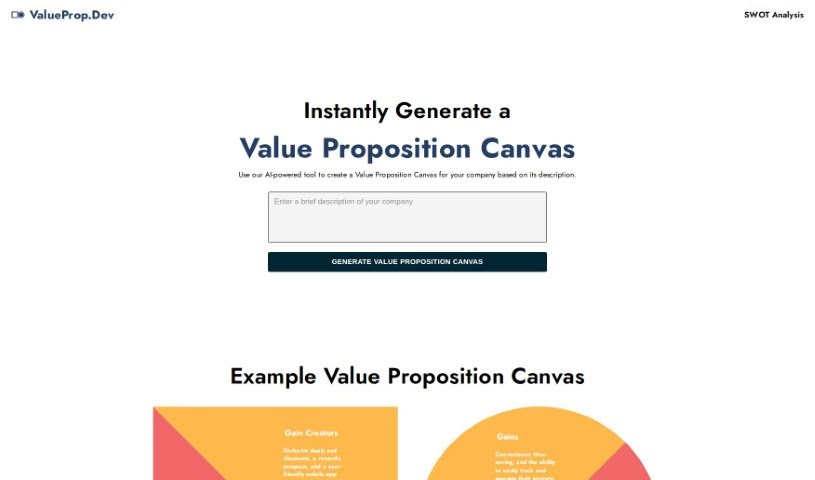
What is the AI Value Proposition Canvas Generator?
The Value Proposition Canvas is a really handy strategic tool businesses use to figure out and then design a value proposition that truly speaks to what their target customers want and need. It’s built around two main parts: the Customer Profile and the Value Map.
First off, the Customer Profile is all about getting inside your target customer’s head. You’re trying to understand their specific needs, what they desire, and how they tend to behave. This means pinpointing the actual jobs they’re trying to get done, the frustrating pain points they run into, and the positive gains they’re hoping to achieve.
Then there’s the Value Map. This part lays out the products, services, and features your business offers to actually meet those customer needs and desires. It specifically includes what we call ‘Pain Relievers’ – these are the things that tackle those customer pains head-on – and ‘Gain Creators,’ which are designed to deliver the benefits and gains that matter most to the customer.
By using the Value Proposition Canvas, businesses can craft a value proposition that genuinely hits the mark with customer needs. Plus, it helps them spot areas where they could improve and make smarter choices about developing new products or services. On top of that, AI-powered tools like the Value Proposition Canvas Generator can really speed up the process of figuring out and clearly explaining the unique benefits that AI can bring to customers. This is super important for making sure your offering resonates with the market and aligns strategically with what customers need and what your business goals are.
Who created the AI Value Proposition Canvas Generator?
Valueprop is the company behind this AI-powered Value Proposition Canvas Generator. Their team created it specifically to help businesses nail down and design effective value propositions for their target customers. The folks at Valueprop really focused on making it easier to clearly explain the unique advantages that AI can offer. Their tool is designed to be a big help for entrepreneurs, product managers, and marketing pros who need to visualize and build clear value propositions for products or services that use AI.
What is the AI Value Proposition Canvas Generator used for?
This tool is great for a bunch of things:
- Pinpointing and designing your value proposition: It helps you create a clear statement that directly addresses what your target customers need and want.
- Understanding your customers: You’ll get a better handle on the tasks customers need to do, their pain points, and the gains they’re looking for, so you can build products or services that really fit.
- Boosting the customer experience: By tackling those pain points and frustrations, you can create a much more positive experience for your customers.
- Delivering what customers value: You can clearly outline the benefits and gains that are important to customers as they go about their tasks.
- Making your value proposition connect: It helps you develop a value proposition that really resonates with customers and clearly shows the value you offer.
- Spotting improvement areas: You can identify where your current value propositions might be falling short.
- Guiding new product decisions: It helps you make smarter, more informed choices about what new products or services to develop.
- Speeding up AI benefit articulation: It streamlines the process of figuring out and clearly explaining the unique advantages that AI brings to customers.
- Visualizing AI value: You can visualize and build a clear value proposition specifically for AI-based products or services.
- Crafting persuasive messages: It helps you create compelling value propositions that effectively communicate how powerful and transformative artificial intelligence can be.
How do you use the AI Value Proposition Canvas Generator?
To get the most out of the Value Proposition Canvas tool, just follow these straightforward steps:
- Define Your Customer Profile:
- Figure out customer jobs: What are the main tasks or goals your customers are trying to achieve?
- Highlight their pains: What negative experiences or frustrations do customers run into?
- Understand their gains: What are the benefits customers are hoping to achieve?
- Develop Your Value Map:
- List your pain relievers: How do your products or services directly address those customer pains?
- Specify your gain creators: How do your products or services provide the benefits customers really want?
- Outline your products/services: What specific offerings are you providing to your customers?
- Use the Value Proposition Canvas Generator:
- Enter your company description: Pop your company details into the tool.
- Generate the Canvas: The tool will then create a visual representation of your value proposition.
- Edit and Download: You can tweak the fields as needed and then save your canvas as an image.
- Leverage the AI Value Proposition Canvas Generator:
- Boost your AI value proposition: Use the generator to clearly articulate the unique benefits your AI offers.
- Tailor your messaging: Customize your marketing strategies to really highlight those AI advantages.
- Align with customer needs: Make sure the AI benefits you highlight truly meet customer value and your business objectives.
- Key Features of the Tool:
- Intuitive Interface: It offers a simplified process for creating a strong AI value proposition.
- Customer Insight: It really helps you identify and clearly explain what your customers need.
- Market Differentiation: It assists you in making your AI offerings stand out from the competition.
- Strategic Marketing: It’s a great aid in developing marketing strategies specifically for AI solutions.
- Business Alignment: It ensures that the benefits of your AI align perfectly with customer value and your overall business goals.
By following these steps and making good use of the features offered by both the Value Proposition Canvas tool and the AI Value Proposition Canvas Generator, businesses can get much better at understanding customer needs, clearly articulating their value propositions, and making sure their offerings line up with what the market demands. This is a solid path to success in both product development and marketing.