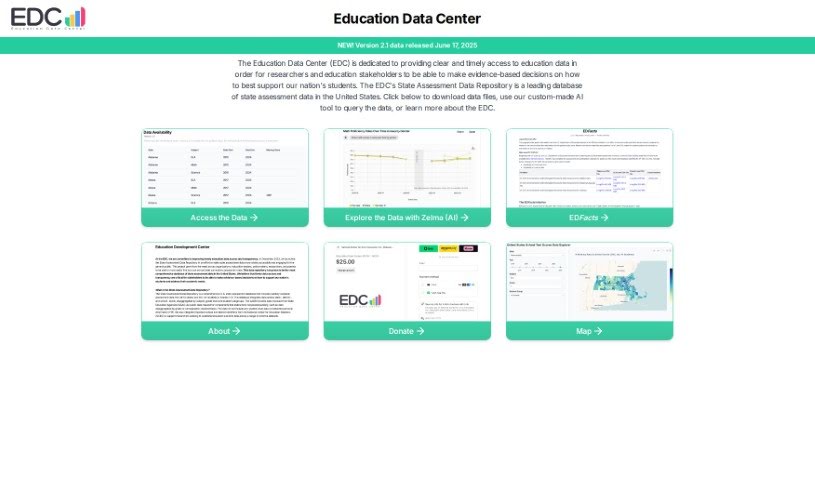
Screenshot of Zelma

Zelma

Discover what Zelma is and how to use it effectively in 2025. Explore its features and see how it stacks up against other School Tools.

Screenshot

What is Zelma?

Zelma is an AI-powered research assistant that’s really good at digging into U.S. school testing data. You can ask it questions in plain English, and it’ll pull out insights based on the data. It’s a great way to explore and understand large educational datasets.

Who created Zelma?

Zelma was developed as an AI research assistant focused on U.S. school testing data, launching on December 7, 2023. It came out of Brown University, where the Zelma Education team works to combine data from state, district, and school levels. They break it down by subject, grade, and different student groups. This project got funding from the Walton Family Foundation and worked with groups like ParentData and OpenAI. Basically, Zelma aims to make it super easy to get to comprehensive educational data and encourage using data to make smart decisions in education.

What is Zelma used for?

  • You can compare test scores between different states and school districts.
  • It helps you look at how testing scores have changed over time.
  • You can spot trends based on things like race or ethnicity.
  • It can show you data using graphs or tables.
  • It helps make decisions based on data.
  • It makes understanding U.S. school testing data much simpler.
  • It’s useful for research on educational policy.
  • It can turn your questions into actual data.
  • It’s a really helpful tool for analyzing educational data.
  • It’s great for looking at trends.
  • You can find patterns based on demographic information like race or ethnicity.
  • It lets you visualize data with graphs and tables.
  • You can easily share insights on social media or put results on your website.
  • It helps get educational data out there for more people to see.
  • It turns your questions into answers backed by data.
  • You can ask all sorts of questions about U.S. school testing data.
  • It’s good for analyzing how scores change over time.
  • It helps you see patterns based on demographic details.
  • You can even graph science scores by grade level.
  • It helps you find the districts doing best in certain subjects or states.
  • You can compare charter districts with non-charter ones for specific subjects or states.
  • It tracks ELA scores over time in different places.
  • It lets you compare math scores based on whether students are English language learners.
  • It helps you understand why math scores might differ based on race or ethnicity.
  • It supports research into educational policies.
  • It helps make decisions using data.
  • You can ask it questions about U.S. school testing data.
  • It helps you understand U.S. school testing data.
  • It turns your questions into data-driven answers.
  • It’s useful for comparing scores between states or districts.
  • It helps analyze how scores change over time.
  • It lets you find patterns based on demographic information.
  • You can visualize data using graphs and tables.
  • It’s great for sharing educational data.

Who is Zelma for?

  • Teachers and other educators
  • People who make education policy
  • Researchers
  • Data Analysts

How to use Zelma?

Using Zelma is pretty straightforward. Here’s how:

  1. First, just type your questions about U.S. school testing data into Zelma’s interface using everyday language.
  2. Zelma’s AI then figures out what you’re asking and what data you need.
  3. The tool pulls the right information from its U.S. school testing dataset and gives you insights based on that data.
  4. Feel free to ask all sorts of questions about education data – like comparing scores between states and districts, looking at score trends, or finding patterns based on demographics like race and ethnicity.
  5. To make the numbers easier to grasp, you can have Zelma create graphs or tables for you.
  6. Zelma’s interface is really user-friendly. You just type your questions, and it gives you answers in different ways – as text, tables, or graphs.
  7. You don’t need any special tech skills to use Zelma. It takes your plain English questions and turns them into easy-to-understand, data-backed answers.
  8. Want to share what you found? You can get tweet links or embed the results, graphs, and tables directly into your blogs or websites to spread educational data effectively.
  9. Use Zelma’s sharing features to encourage more conversations and data-focused discussions among educators, policymakers, researchers, and the public.
  10. Make smarter decisions by using Zelma for data analysis. Explore educational datasets, spot trends, and base your choices on clear, precise insights.

Zelma is a really useful tool for anyone working with educational data. It helps with policy research, trend analysis, sharing data, and generally understanding U.S. school testing data better.

Related AI Tools

Discover more tools in similar categories that might interest you

Academic Help Free Essay Generator

Education Academic Writing
Learn More

Stay Updated with AI Tools

Get weekly updates on the latest AI tools, trends, and insights delivered to your inbox

Join 25,000+ AI enthusiasts. No spam, unsubscribe anytime.