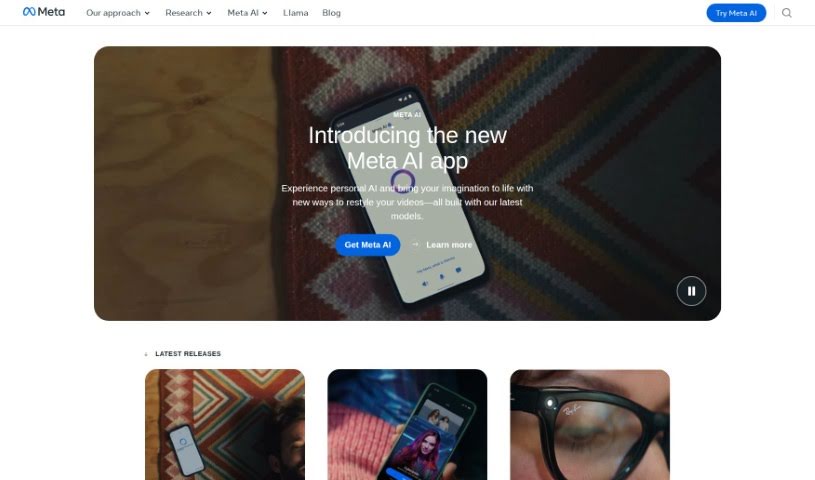
Screenshot of Meta AI

Meta AI

Curious about Meta AI? We'll break down what this powerful technology is, how Mark Zuckerberg's vision shapes it, and walk you through using its features. Plus, see how it stacks up against other content creation tools.

Screenshot

What is Meta AI?

Meta AI is essentially the collection of artificial intelligence (AI) technologies that Meta Platforms Inc. (you know, the company formerly known as Facebook) uses across its various services. It is the smart engine behind many of the features you interact with daily. It’s built on sophisticated machine learning algorithms, natural language processing (which helps computers understand human language), computer vision (so computers can ‘see’), and other AI tools. The main goal? To make your experience on Meta’s platforms better, deliver content you’ll actually want to see, and generally make everything run more smoothly. It’s what powers those personalized recommendations, helps filter out inappropriate content, and even enables those cool augmented reality effects. Essentially, Meta AI is constantly being refined to keep up with what users need and want.

Who created Meta AI?

Mark Zuckerberg is the driving force behind Meta AI. While it might be associated with Meta’s broader AR/VR efforts, the core AI development has been a significant focus. Zuckerberg, famously the founder of Facebook, has a clear vision: to enhance human connection and productivity, particularly through augmented and virtual reality. Meta AI is at the forefront of pushing the boundaries in the AR/VR space, and it continues to advance under his leadership.

Who is Meta AI for?

Meta AI is a versatile tool that can benefit a wide range of professionals:

  • Digital Marketers
  • Content Creators
  • Social Media Managers
  • Customer Service Representatives
  • Data Analysts
  • Software Developers
  • Graphic Designers
  • E-commerce Specialists
  • Advertising Specialists
  • User Experience (UX) Designers

How to use Meta AI?

Getting started with Meta AI is pretty straightforward. Here’s a step-by-step guide to help you make the most of it:

  1. Access the Platform: First things first, you’ll want to head over to the Meta AI platform. You can usually access it through their dedicated website or a specific application.
  2. Create Your Account: If you don’t have one already, you’ll need to sign up. Just follow the prompts to create your account, entering the necessary details.
  3. Log In: Once your account is set up, log in using your username and password. This will give you access to all the features Meta AI has to offer.
  4. Explore the Dashboard: Take a moment to get acquainted with the main dashboard. It’s designed to be user-friendly, but it’s always good to see where everything is located and what each section does.
  5. Start a New Project: Ready to dive in? Begin by creating a new project. Give it a clear, descriptive name so you can easily find it later.
  6. Pick Your Tools: Meta AI offers a library of tools. Browse through them and select the specific functionalities that best suit what you’re trying to achieve with your project.
  7. Upload Your Data: Now, it’s time to bring in your content. Upload the data or information you need for your project. Just make sure it’s in a format that Meta AI can work with.
  8. Set Up Parameters: Tailor the experience to your needs. Configure the project’s parameters and settings to align with your specific goals and objectives.
  9. Run the Analysis: Once everything is set up, you can start the analysis. Let Meta AI process your data using the tools and settings you’ve chosen.
  10. Review the Results: After the analysis is done, take a good look at the outcomes. Analyze the insights Meta AI provides in relation to your project’s aims.
  11. Fine-Tune for Better Performance: If you think you can get even better results, don’t hesitate to tweak things. You can optimize configurations or try different tools to improve performance.
  12. Save and Export: Make sure to save your work within Meta AI so you can come back to it. If you need to share your findings or use them elsewhere, you can export the results or reports.
  13. Give Feedback and Iterate: Your input is valuable! Provide feedback on what worked well and what could be improved. This helps you refine your approach for future projects.

By following these steps, you can effectively use Meta AI to tackle a variety of projects and get things done efficiently.

Related AI Tools

Discover more tools in similar categories that might interest you

Stay Updated with AI Tools

Get weekly updates on the latest AI tools, trends, and insights delivered to your inbox

Join 25,000+ AI enthusiasts. No spam, unsubscribe anytime.