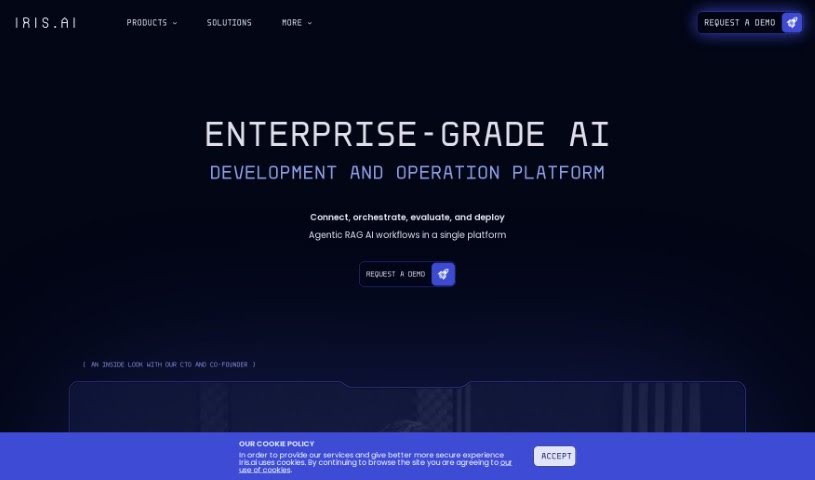
What is Iris.ai?
Iris.ai is a really smart AI platform that’s all about understanding scientific writing. It is a super-powered assistant for anyone working with research papers. It uses advanced algorithms and machine learning to completely change how we do things like literature reviews, pulling out key data from research, and keeping an eye on medical products after they’re released. It can quickly go through tons of scientific articles, pull out the important bits, and spot trends, which makes reviews much more thorough. Plus, it handles the tedious job of extracting data from research papers automatically, freeing up researchers to focus on the bigger picture and deeper analysis. For post-market surveillance, it’s a lifesaver, helping monitor the safety and effectiveness of medical products by sifting through biomedical data to flag any potential safety issues.
Who created Iris.ai?
Iris.ai was actually started by a group of people who are a bit of everything – driven, maybe a little quirky, and spread out all over the world. What really unites them is a desire to make a positive impact on society. Their platform is built on sophisticated AI algorithms and machine learning, specifically designed to tackle scientific text. It’s really changing the game for literature reviews, extracting research data, and handling post-market surveillance within the scientific community.
What is Iris.ai used for?
- Understanding Scientific Papers: It helps you really dig into and make sense of scientific literature.
- Finding What Matters: It’s great at quickly spotting the information you need in your research.
- Structuring Research Data: It can pull data from research papers and organize it for you.
- Automating Tedious Tasks: It takes care of those repetitive research jobs, saving you valuable time.
- Post-Market Surveillance: It’s a key tool for monitoring medical products after they’re out.
- Checking Product Safety: It helps keep tabs on how safe and effective medical products are.
- Spotting Safety Issues: It’s designed to identify potential safety concerns and adverse events.
- Improving Healthcare: Ultimately, it helps make patient safety better and improves overall healthcare quality.
- Easy to Use: The platform has a user-friendly interface, making it simple to interact with.
- Handles Many Formats: It supports various data types, including PDFs and research articles.
- Revolutionizing Reviews: It’s changing how literature reviews are done in science.
- Automating Data Extraction: It makes getting data from research papers much faster.
- Boosting Surveillance: It improves how we monitor products after they’re released.
- Efficient Information Finding: It’s excellent at pinpointing relevant information quickly.
- Extracting Key Insights: It pulls out main ideas, connections, and trends from scientific texts.
- Automating Data Extraction: It streamlines getting data from research papers.
- Monitoring Product Safety: It helps track the safety and effectiveness of medical products.
- Continuous Safety Analysis: It constantly looks for safety concerns and adverse events.
- Enhancing Patient Safety: It contributes to better patient safety and healthcare.
- Supports All Science: It’s useful across many different scientific fields.
- Transforming Literature Reviews: Iris.ai is really changing how literature reviews are done by analyzing huge amounts of scientific text to find what’s relevant and offer deep insights.
- Automating Research Data Extraction: It automatically extracts data from papers and scientific sources, saving researchers time so they can focus on higher-level analysis and interpretation.
- Excelling in Post-Market Surveillance: Iris.ai is great at analyzing large volumes of biomedical data to monitor the safety and effectiveness of medical products, which really helps patient safety and healthcare quality.
- User-Friendly Interface: It offers an easy-to-use interface for researchers to work with the platform and get insights, supporting formats like PDFs, articles, and clinical trial data.
- Accelerating Research: Iris.ai speeds up research, provides deeper insights, and helps drive scientific progress with its advanced AI and machine learning.
- Revolutionizing Literature Reviews: It’s changing how literature reviews are done in science by analyzing and understanding vast amounts of scientific literature to efficiently find relevant information and gain valuable insights.
- Efficiently Identifying Information: It helps you efficiently pinpoint relevant information and gain valuable insights from huge collections of scientific literature.
- Automating Data Extraction: It automates the process of extracting research data from papers, saving researchers time and allowing them to focus more on analysis and interpretation.
- Excelling in Surveillance: It’s particularly strong in post-market surveillance, analyzing large amounts of biomedical data to track the safety and effectiveness of medical products and interventions.
- Contributing to Safety: It helps improve patient safety and healthcare quality by continuously analyzing and identifying potential safety concerns and adverse events.
- Easy Interaction: It provides a user-friendly interface that makes it simple for researchers to interact with the platform and access the insights it generates.
- Versatile Data Support: It supports various data formats, including PDFs, research articles, and clinical trial data, making it very versatile for many scientific fields.
- Accelerating Science: It speeds up research work, offers deeper insights, and contributes to scientific advancements.
- Extracting Key Insights: It analyzes and comprehends vast scientific literature to pull out key concepts, relationships, and trends, leading to more comprehensive and insightful literature reviews.
- Specializing in Scientific Understanding: It focuses on understanding scientific text using advanced algorithms and machine learning.
Who is Iris.ai for?
- Researchers
- People in Pharmaceutical Companies
- Healthcare Providers
- Regulatory Agencies
- Staff at Regulatory Agencies
- Personnel within Regulatory Agencies
- Pharmaceutical Companies
- Healthcare Providers
- Professionals working in Regulatory Agencies
How to use Iris.ai?
Here’s how you can get started with Iris.ai:
- Sign Up: First, create an account on the Iris.ai platform. This gives you access to its advanced AI tools for understanding scientific text.
- Log In: Once you’ve signed up, log in. You’ll find the interface is designed to be really easy to use, making it simple to interact with the platform’s capabilities.
- Upload Your Data: You can upload scientific literature, research papers, or clinical trial data. It handles various formats, including PDFs, so just upload what you need.
- Analyze and Comprehend: Use Iris.ai’s advanced algorithms and machine learning to analyze and understand the large amounts of scientific text you’ve uploaded.
- Extract Key Information: Take advantage of its natural language processing and semantic analysis. This helps you pull out the main concepts, how they relate, and any trends in your data.
- Automate Data Extraction: Use its research data extraction features. This process automatically pulls and structures data from your research sources, saving you a lot of manual work.
- Assist with Surveillance: See how Iris.ai can help with post-market surveillance. It analyzes biomedical data to keep track of how safe and effective medical products are.
- Gain Better Insights: Work with the insights Iris.ai provides. This will help improve your literature reviews, data extraction, and surveillance tasks, leading to more complete and insightful results.
By following these steps, researchers can really use Iris.ai to speed up their work, get deeper insights, and contribute more effectively to scientific progress.