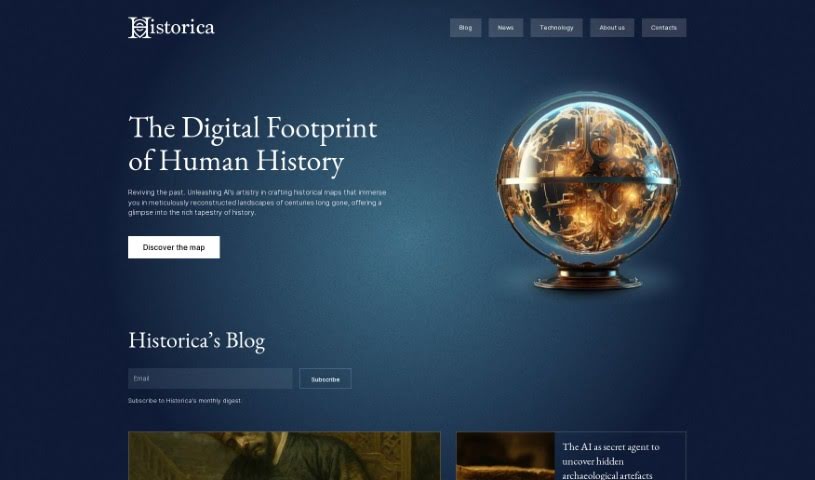
Screenshot of Historica

Historica

Discover what Historica is and how to use it effectively in 2025. Explore its features, who created it, and how it compares to other school tools.

Screenshot

What is Historica?

Historica is an ambitious project aiming to build a digital model of human history, powered by artificial intelligence. It is a way to map out everything that’s happened to us as humans, across all times and places. It brings together different kinds of information into one organized system, showing just how vast and varied human history really is. At its heart, Historica is a lively, interactive map that visualizes how civilizations have developed all over the world, from ancient times right up to today. It’s designed for a wide range of uses – whether you’re an academic doing research, someone interested in culture, or just looking for some fun. It’s a great tool for learning, helps promote cultural items and events, and even offers games and simulations based on historical moments. The project is built on a few key ideas: bringing together knowledge from different fields (interdisciplinarity), working collaboratively without a single central authority (decentralization), and using AI to keep the historical model comprehensive and constantly improving.

Who created Historica?

Dr. Alexander Tsikhilov is the driving force behind Historica, serving as both its Founder and CEO. The project officially launched on June 9, 2023. Importantly, Historica is a non-commercial initiative, meaning its focus is purely on the academic, cultural, and recreational aspects of history. The goal is to create an interdisciplinary, decentralized information model of human history, all powered by AI. This model is intended to benefit science, education, culture, and entertainment.

What is Historica used for?

Historica is incredibly versatile and serves many different purposes:

  • For Research and Education: It’s a powerful tool for academics, helping with research and providing rich educational content. It can be integrated into school curricula, used for scientific projects, and incorporated into educational software.
  • For Cultural Promotion: It acts as a platform to showcase cultural objects and events, giving them a global stage. Local cultural groups can present their artifacts and historical moments with unique perspectives and fresh contexts.
  • For Recreation: Historica offers a space for historical games and simulations, making learning about the past engaging and fun.
  • Supporting Content Creation: It’s useful for promoting historical publications, organizing educational events, and helping with the preservation and restoration of historical heritage.
  • Boosting Tourism: The platform can enhance tourism industry efforts by providing historical context.
  • Brand Building and Community Engagement: It helps build brands and communities by creating engaging content for social media and blogs.
  • Film and Media Production: Historica supports historical reconstructions and is valuable for scriptwriters, producers of historical films and series.
  • Educational Platforms: It contributes to educational and popular science platforms.

Essentially, Historica is used by a very broad audience, including:

  • Gamers and Game Developers: For creating historically accurate or inspired games.
  • Historical Reenactors: To help with authenticity and context.
  • Writers and Producers: For historical films, series, and literature.
  • History Enthusiasts: Members of historical clubs, societies, and anyone who loves popular history.
  • Educators and Students: For learning, teaching, and research.
  • Cultural Professionals: Museum workers, archivists, librarians, cultural studies scholars, art historians, and heritage preservation specialists.
  • Tourism Professionals: To enhance visitor experiences.
  • Content Creators: Influencers and bloggers focusing on history and culture.
  • Policymakers and Administrators: Those involved in science, education, and culture.

Historica uses AI to process vast amounts of data from various scientific fields. This allows it to constantly add new facts and help resolve disagreements or contradictions in historical interpretations. The project actively encourages collaboration, welcoming scholars, researchers, AI specialists, bloggers, and all history enthusiasts to contribute. It aims to create and continuously update an objective, interdisciplinary, decentralized, AI-based model of human history for the benefit of science, education, culture, and entertainment.

Who is Historica for?

Historica is designed for a wide array of individuals and groups interested in human history, culture, and learning. This includes:

  • In Academia: Educators, students, policymakers, scientists, researchers, teachers, and authors of educational materials. Administrators in science and education also benefit.
  • In Cultural Sectors: Workers in museums, heritage conservation, tourism, and cultural event organization. This also extends to museum workers, archive and library workers, cultural studies scholars, art historians, and specialists in heritage preservation.
  • In Recreation: Gamers, game developers, participants in historical reconstructions, authors of historical literature, members of historical clubs and societies, and lovers of popular history.
  • Content Creators and Promoters: Influencers and bloggers in the field of history and culture, PR and marketing specialists in culture, and organizers of historical events and festivals.
  • Media Professionals: Scriptwriters and producers of historical films and series.
  • Public and Policy: Local communities, public organizations, politicians, legislators, and administrators involved in science, education, and culture.
  • Platforms: Educational and popular science platforms.

Essentially, anyone from students and educators to gamers, authors, and cultural professionals can find value in Historica.

How to use Historica?

Getting started with Historica is straightforward. Here’s a simple guide:

  1. Understand Its Core Purpose:
    • Historica is essentially a digital, AI-powered model of human history. It’s constantly being updated and refined.
    • It pulls together all sorts of data into one organized system, showing the incredible scale, complexity, and diversity of our past.
  2. Who Benefits?
    • Academics (like teachers and students) find it great for research and education. Cultural workers in museums, heritage sites, and tourism also find it very useful. Plus, gamers and history buffs can use it for fun and learning.
  3. How AI Plays a Role:
    • Historica uses artificial intelligence to handle and process huge amounts of historical data. This helps add new information and even resolve debates or contradictions found in different scientific interpretations of history.
  4. Get Involved and Collaborate:
    • The project is open to everyone! Scholars, researchers, AI experts, bloggers, and anyone passionate about history can contribute. It’s a global effort, and collaboration is highly encouraged.
  5. Explore the Features:
    • You’ll find a dynamic, interactive map that visualizes how civilizations have developed worldwide.
    • It’s a non-commercial project that spans academic, cultural, and recreational areas, supporting science, education, culture, and entertainment.
  6. Key Principles:
    • Historica is built on interdisciplinarity (combining knowledge from many fields), decentralization (encouraging broad collaboration), and AI reliance (for continuous improvement).
    • These principles ensure a comprehensive view, foster open contribution, and keep the historical model rich and up-to-date.
  7. Its Role:
    • Think of it as a powerful tool for research, a platform for cultural promotion, and a fun space for historical games and simulations.
  8. How to Contribute:
    • If you’re interested in getting involved or collaborating, you can usually express this through a contact form on their website.

Ultimately, Historica aims to draw you into historical landscapes, offering a unique way to understand human history and appreciate diverse civilizations and cultures, all thanks to advanced AI technology. This guide gives you a good overview of how to engage with Historica, from its basic purpose and features to how you can participate and the guiding principles behind its development.

Related AI Tools

Discover more tools in similar categories that might interest you

Academic Help Free Essay Generator

Education Academic Writing
Learn More

Stay Updated with AI Tools

Get weekly updates on the latest AI tools, trends, and insights delivered to your inbox

Join 25,000+ AI enthusiasts. No spam, unsubscribe anytime.