777ccc.com
Education Summarizers
Learn more
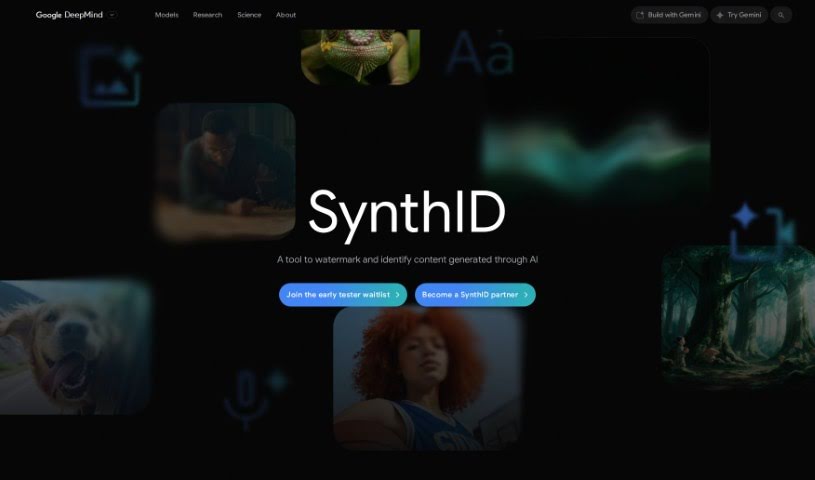
Discover what Google SynthID is and how it embeds imperceptible watermarks into AI-generated text, audio, images, and video for detection.
SynthID is a toolkit for watermarking and identifying AI-generated content. It embeds digital watermarks directly into AI-generated images, audio, text, or video, and can detect whether content — or part of it — was produced using Google’s AI tools. The watermarks are imperceptible to humans but detectable by scanning tools, addressing the challenge of marking AI-generated content without affecting its quality or accuracy. SynthID uses deep learning models to scan content for these watermarks, supporting authenticity verification and AI safety efforts. The technology is in beta.
SynthID was developed by Google DeepMind, working with Hugging Face. It is integrated into the Gemini platform, making it available to developers within their own AI models. Its first deployment was with Lyria, Google’s AI music generation model: every piece of AI-generated audio from Lyria carries a SynthID watermark that is inaudible to listeners but detectable for identification.
Text: When a large language model generates text, it predicts tokens (characters, words, or word fragments) one at a time, assigning probability scores to candidate tokens. SynthID subtly adjusts the probability scores of predicted tokens at points where multiple options are equally plausible, keeping output quality, accuracy, and creativity intact while embedding the watermark.
Audio: The audio is first converted into a spectrogram — a two-dimensional visual map of how frequencies change over time. The watermark is added directly to the spectrogram and is inaudible to listeners. It is designed to survive common modifications such as adding noise, MP3 compression, or playback speed changes. SynthID can also scan the audio track at different points to detect watermarks after such modifications.
Images and video: SynthID inserts imperceptible digital watermarks directly into the pixels of AI-generated images and into each individual frame of AI-generated video.
SynthID helps build trust in the information people encounter by making AI-generated content identifiable without degrading it, supporting broader AI safety efforts across text, audio, images, and video.
Related
Discover more tools in similar categories
Weekly picks of the best AI tools we've researched and added — no spam, unsubscribe anytime.
Join 25,000+ AI enthusiasts. No spam, unsubscribe anytime.