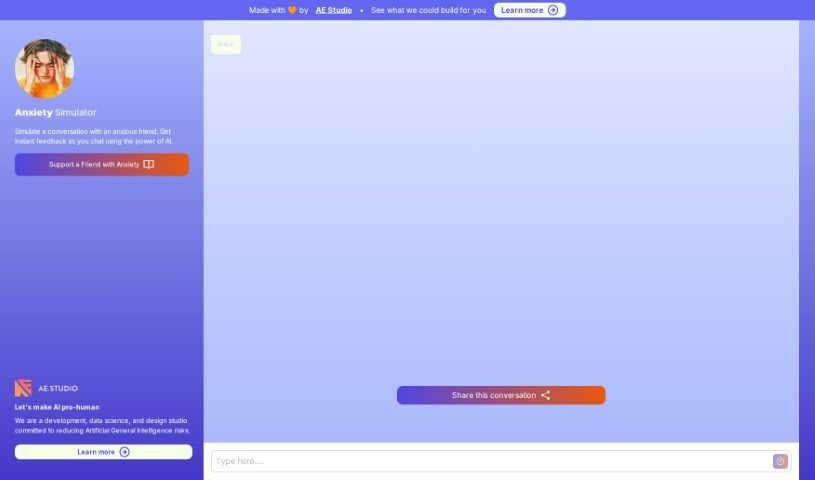
Screenshot of Anxiety Simulator

Anxiety Simulator

Discover what the Anxiety Simulator is and how to use it effectively in 2025. We'll explore its features and see how it stacks up against other student tools.

Screenshot

What is Anxiety Simulator?

Anxiety Simulator is a really neat tool designed to help you understand and support friends who are dealing with anxiety. It is a simulation where you can chat with a virtual friend who’s experiencing anxiety. As you talk, it gives you helpful feedback to guide you in offering the best support. By playing around with this simulation, you can really get a feel for the challenges people with anxiety disorders go through. It’s a great way to get better at offering comfort and understanding. The Anxiety Simulator comes with interactive chats, a system that gives you feedback to improve how you communicate, handy tips for supporting friends with anxiety, a design that’s super easy to use, and links you can click for more info on helping people with anxiety.

Who created Anxiety Simulator?

AE Studio is the team behind the Anxiety Simulator. They created this innovative tool to help people understand and support friends facing anxiety, using interactive simulations and feedback. AE Studio really put care and thought into crafting this simulation, making sure it’s easy to navigate and offers resources to help you communicate supportively.

What is Anxiety Simulator used for?

  • Practice conversations: Chat with a virtual friend to better understand anxiety.
  • Improve communication: Get useful feedback to help you communicate supportively.
  • Learn key tips: It’s an educational resource packed with essential advice for supporting friends with anxiety.
  • Easy to use: The design is straightforward, making the learning process smooth.
  • Get more info: Clickable links provide extra details on supporting individuals with anxiety.
  • Simulate and get feedback: Practice a conversation with a friend experiencing anxiety and receive feedback as you go.
  • Understand and support: Learn how to understand and support a friend with anxiety through digital communication.
  • Texting practice: Work on the principles of texting someone who has anxiety.
  • Gentle conversation starters: Learn how to start conversations softly and offer choices for how to communicate.
  • Respecting boundaries: Understand and respect digital communication boundaries and your friend’s need for space.
  • Encourage professional help: Know when and how to encourage professional support if it’s needed.
  • Patient support: Practice offering support patiently in a safe environment.
  • Gain insight: Understand the unique challenges faced by people with anxiety disorders.
  • Offer comfort: Get better at providing comfort and understanding.
  • Effective support tips: Learn the best ways to support friends dealing with anxiety.
  • Simulate and get feedback: Practice conversations with a friend who has anxiety and receive feedback along the way.
  • Understand and support: Gain insight into your friend’s challenges to better understand and support them.
  • Essential tips: Learn key advice on how to effectively support friends with anxiety.
  • Feedback for improvement: Use the feedback system to hone your supportive communication skills.
  • Provide comfort: Enhance your ability to offer comfort and understanding to those with anxiety disorders.
  • Become an ally: Grow into a more empathetic and skilled supporter in mental health.
  • Engage in chats: Participate in simulated conversations to deepen your understanding of anxiety.
  • Guide your support: Receive timely feedback to help you offer effective support.
  • Seamless experience: Enjoy a user-friendly design that makes learning easy.
  • More resources: Click links for additional information on supporting individuals with anxiety.
  • Feedback during chats: Practice conversations with a friend who has anxiety, getting feedback as you go.
  • Understand and support: Learn how to understand and support a friend with anxiety.
  • Texting principles: Grasp the principles of texting someone with anxiety.
  • Practical texting tips: Get practical advice for texting individuals with anxiety.
  • Encourage professional help: Learn how to encourage professional support for those with anxiety.
  • Interactive learning: Use the interactive simulation to engage in chats and better understand anxiety.
  • Improve skills: Benefit from the feedback system to refine your supportive communication skills.
  • Learn essential tips: Use this educational resource to learn key advice for supporting friends with anxiety.
  • Easy navigation: The user-friendly design ensures a smooth and easy learning experience.

Who is Anxiety Simulator for?

  • Psychologists
  • Therapists
  • Counselors
  • Mental health professionals

How to use Anxiety Simulator?

To get the most out of the Anxiety Simulator tool, just follow these simple steps:

  1. Head over to the Anxiety Simulator website: https://www.anxietysimulator.com.
  2. Jump into the interactive simulation! Start up some conversations with a virtual friend who’s experiencing anxiety.
  3. Pay attention to the feedback you get during the chat. It’s there to help you offer really effective support to people with anxiety.
  4. Practice what you learn about texting someone with anxiety. This includes starting conversations gently and not overwhelming them with too many questions.
  5. Pick up some practical texting tips. Think about encouraging without pushing, being positive, and offering different ways to communicate, like voice notes.
  6. It’s important to recognize boundaries and respect your friend’s need for space and privacy when you’re communicating digitally.
  7. If you notice anxiety is really affecting your friend’s daily life, it’s a good idea to encourage them to seek professional support.
  8. Feel free to explore the website for more information and resources. They offer comprehensive guidance on how to help friends who are dealing with anxiety.

By following these steps and using all the features the Anxiety Simulator offers, you’ll gain a much better understanding of anxiety disorders. Plus, you’ll sharpen your supportive communication skills and become a more empathetic ally in supporting mental health.

Related AI Tools

Discover more tools in similar categories that might interest you

Academic Help Free Essay Generator

Education Academic Writing
Learn More

Stay Updated with AI Tools

Get weekly updates on the latest AI tools, trends, and insights delivered to your inbox

Join 25,000+ AI enthusiasts. No spam, unsubscribe anytime.